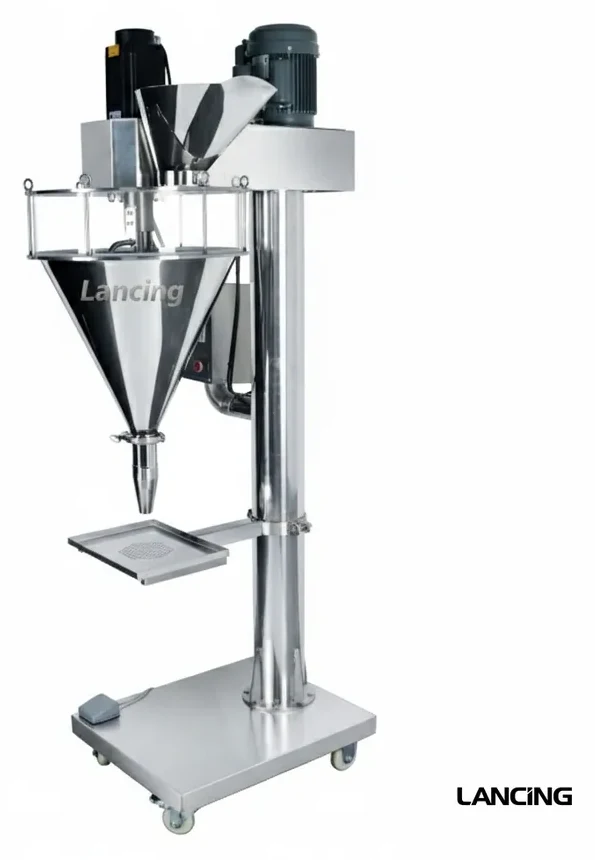
 Bench / compact
Semi-automatic auger fillers
Compact auger filling for short runs, product trials, smaller batches and operator-presented jars, bottles, tubs or pouches.
View routeStart with the production route you need: compact operator-fed auger filling, conveyor-fed automation, VFFS powder bagging or a complete dry-product line.
Start by deciding whether you need a bench machine, a conveyor-fed filler, a bagging system or a full powder filling line. The right route depends on the product, pack, output target and available space.
Compare the main auger filler options, then move into the detailed route that matches your powder and pack.
Use the images below to compare compact, semi-automatic, automatic, rotary and VFFS auger filling routes before discussing the best fit for your production line.
Bench / compact
Compact auger filling for short runs, product trials, smaller batches and operator-presented jars, bottles, tubs or pouches.
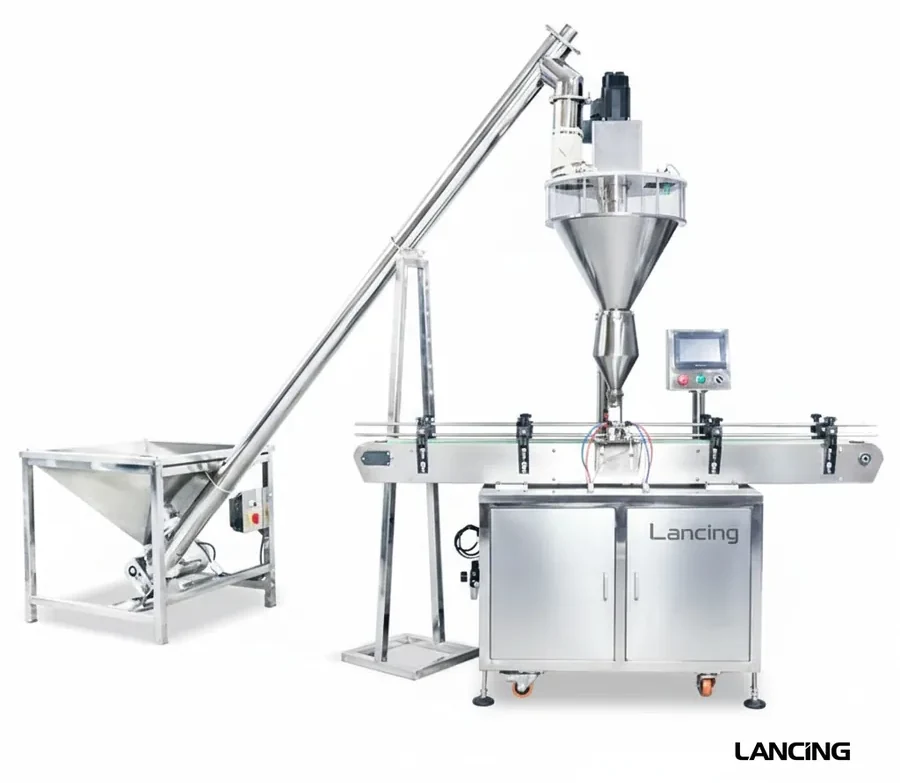
View route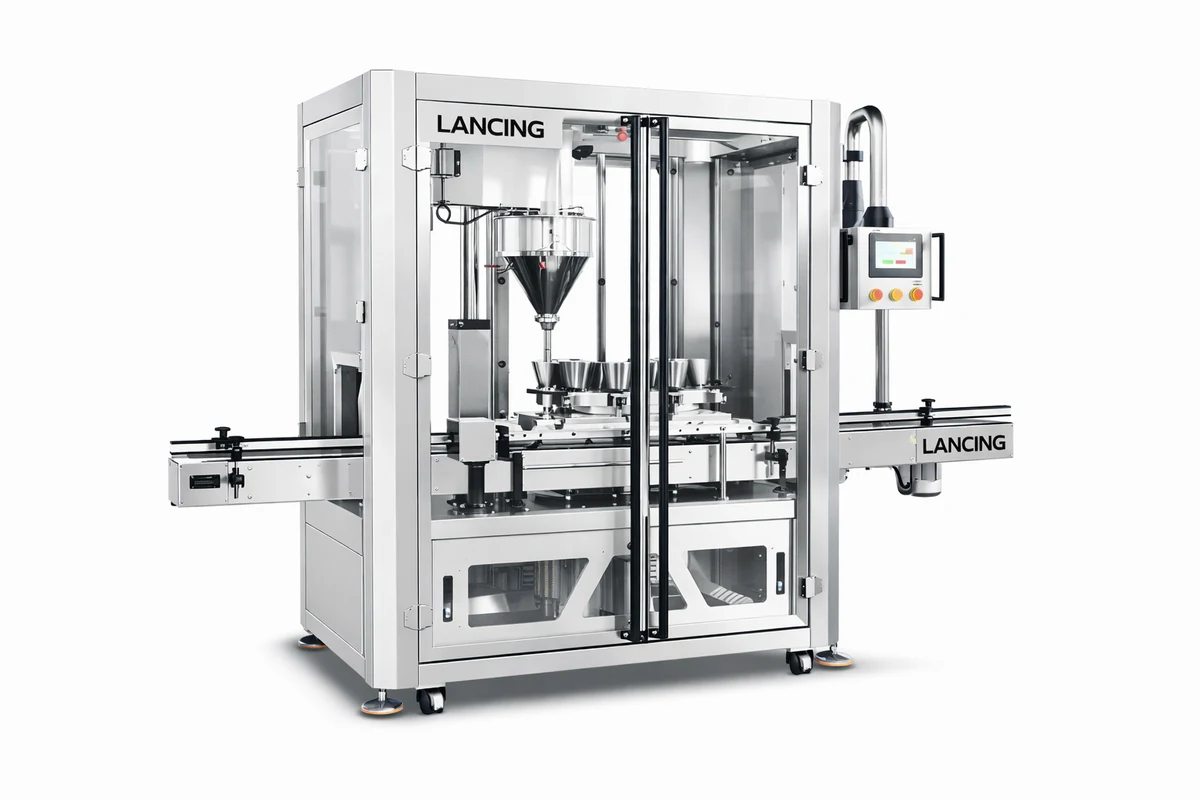 Inline automation
Conveyor-fed auger filling routes for powders that need repeatable dosing, container handling and integration with closing or labelling.
View route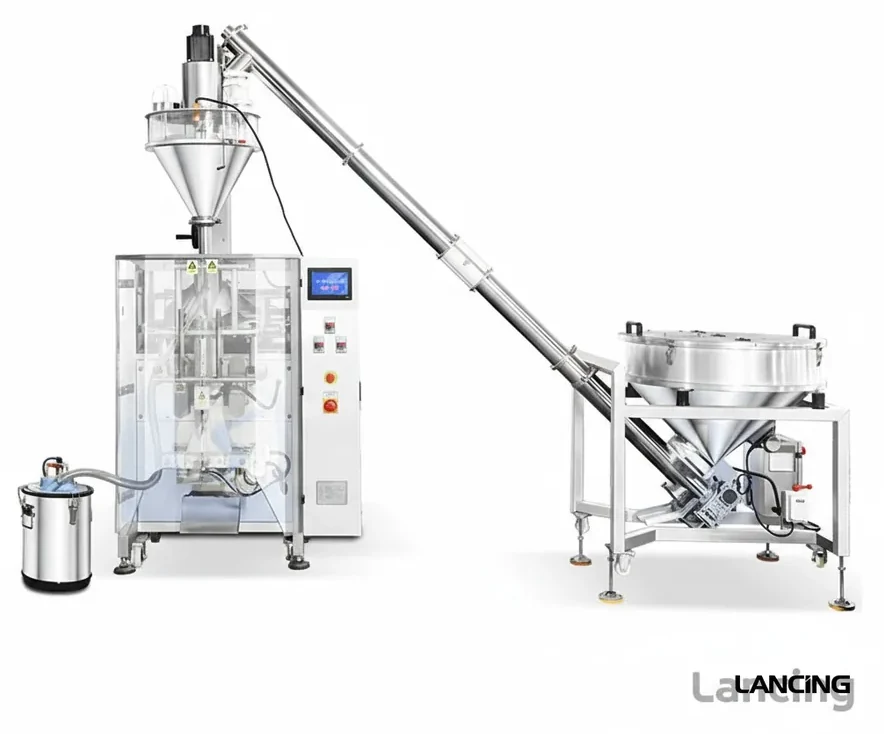 Bagging / roll film
Auger dosing integrated with vertical form fill seal bagging for powder pouches, sachets and formed bags from roll film.
View route
Line planning
Product feed, filling, settling, capping, sealing, labelling, coding and checking planned as one dry-product route.
View route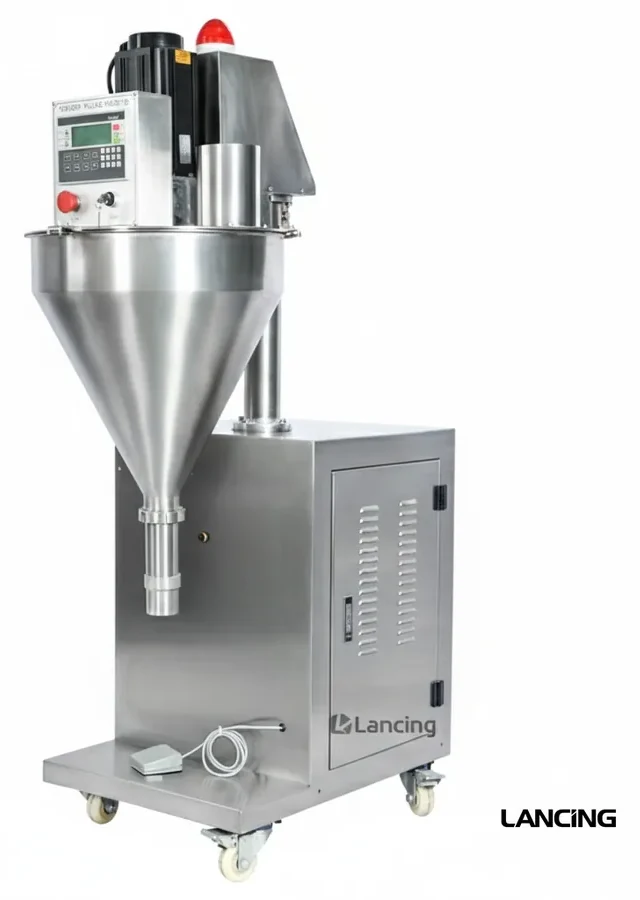 Route
Route
General powder dosing where flow, dust and fill consistency decide the auger route.
View route
Route
Auger filling routes for spices, seasonings, herbs and mixed dry ingredients.
View route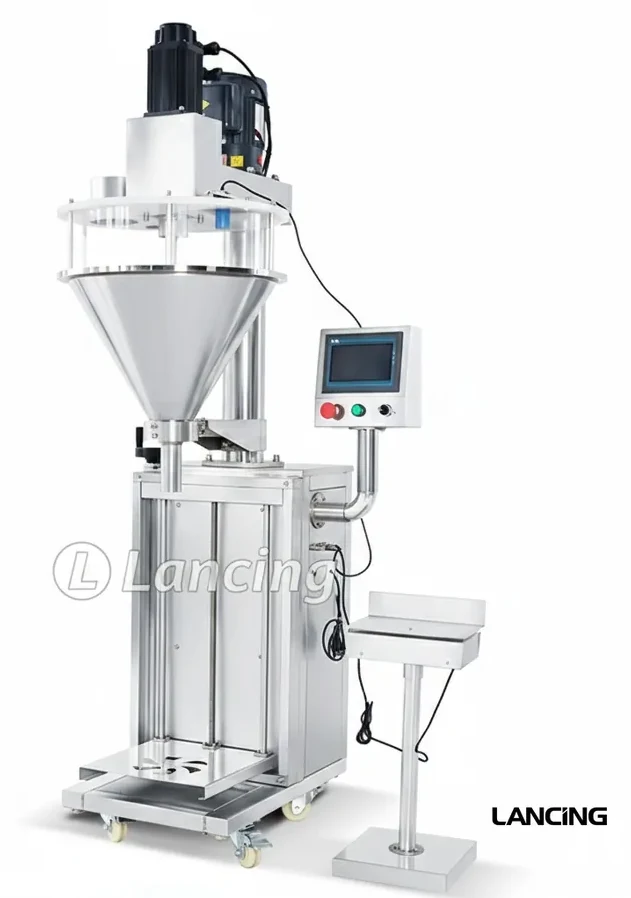 Route
Route
Dry-powder filling for sports nutrition, supplement tubs, pouches and jars.
View route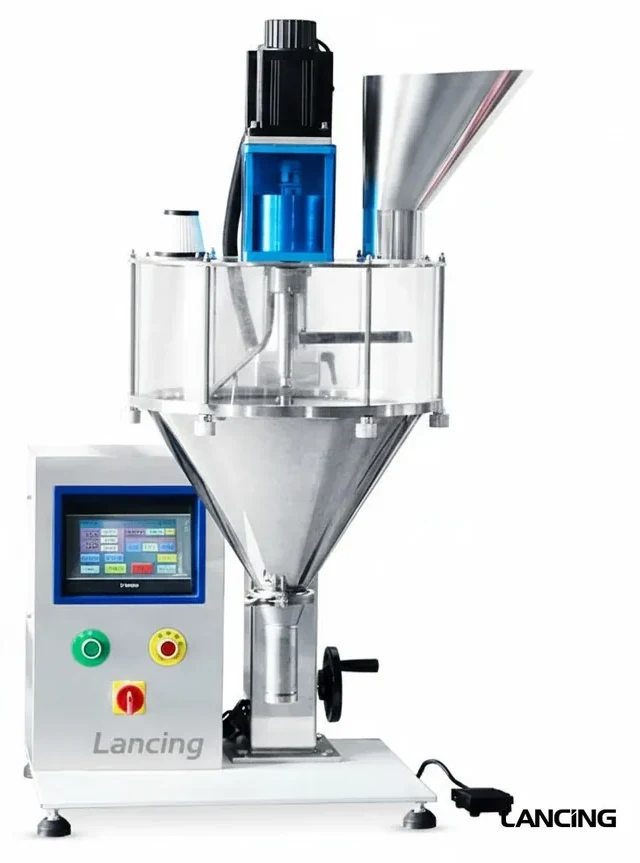 Route
Route
Powder filling layouts for flour, starches, baking powders and dry mixes.
View routeAuger fillers are normally used for powders and some fine granules where controlled screw dosing gives a more suitable route than a pump, cup filler or basic gravity feed.
Yes, but the container handling and discharge setup changes. Rigid containers, premade pouches, VFFS bags and sachets all need different presentation and sealing arrangements.
Send the product name, sample behaviour, fill weight range, pack dimensions, target output, accuracy requirement, available space and any sealing, capping, labelling or coding steps.
Send the product, pack format, target fill weight and required output so Lancing can suggest the most suitable auger filler route.
The figures below come from first-party Lancing project specifications. They show how model, tooling and test conditions are linked; they are not universal guarantees for every powder or pack.
| Model and route | Dose and hopper basis | Screw, tooling and controls | Accuracy test condition | Output basis |
|---|---|---|---|---|
| Lancing LU-FM750F Semi-automatic servo auger filler | Documented tooling bands of 5–50 g, 50–300 g, 300–1000 g and 1000–5000 g by auger change. Approx. 50 L hopper. Final selection depends on density, pack and trials. | Interchangeable auger, tube and filling-spout sets; internal motorised agitator in a documented 100 g–5 kg configuration; PLC touchscreen, foot-pedal operation and weighing-feedback interface. | Supplier reference measurement error ±1% in the documented configuration. Final result is subject to product, selected tooling, density, scale arrangement and agreed trial method. | Indicative operator-cycle rate of 1–8 fills/min, depending on fill weight, powder flow, pack handling and settling time. |
| Lancing LU-FM4A Three-head automatic servo auger filler | Published 50–300 g range, configured around an approved nominal 50 g bottle application. Three powder hoppers with conditioning arrangements selected after testing. | Three independently driven servo auger heads, custom screw and nozzle set, PLC/HMI recipes, photoelectric bottle detection and no-bottle/no-fill logic. | No generic accuracy figure is published in the documented project basis. Fill repeatability is to be established during sample trials and factory acceptance testing using the approved powder and bottle. | Practical integrated-line target of 25–35 bottles/min for the documented nominal 50 g bottle project, subject to product and line trials. |
How to use the table: compare the documented route with your product, but do not select tooling from fill weight alone. Bulk density, flowability, pack opening, headspace, dust and required cleaning can all change the final build.
A model comparison should lead to a sample-led test plan. Confirm the powder batch, target weights, proposed tooling, hopper condition, scale and sampling method, output condition and the real pack. Record start-up, stable running, hopper replenishment, planned stops and restart so the result represents production rather than a single favourable fill.
Read the auger selection guide, compare auger and weigh filling, or send the application through the enquiry checklist.
Lancing can use your fill range, bulk density, pack opening, output and cleaning requirements to identify the model and trial route that should be evaluated.
The auger is the dosing device, but the machine family is usually decided by who presents the pack, how the pack is held under the outlet and what has to happen after filling.
| Machine route | Best starting point | Evidence before specification |
|---|---|---|
| Tabletop or compact filler | Trials, short runs and very small production spaces where an operator can control the pack. | Smallest pack opening, target fill weight, operator access and bench or floor space. |
| Semi-automatic auger filler | Operator-presented jars, bottles, tubs or pouches where screw dosing improves repeatability over hand filling. | Powder flow, pack support, weighing method, dust around the filling point and changeover frequency. |
| Automatic auger filler | Conveyor-fed container projects where filling must work with infeed, indexing, capping, labelling or coding. | Container stability, neck or opening tolerance, dwell time, downstream closure and recovery after a stop. |
| VFFS auger filling | Roll-film bag or sachet applications where dosing, product drop, forming and sealing interact. | Bag width, film specification, fill volume, dust in the seal area and settling before the jaws close. |
| Complete powder line | Projects where feed, filling, closure, labelling, checking and discharge need one controlled route. | Process layout, utilities, guarding, controls interfaces, acceptance checks and operator handover. |
A published fill range can be a useful first filter, but the product may still require different tooling, outlet geometry, agitation or pack handling. A dense, free-flowing powder and a light aerated powder can behave very differently at the same target weight.
For this reason, Lancing will usually ask for representative samples before treating a machine route as confirmed.
Use AugerFillers.co.uk when screw dosing is the main question. If the main uncertainty is direct weigh dosing, compare the weighing route on WeighFillers.co.uk. If the project is mainly pouch handling or film forming, keep the deeper pack-making detail on the specialist Lancing pouch and form-fill-seal routes.
State whether the operator will present each pack or whether you need conveyor, indexing, sealing, capping, labelling or coding integration.
The model pages separate verified configuration data from application-dependent performance, so the shortlist can be based on real powder, pack and trial conditions.
25 L agitated hopper, semi-automatic pack presentation and a separate weighing device for flexible batches.
View model50 L hopper, servo dosing, interchangeable tooling and optional net-weight configurations across a wider fill range.
View modelThree servo auger heads with bottle detection, custom nozzles and automatic line interfaces.
View modelConfirm who presents the pack, how weight is checked, how the hopper is replenished and what happens after filling. Then use the sample-trial and FAT guide to prove the selected route.
Choose the operating route first, then confirm the model and tooling with product and pack trials.
Start by deciding who presents the pack, how the powder reaches the hopper, whether weight feedback is required and what equipment must happen before and after dosing. That separates operator-presented, weigh-assisted, inline and fully integrated routes without relying on an unsupported speed or accuracy assumption.
See semi-automatic versus automatic auger fillers for a decision sequence.
Direct link to answerA weigh-assisted auger filler is useful when packs are still presented by an operator but the process needs measured weight feedback for bulk and fine dosing or routine checking. Suitability depends on the powder, pack stability, target range, weighing method and required cycle.
The LU-FM710 page shows the verified Lancing model basis for this route.
Direct link to answerA rotary or multi-head layout becomes relevant when one dosing head cannot support the required indexed line cycle, or when container handling and dwell need to be shared across several stations. The complete line—not the filler alone—must be balanced and tested with production packs.
Review automatic auger fillers and the line-integration guide.
Direct link to answerSend representative powder and packs so the operating route, tooling and line interfaces can be defined together.
The LU-FM100S and LU-FM100B extend the current model library below the weigh-assisted LU-FM710 and LU-FM750F. Their documented ranges describe different hopper, controls and tooling arrangements; the actual duty is still selected from the product, dose volume and pack opening.
6 L compact semi-automatic route for small-dose dry-powder applications.
View resource35 L touchscreen model with published tooling windows and foot-pedal operation.
View resourcePlan sustained accepted-pack output across filling, checks, closing and changeovers.
View resource| Model | Documented platform | Best reason to shortlist | Boundary to confirm |
|---|---|---|---|
| LU-FM100S | Compact 6 L semi-automatic auger filler. | Focused small-dose or small-batch work with direct operator control. | Product flow, outlet, manual pack support and separate checking or closing. |
| LU-FM100B | 35 L tabletop/bench-format filler with touchscreen recipes. | Development batches, wider documented tooling windows and packs below the documented height limit. | Tooling overlap, operator cycle, external weighing and separate pack closing. |
| LU-FM710 | 25 L semi-automatic filler with a separate weighing device. | Flexible batches where routine weight verification or correction is important. | Manual pack handling and the agreed status of the scale in the production process. |
| LU-FM750F | 50 L servo auger platform with larger documented tooling ranges. | Heavier fills, larger hopper demand and a more substantial semi-automatic station. | Product-specific tooling, feeder, dust control, bag support and practical operator output. |
Lancing can identify which documented platform should be trialled and which tooling, support and downstream functions belong in the scope.
After choosing between compact, semi-automatic, automatic and integrated routes, confirm whether the project also needs food-contact cleaning access, allergen-changeover controls, calibration records or final weight verification. These factors may decide the tooling, hopper access, weighing support and line layout.
Review hygienic auger filler selection and calibration and weight verification before finalising the machine brief.