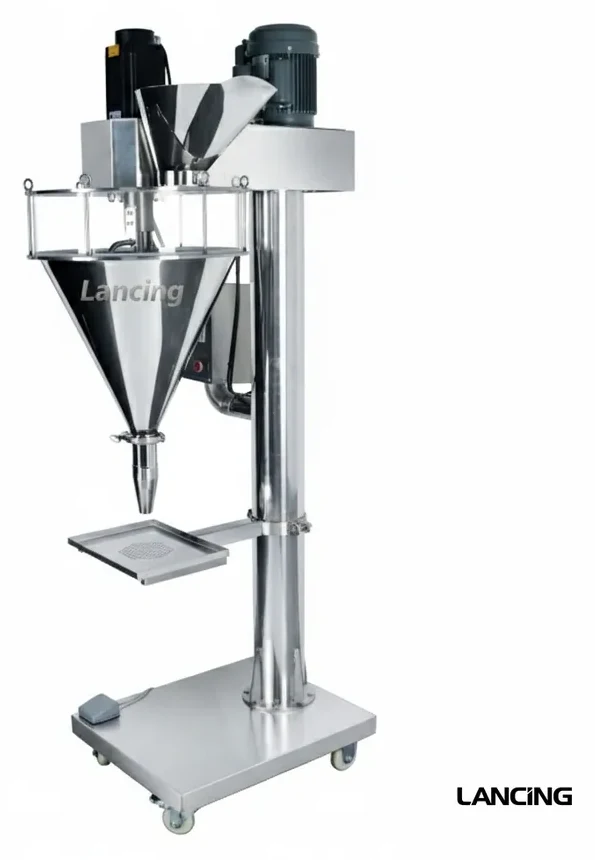
 Bench / compact
Semi-automatic auger fillers
Compact auger filling for short runs, product trials, smaller batches and operator-presented jars, bottles, tubs or pouches.
View routeAuger dosing integrated with vertical form fill seal packaging for powders that need controlled discharge into pouches, sachets or formed bags.
A VFFS auger route is suitable when the pack is made from roll film and the product needs controlled powder dosing into formed bags or sachets. Film, seal area, product drop and dust behaviour all affect the final specification.
Send film, bag dimensions, seal style, fill weight and powder behaviour before selecting a VFFS route.
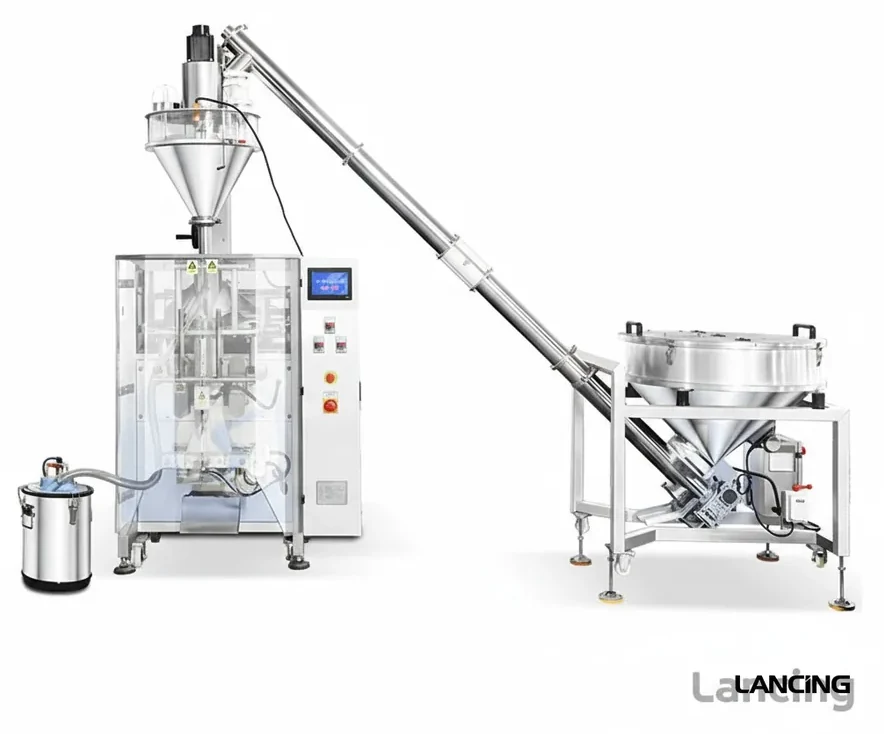
Auger dosing can be paired with VFFS machinery where powders need formed bags, pouch presentation, controlled discharge and seal-quality planning.
With powder bagging, seal quality is linked to product control. Fill timing, product drop, dust extraction, bag size and discharge handling should be considered before the VFFS system is finalised.
Send the powder, film, bag dimensions and target output so the dosing and sealing route can be checked together.
Bench / compact
Compact auger filling for short runs, product trials, smaller batches and operator-presented jars, bottles, tubs or pouches.
View route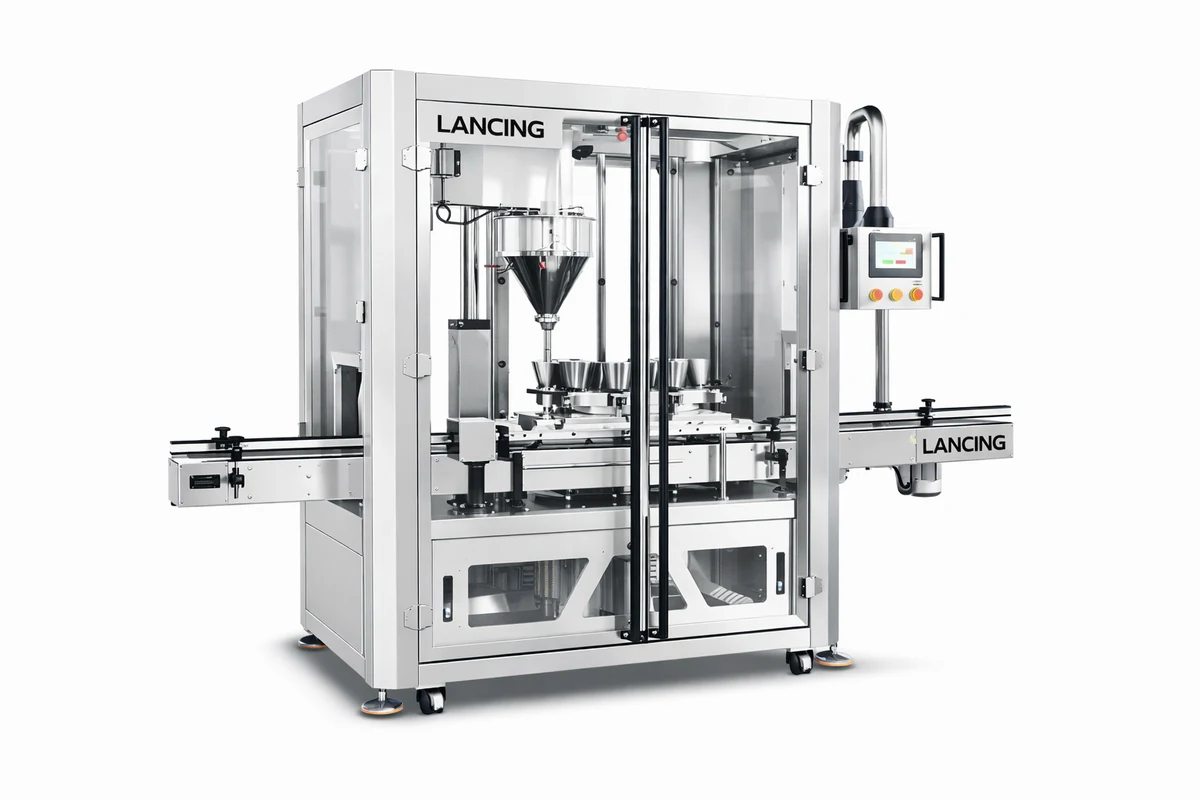 Inline automation
Conveyor-fed auger filling routes for powders that need repeatable dosing, container handling and integration with closing or labelling.
View route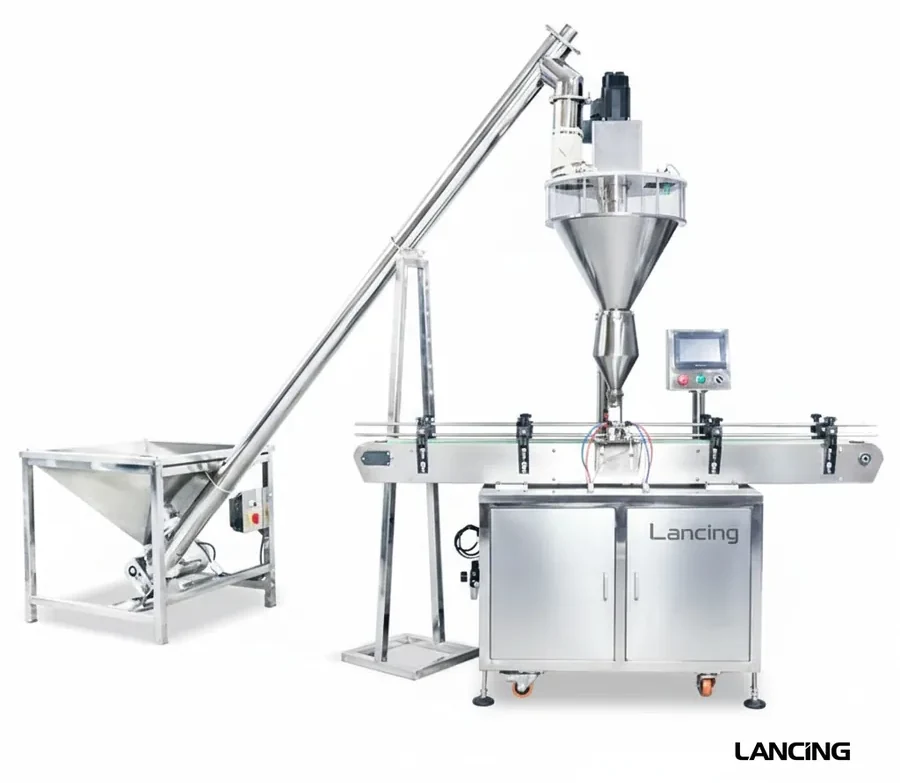 Line planning
Product feed, filling, settling, capping, sealing, labelling, coding and checking planned as one dry-product route.
View route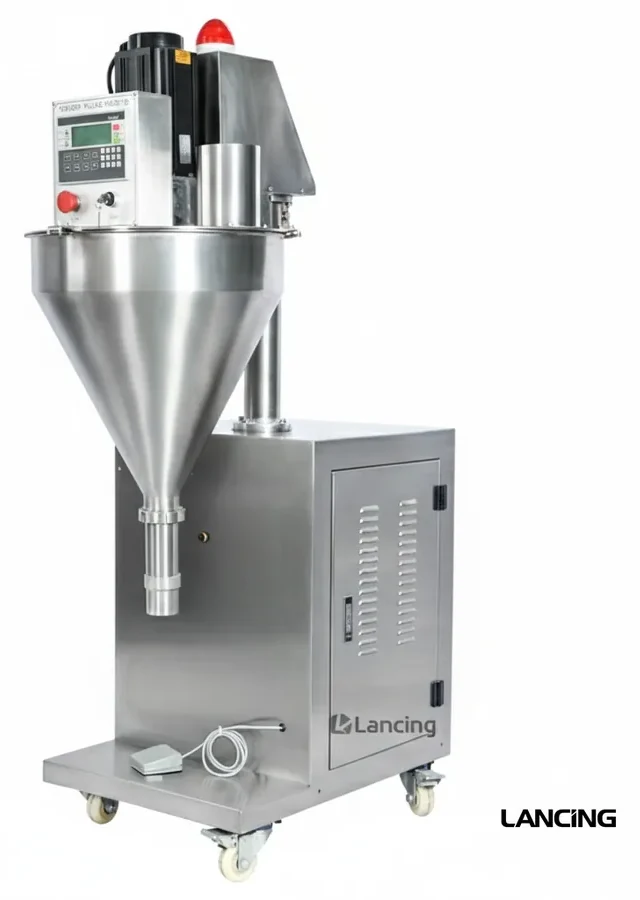 Route
Route
General powder dosing where flow, dust and fill consistency decide the auger route.
View route
Route
Auger filling routes for spices, seasonings, herbs and mixed dry ingredients.
View route
Route
Auger and bagging routes for ground coffee, instant coffee and drink powders.
View route
Route
Flexible-pack auger filling for pouches, sachets and formed bags.
View routeAuger fillers are normally used for powders and some fine granules where controlled screw dosing gives a more suitable route than a pump, cup filler or basic gravity feed.
Yes, but the container handling and discharge setup changes. Rigid containers, premade pouches, VFFS bags and sachets all need different presentation and sealing arrangements.
Send the product name, sample behaviour, fill weight range, pack dimensions, target output, accuracy requirement, available space and any sealing, capping, labelling or coding steps.
Send the product, pack format, target fill weight and required output so Lancing can suggest the most suitable auger filler route.
The auger controls the dose, while the VFFS machine forms and seals the bag. Reliable production depends on the timing and physical interface between both systems, not on either unit in isolation.
| Process area | What to confirm | Trial evidence |
|---|---|---|
| Product feed | How powder reaches the hopper, level-control method, refill behaviour and whether agitation is required. | Stable hopper level and screw charging through start, sustained run and refill. |
| Auger dose | Screw, tube, outlet, target range, bulk-density variation and dose timing. | Consecutive fill results recorded with settings, rate and product batch. |
| Bag forming | Film width, bag length, forming set, registration and the available opening beneath the fill tube. | Consistent formed bags using the intended production film. |
| Product drop | Drop height, dust, settling and whether product rebounds or reaches the seal zone. | Clean pack mouth and controlled product position before sealing. |
| Sealing | Film structure, jaw temperature, pressure, dwell and contamination risk. | Agreed seal inspection or integrity method on filled production-size packs. |
| Discharge | Finished-pack support, takeaway conveyor, coding, checking and reject handling. | Stable transfer at the agreed sustained output. |
This page covers the auger dosing interface. For roll-film selection, bag forming and sealing, use Lancing’s automatic VFFS auger powder filling route. For feeding and sealing finished pouch blanks, compare the specialist premade pouch filling machinery route.
Separating those decisions avoids treating every flexible pack as the same machine. The product may use an auger in both cases, but the way the pack is created, opened, supported and sealed is different.
The dose timing, product drop, bag length, sealing cycle and powder settling all interact. A stable auger dose can still produce poor packs if powder reaches the seal area or the bag is not ready for the discharge.
Yes. An auger meters by controlled screw movement, so a change in bulk density or aeration can change the mass delivered for the same setting. Representative batches should be included in trials.
A different screw, tube or outlet may be needed when the fill range, powder behaviour or bag opening changes materially. Tooling should be selected from samples rather than from the ingredient name alone.
The practical rate can be limited by powder feeding, dose time, product settling, bag length, film tracking, seal dwell, dust in the seal area and downstream discharge. A headline bag speed is not a complete application guarantee.
Not necessarily. VFFS forms bags from roll film, while a premade-pouch machine feeds, opens, fills and seals finished pouch blanks. The powder dosing head may be similar, but the pack handling route is different.
Source capture is normally reviewed around hopper loading, the auger outlet and the bag-filling zone. The extraction arrangement must avoid disturbing the dose or drawing product from the open bag.
Send the product, bag and film details so the dosing and form-fill-seal interfaces can be reviewed as one production route.
With VFFS powder filling, the auger is only one part of the process. Product release, settling, film movement and jaw timing need to be assessed as a single sequence.
| Interface point | What to confirm | Why it changes the specification |
|---|---|---|
| Powder drop | Whether the product falls cleanly into the forming tube or hangs, aerates, floods or coats the tube. | The outlet, fill timing, settling allowance and dust containment may need adjustment. |
| Bag volume | The filled volume, headspace and whether the bag can close without squeezing powder into the seal. | Bag dimensions and target weight must be checked against real bulk density rather than product name. |
| Seal area | Whether dust, fines or product bounce contaminates the top seal before the jaws close. | Extraction, settling time, film path and fill speed all affect seal quality. |
| Feed continuity | How the product is loaded into the hopper and whether the auger receives a stable head of material. | Screw conveyor, hopper volume, level sensing and refill procedures should be included in the line scope. |
| Format change | How often bag sizes, products or target weights change. | Former changes, recipes, tooling identification and first-off checks need to be considered at quotation stage. |
This page covers the auger dosing and its handover into a VFFS powder process. If the main question is roll-film forming, bag geometry or sealing system selection, the deeper machine route belongs on the Lancing form fill and seal website. If the pack is a premade pouch, compare the specialist pouch filling route instead.
That separation helps the auger filler enquiry stay focused on dosing, dust, hopper feed and product release.
Send the powder, target bag, fill weight and expected output so Lancing can check whether VFFS auger filling is the right route.
A dosing result can be acceptable while the completed bag fails because powder hangs in the tube, displaces air, lands in the seal or has not settled before the jaws close.
Include feeder start/stop and density change in the trial.
Check residue, static and complete discharge through the forming tube.
Allow headspace and settling without overfilling the formed pack.
Inspect contamination and confirm film, temperature, pressure and dwell separately.
Plan the powder supply with the hopper feeding guide, define the run on the sample-trial and FAT guide, and use the troubleshooting guide if fill variation or seal contamination appears.
The dose, product fall, bag formation and sealing cycle have to be treated as one timed process.
The auger filler and vertical form-fill-seal machine exchange ready, dose-request, dose-complete and fault states so powder is released only when the formed bag and sealing sequence are ready. Exact signals and timing depend on the two machines, the product fall time and the agreed control responsibility.
Review the wider line-integration guide.
Direct link to answerPowder on the intended seal area can interfere with film contact and create weak, contaminated or visibly unacceptable seals. The risk rises when the powder is dusty, the drop height is excessive, the bag is too small for the fill volume or the sealing cycle starts before the product has settled.
The product, film, bag dimensions and filling timing should be trialled together.
Direct link to answerProvide the powder, loose and settled bulk density, target dose range, bag dimensions, film structure, forming-tube information, required accepted-pack output, available headroom, controls interface and dust-control expectations. Also identify which supplier owns the integrated sequence and acceptance test.
Use the enquiry checklist to assemble the brief.
Direct link to answerLancing can review the auger-filling interface using the real powder, film and target pack.