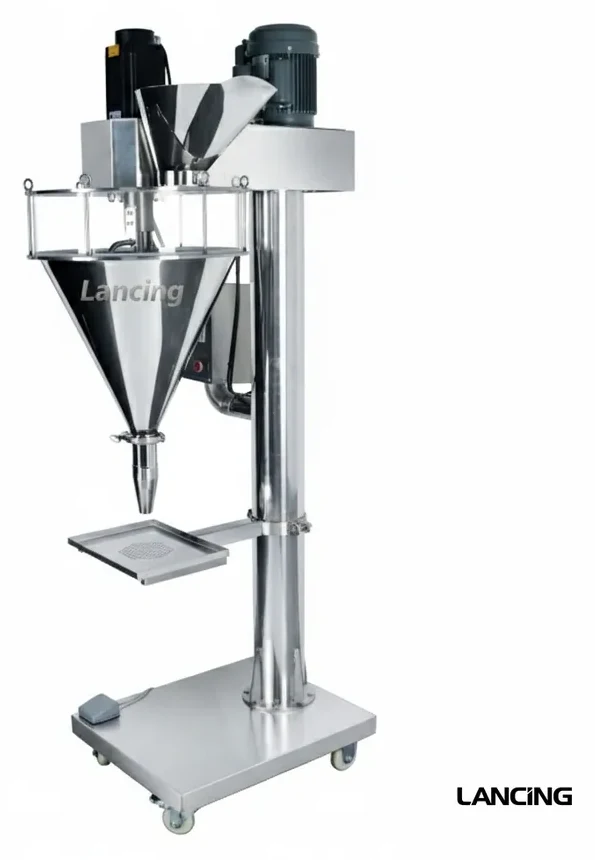
 Bench / compact
Semi-automatic auger fillers
Compact auger filling for short runs, product trials, smaller batches and operator-presented jars, bottles, tubs or pouches.
View routeA focused route for buyers comparing auger filling machines for dry powders, from compact semi-automatic filling through to automatic powder packaging lines.
The right auger filler depends on how the product behaves in the hopper and at the fill point. Free-flowing, dusty, cohesive, aerated or settling powders can require different screw, agitation, feed and discharge arrangements.
Real product samples help confirm the hopper, auger and fill-head setup before the final specification.
Free-flowing, dusty, cohesive and aerated powders need different screw, hopper and discharge arrangements to control accuracy and presentation.
Jars, bottles, tubs, pouches, sachets and VFFS bags each create different positioning, filling, settling and closing requirements. The pack format should be reviewed with the powder before equipment is shortlisted.
Send pack drawings, photos or samples alongside product details to avoid a generic recommendation.
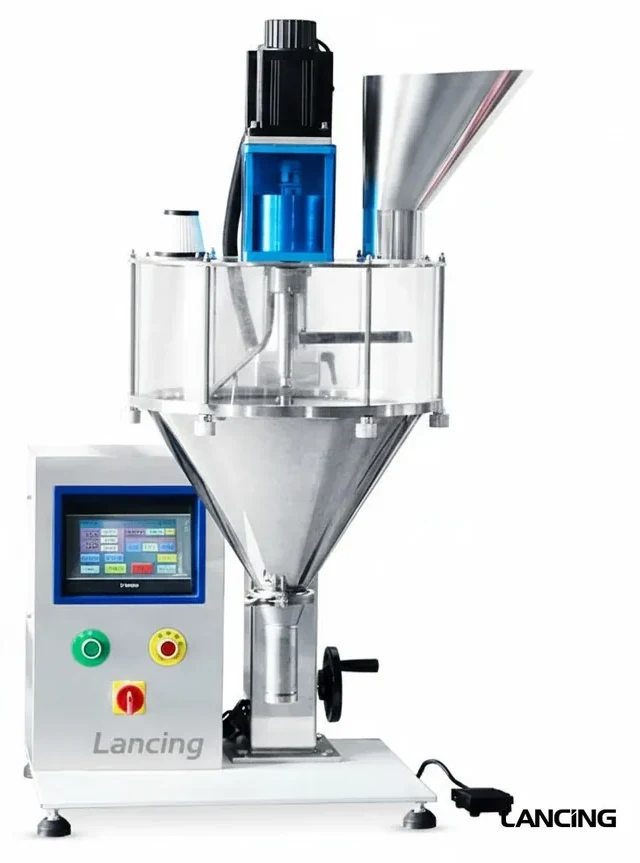
Bench / compact
Compact auger filling for short runs, product trials, smaller batches and operator-presented jars, bottles, tubs or pouches.
View route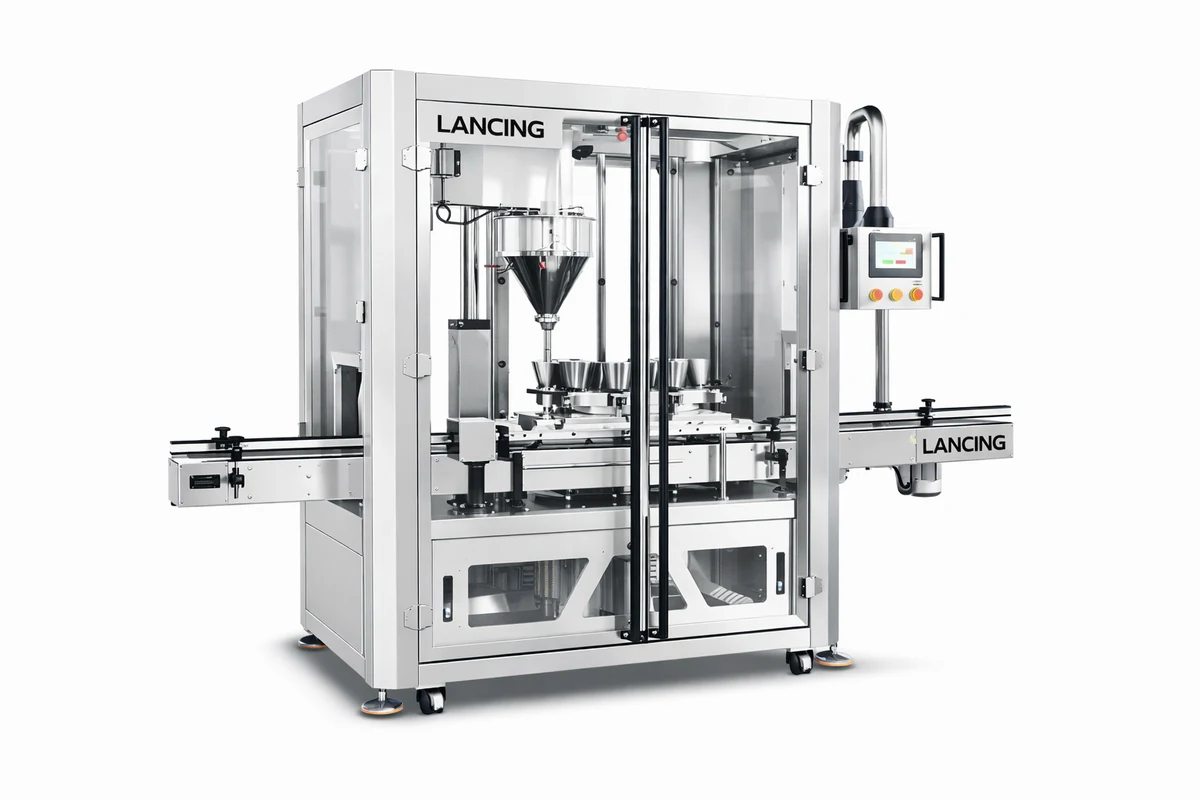 Inline automation
Conveyor-fed auger filling routes for powders that need repeatable dosing, container handling and integration with closing or labelling.
View route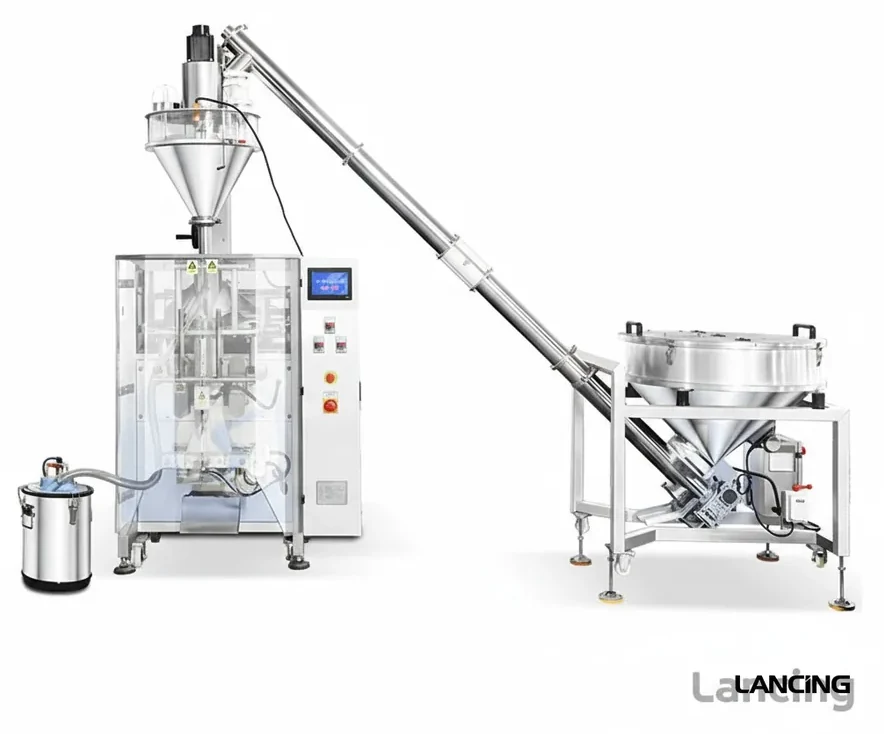 Bagging / roll film
Auger dosing integrated with vertical form fill seal bagging for powder pouches, sachets and formed bags from roll film.
View route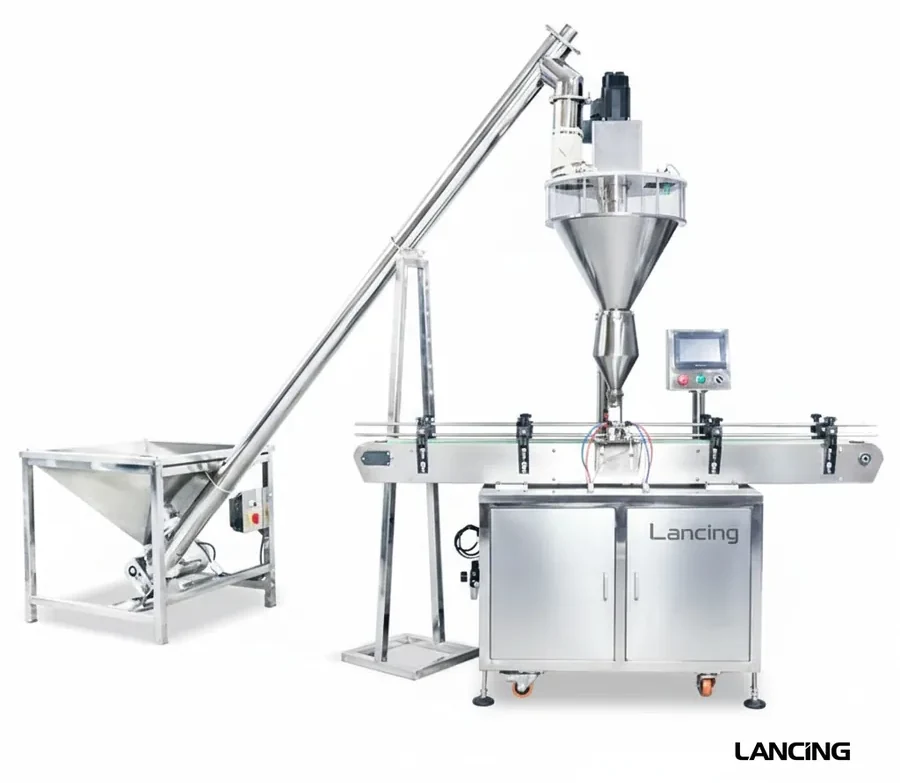 Line planning
Product feed, filling, settling, capping, sealing, labelling, coding and checking planned as one dry-product route.
View route
Route
Auger filling routes for spices, seasonings, herbs and mixed dry ingredients.
View route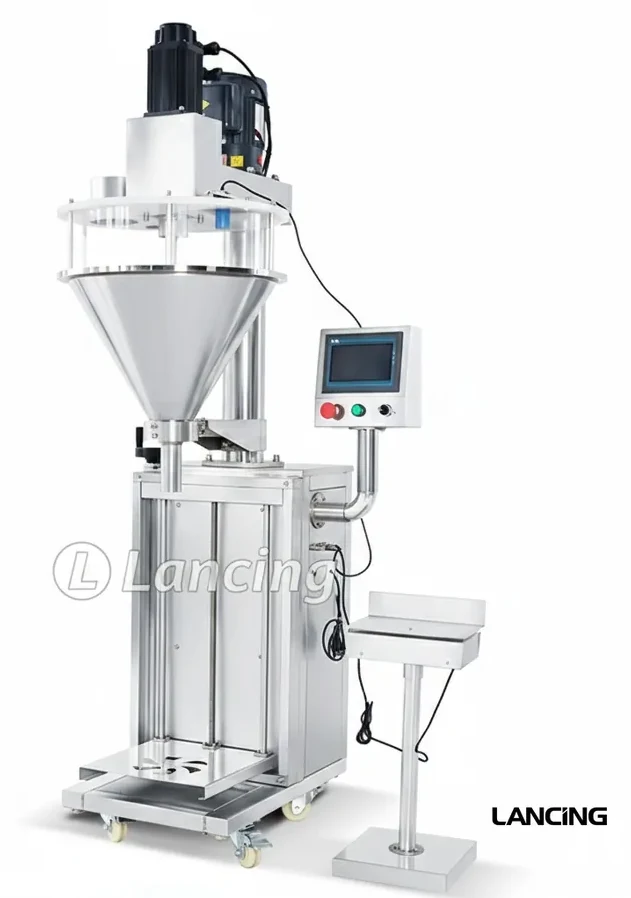 Route
Route
Dry-powder filling for sports nutrition, supplement tubs, pouches and jars.
View route
Route
Powder filling layouts for flour, starches, baking powders and dry mixes.
View route
Route
Practical auger-filling considerations for detergent, cleaning and industrial powders.
View routeNo. Powders with the same broad name can differ in bulk density, flow, aeration, cohesion and dust. Representative samples, the target fill range and the actual pack should determine the tooling and feeding route.
An auger meters a controlled volume. Changes in powder density or presentation around the screw can change the mass delivered, so include hopper refill, agitation, pauses and restart in the trial record.
Compare a weight-led route when the product feeds reliably as granules or pieces, or direct weight control is the main requirement. Use the same product, pack and acceptance method to compare weight results, accepted output and handling.
Send the product, pack format, target fill weight and required output so Lancing can suggest the most suitable auger filler route.
Servo control can repeat a screw movement, but repeatable filled weight also requires the powder around the screw to remain consistent. Bulk density, hopper level, agitation, aeration and bridging should therefore be measured or observed during the same trial as fill accuracy.
Review how product is loaded, screened or transferred, whether the hopper refills automatically and whether the refill changes density or entrained air. Check that the agitator prevents bridging without separating or damaging the product.
Match the screw, tube, outlet and filling height to the real pack. Observe product cut-off, dust escape, settling and the condition of the neck or seal area before the pack moves to capping or sealing.
A useful fill study identifies the product batch, target, accepted limits, auger and outlet, hopper condition, recipe, scale capacity and resolution, number and sequence of fills and the output rate. It should include start-up, stable running, refill and restart. The result can then be assessed against the agreed process or regulatory requirement without presenting a single percentage as universal.
| Record | Why it belongs with the result |
|---|---|
| Product and batch | Confirms which formulation and condition were tested. |
| Bulk-density method | Shows how the relationship between screw volume and weight was established. |
| Tooling and settings | Makes the trial reproducible and links results to the correct auger set. |
| Pack and opening | Confirms the physical filling conditions and headspace. |
| Fill sequence | Reveals drift, start-up effects and outliers rather than hiding them in an average. |
| Rate and interventions | Connects the accuracy result to the output and operator actions under which it was achieved. |
An auger controls the volume displaced by the screw. If the powder becomes more or less dense, the delivered weight can change even when the screw setting remains the same.
Sometimes, but hopper geometry, agitation, screw profile, outlet and settings may need to change. Representative samples should be tested before assuming one configuration will suit every product.
Agree the product batch, tooling, target, sampling plan, scale resolution, line speed and environmental conditions, then record consecutive fill results. Accuracy should always be stated with those test conditions.
The mouth or opening, pack stability, fill height, available headspace and the closing or sealing method all influence the nozzle, support and dust-control arrangement.
The auger is the dosing device. Forming and sealing roll-film bags requires a VFFS machine, while premade pouches need their own feeding, opening and sealing system.
Send representative powder, the target range, pack drawings or samples, required output, tolerance, cleaning constraints, utilities, site layout and details of any capping, sealing, labelling, coding or checking equipment.
Use the auger filler enquiry checklist to provide density, fill range, samples, output and cleaning requirements for a practical review.
| Variable | Why it matters | How to verify |
|---|---|---|
| Bulk density and aeration | Changes the mass delivered by a volumetric screw movement. | Record loose/settled values and start, refill and restart results. |
| Hopper presentation | Bridging, rat-holing or flooding changes screw charging. | Observe level, agitation and feeder events. |
| Auger and outlet set | Controls dose resolution, flow and cut-off. | Identify each part and retain it with the approved recipe. |
| Pack geometry | Affects filling height, dust, spillage and product settling. | Use production packs at limits. |
Compare the LU-FM710, LU-FM750F and LU-FM4A, then define the proof on the trial and FAT guide.
If results drift, use the troubleshooting matrix before changing several settings.
The same product category can contain powders that feed, settle and release very differently.
No. A product name does not define particle distribution, moisture sensitivity, aeration, cohesion, bulk density or dust behaviour. Machine and tooling selection should be based on a representative sample, the actual fill range and the intended pack rather than a broad ingredient label.
Read which powders suit auger filling for the practical screening factors.
Direct link to answerRecord loose and settled bulk density, then observe how density changes after transport, hopper refill, agitation, pauses and repeated dosing. A volumetric auger delivers a controlled volume, so a change in the mass held within that volume can change the resulting fill weight.
The accuracy-evidence guide explains how to test those conditions.
Direct link to answerA narrow opening, unstable base, flexible mouth, low headspace, static-prone material or sensitive rim and seal area can turn a simple dosing task into a pack-handling problem. The filling head, support, clamp, height and settling time must be matched to the real pack.
Send the smallest and largest production packs, including normal manufacturing tolerances where available.
Direct link to answerRepresentative samples allow Lancing to assess feed behaviour, tooling and pack presentation together.
Powder filling decisions are strongest when the enquiry includes more than an ingredient name. Bulk density, flowability, dust, refill behaviour and pack opening all affect whether an auger filler, weigh-supported route or another system should be trialled.
The most useful evidence is a representative sample, loose and settled behaviour, dust observations, target fill range, pack samples and the required accepted output. This information shows whether auger dosing should be tested on its own or with weighing and checkweighing.
Use the bulk-density and flowability test before requesting a trial when the product is fine, dusty, cohesive or variable.