 Route
Route
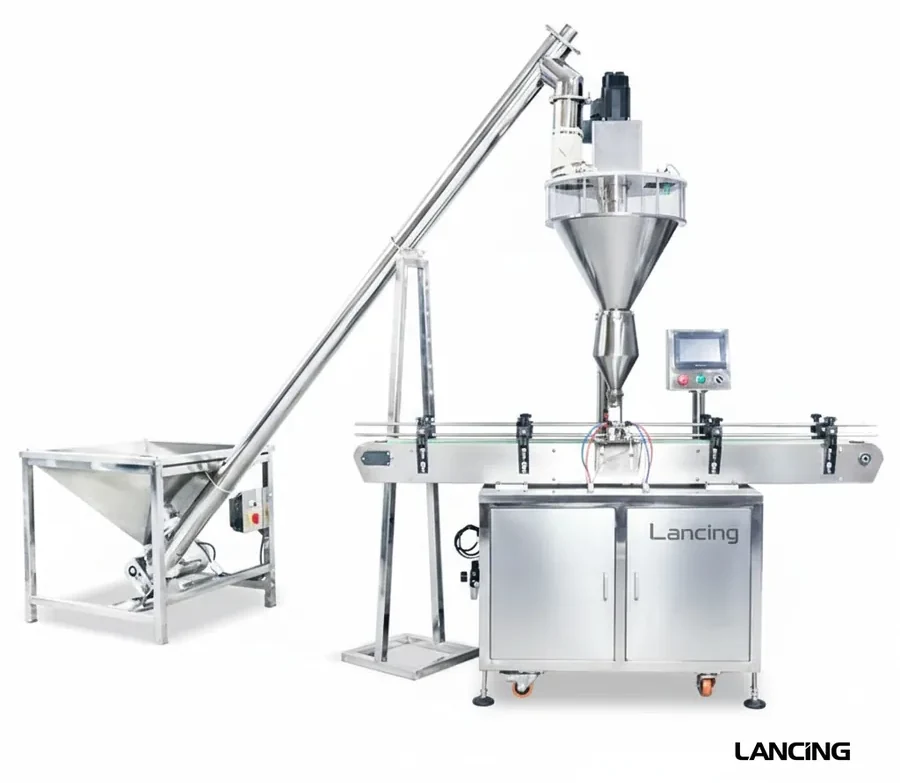
How to choose an auger filler
A buyer guide to matching auger fillers to product behaviour, pack format and output.
View routeSupport routes for powder filling machinery projects, from specification and line layout through to installation, commissioning, handover, spares and ongoing aftercare.
Auger filler projects are easier to commission when layout, utilities, samples, operators and downstream equipment have been discussed before delivery. Support should cover the full route from brief to handover.
Make spare parts, change parts and support expectations part of the buying decision.
Many powder lines need more than the filler. Capping, induction sealing, heat sealing, labelling, coding, checkweighing and conveyors should be considered when the layout is being planned.
Clarify what is included in the line quote and what remains by others.
Route
A buyer guide to matching auger fillers to product behaviour, pack format and output.
View route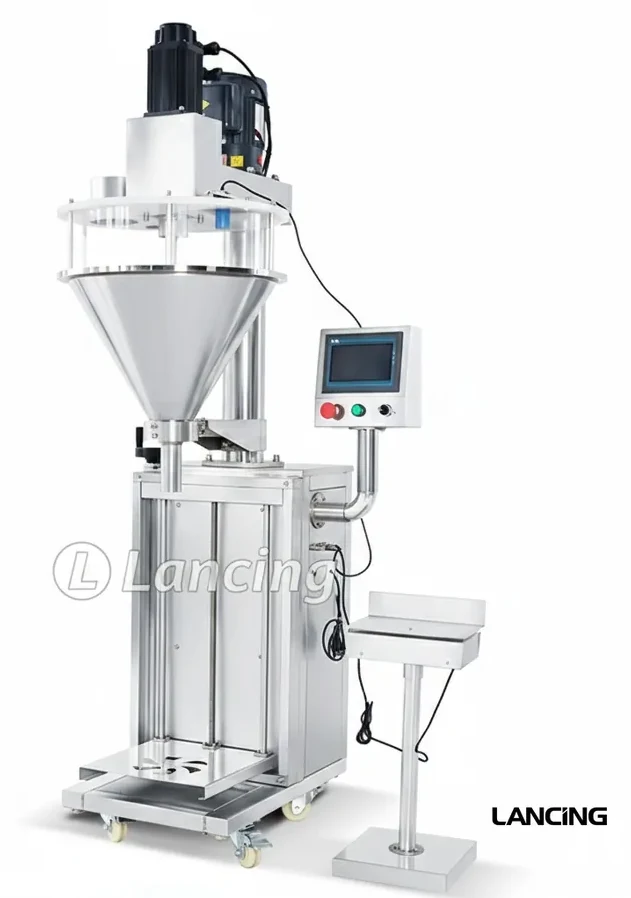 Route
Route
Compare auger filling with weigh-head, multihead and cup-dosing routes.
View route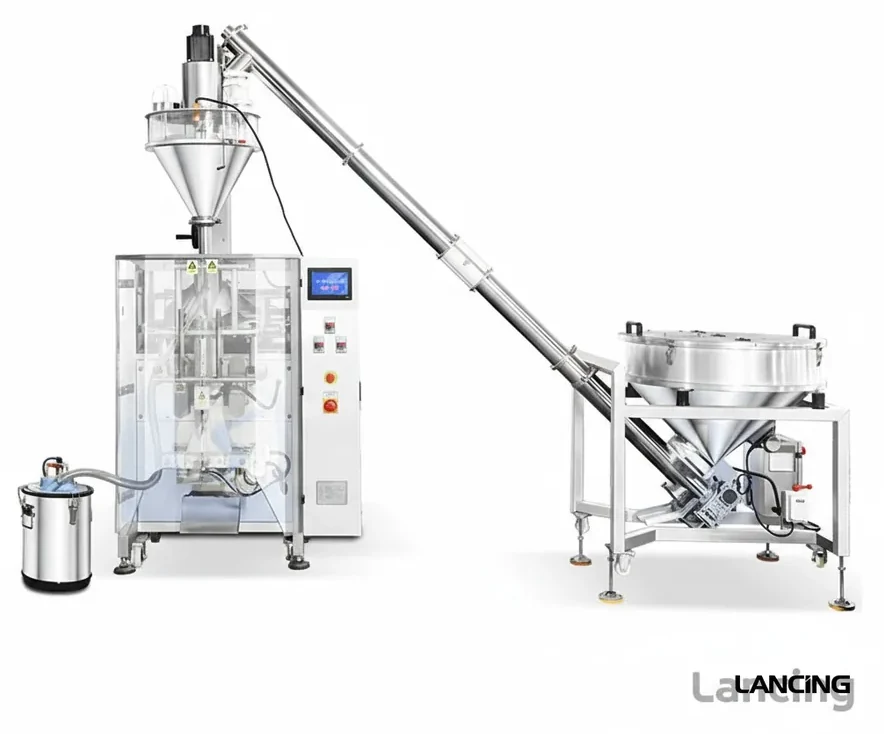 Route
Route
Plan hopper design, filling head, extraction and line layout around dusty powders.
View route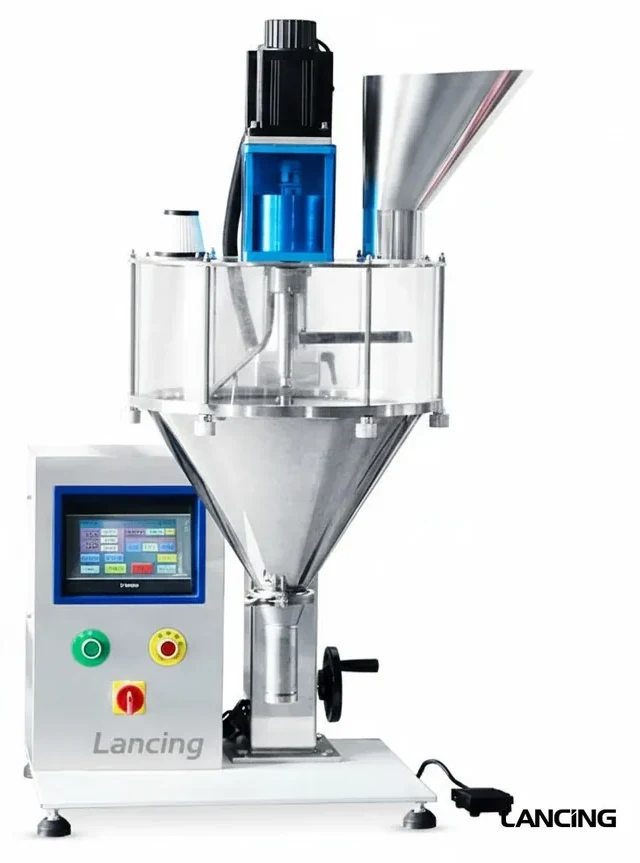 Route
Route
What to send before asking for an auger filling machine quotation.
View route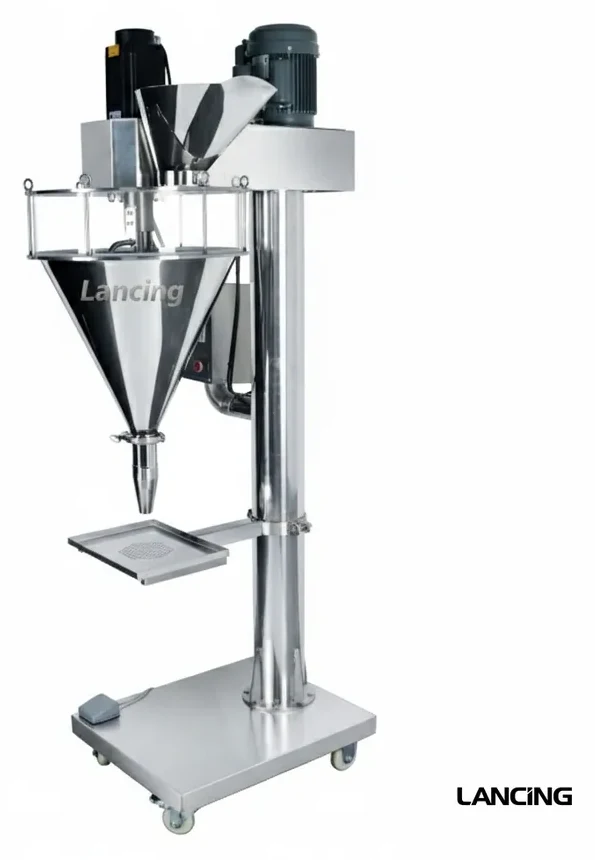 Bench / compact
Compact auger filling for short runs, product trials, smaller batches and operator-presented jars, bottles, tubs or pouches.
View route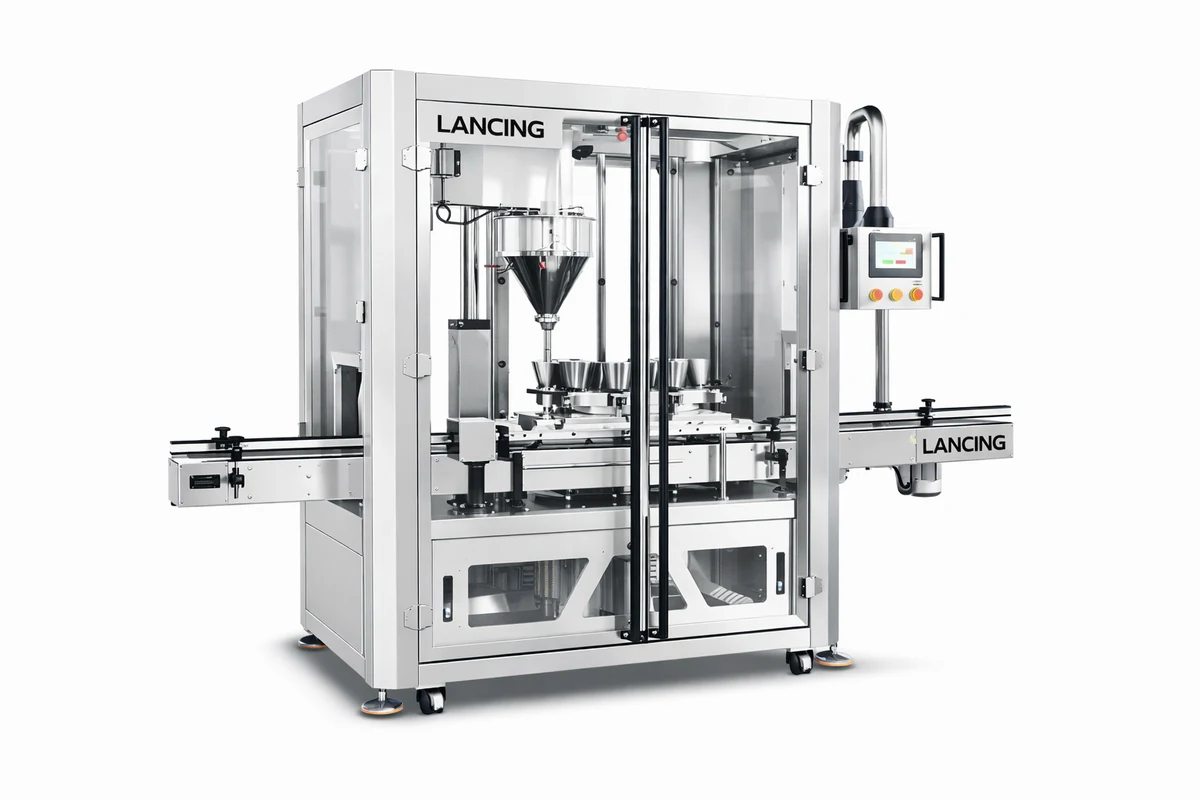 Inline automation
Conveyor-fed auger filling routes for powders that need repeatable dosing, container handling and integration with closing or labelling.
View route
Bagging / roll film
Auger dosing integrated with vertical form fill seal bagging for powder pouches, sachets and formed bags from roll film.
View route
Line planning
Product feed, filling, settling, capping, sealing, labelling, coding and checking planned as one dry-product route.
View routeAuger fillers are normally used for powders and some fine granules where controlled screw dosing gives a more suitable route than a pump, cup filler or basic gravity feed.
Yes, but the container handling and discharge setup changes. Rigid containers, premade pouches, VFFS bags and sachets all need different presentation and sealing arrangements.
Send the product name, sample behaviour, fill weight range, pack dimensions, target output, accuracy requirement, available space and any sealing, capping, labelling or coding steps.
Send the product, pack format, target fill weight and required output so Lancing can suggest the most suitable auger filler route.
Effective support is faster when the machine condition can be compared with an approved production baseline. Record the model and serial details, fitted auger set, recipe, product and pack, recent maintenance and the exact sequence that leads to the problem.
| Record | Useful detail |
|---|---|
| Machine identity | Model, serial number, control version and photographs of the complete machine and affected area. |
| Tooling set | Auger, tube, spout or nozzle identification and the approved product, fill range and pack. |
| Recipe and result | Settings, target, actual fill sequence, output, hopper state and what changed from normal production. |
| Alarm or fault | Exact message, time, machine state, repeatability and the steps already taken. |
| Cleaning or maintenance | Parts removed, work completed, replacement parts and first-off checks after reassembly. |
| Media | Clear photographs or short video showing product flow, noise, motion, leakage, dust or the failed sequence. |
A settings adjustment cannot prove that an existing auger, outlet, agitator or pack guide is suitable for a materially different density, flow behaviour, opening or target range. Review changed applications against the original tooling basis and run an agreed sample test where needed.
Use the enquiry checklist for new products and the dust-control guide when product escape or extraction has changed.
Keep the machine model and serial details, tooling identification, recipe or settings, product and pack batch, alarm history, photographs or video and a clear description of what changed before the issue appeared.
Yes. Augers, tubes, spouts, nozzles and pack guides should be matched to the approved product and format so the correct set can be selected and inspected before use.
Complete the agreed safety and line-clearance checks, run the machine at controlled conditions, inspect the first packs and verify the dose and downstream handling before releasing normal production.
Remote support can help diagnose settings and equipment condition, but it cannot prove a new powder, pack or tooling combination. Changed applications should be reviewed and trialled.
Provide the machine model, serial number, photographs of the part and its location, dimensions where relevant, and the product or format tooling set with which it is used.
Clear records and media help Lancing distinguish a settings issue, product change, tooling problem or mechanical fault before the next action is agreed.
Fast fault diagnosis depends on knowing what changed. Retain the product batch, tooling IDs, recipe, hopper condition, result sequence, alarms and photographs or video with the support request.
Separate measurement, product feed, tooling, pack and control causes.
Open guideControl line clearance, contact parts, reassembly and first-off release.
Open guidePrepare services, product, packs, operators and acceptance checks.
Open guideUseful aftercare starts with the machine serial number, installed software or control version, fitted auger/tube/nozzle set, approved recipe, product and pack. That information helps distinguish a component fault from a changed product, incorrect tooling, altered hopper level or downstream restriction.
Record serial number, control version, electrical build and the installed options.
Mark auger, tube, nozzle and support parts so the approved set is not mixed with another recipe.
Retain target, settings, hopper method, scale checks and the conditions used to approve the product.
Order wear and control items against the machine identity rather than a generic photograph alone.
Use the output and capacity guide to check whether the constraint sits in product feed, pack handling, weighing, closing or changeover before altering the dosing recipe.
Use the cleaning and changeover guide to record isolation, removed contact parts, inspection, reassembly and first-off verification.
Include photographs or video, current recipe, product, tooling and the last known acceptable run so Lancing can review the issue efficiently.
Support is easier when the machine, powders and formats are documented from the start. Spare screws, tubes, seals, sensors, tooling and weighing interfaces should be linked to the products and packs they serve, not kept as anonymous parts.
Use the new auger filler maintenance and spares guide to prepare the support questions before installation.
Support is easier when the site keeps the product sample notes, bulk-density observations, agreed tooling, weighing method, reject settings and accepted-output evidence from the original project. These records help diagnose later changes in product, pack or output.
For new enquiries, the same information helps Lancing decide whether maintenance, spare tooling, checkweighing or hopper feeding should be included in the scope.
Aftercare is easier when the machine specification includes the checks that operators will repeat during production. For food or supplement powders, include cleaning access and allergen changeover. For weight-sensitive packs, include calibration records and finished-pack verification.
Connect food-contact access, cleaning and dust control to the initial machine brief.
Review hygiene checks →Define setup checks, scale method and restart checks before production acceptance.
Review weight checks →Plan wear parts, auger tooling and changeover support for the chosen powder route.
Plan support →Auger filler support is strongest when service records do more than note mechanical condition. For repeatable production, keep a record of installed tooling, screw and tube condition, hopper setup, sensor checks, weight-verification method, guarding checks and any setting changes made during the visit.
For quality-managed sites, the validation evidence guide can help decide which service and restart checks need to be retained as part of the machine history.