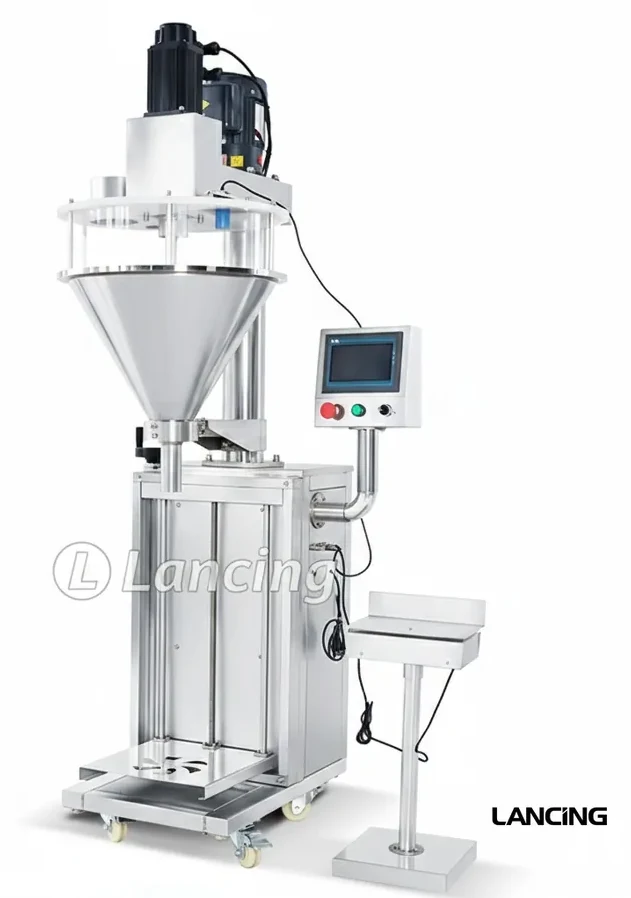
 Route
Route
Auger vs weigh filling
Compare auger filling with weigh-head, multihead and cup-dosing routes.
View routeChoose an auger filler by matching the powder, target fill, container or pouch, output target, dust-control need and downstream packaging route.
The auger filler has to suit the product. Bulk density, dust, bridging, aeration, particle size and settling behaviour can all affect hopper design, screw choice, agitation and fill-head control.
A better sample description almost always improves the first shortlist.
Semi-automatic filling can be right for smaller batches and flexible formats. Automatic auger filling becomes more suitable when labour, repeatability, conveyor handling or downstream integration matter more.
Do not compare speed figures until the pack and product behaviour are clear.
Route
Compare auger filling with weigh-head, multihead and cup-dosing routes.
View route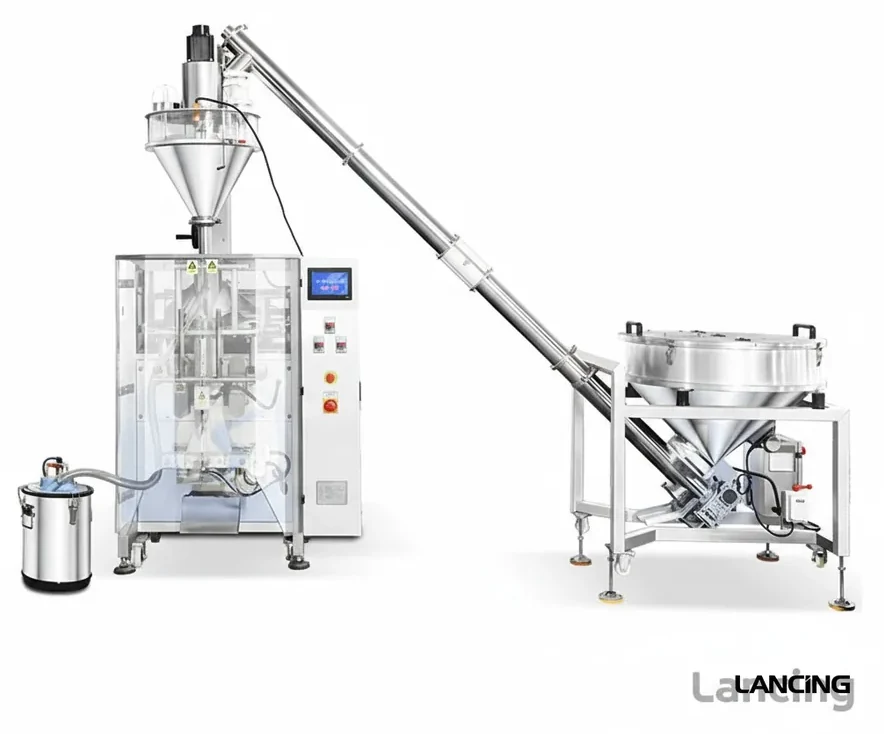 Route
Route
Plan hopper design, filling head, extraction and line layout around dusty powders.
View route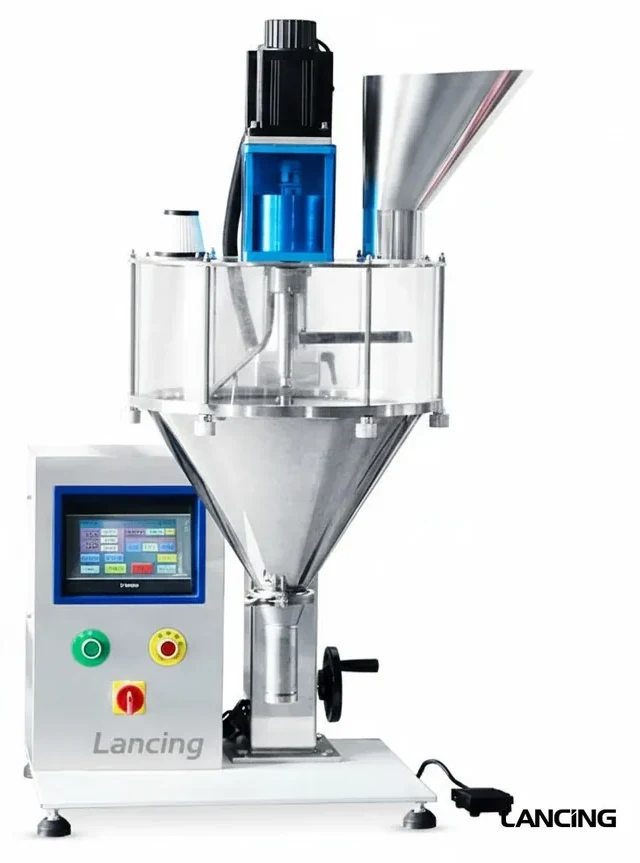 Route
Route
What to send before asking for an auger filling machine quotation.
View route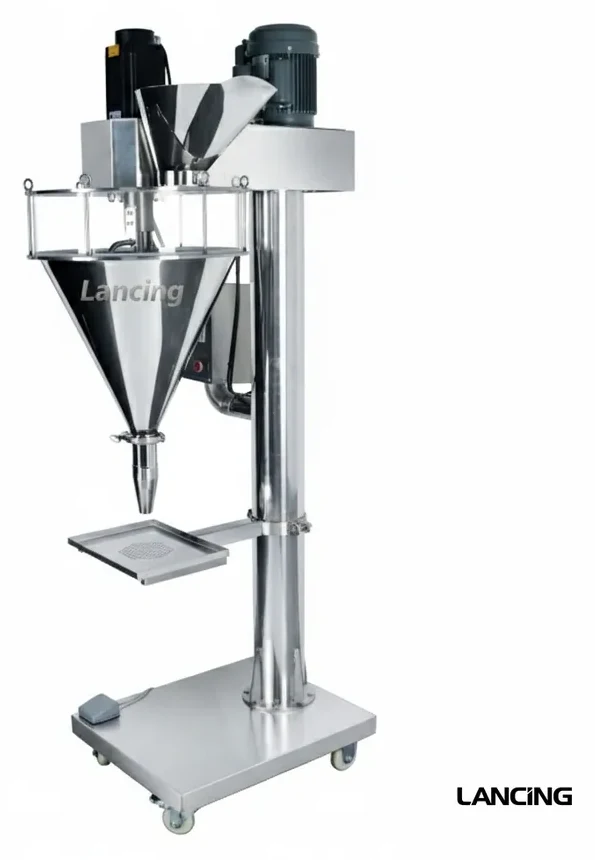 Bench / compact
Compact auger filling for short runs, product trials, smaller batches and operator-presented jars, bottles, tubs or pouches.
View route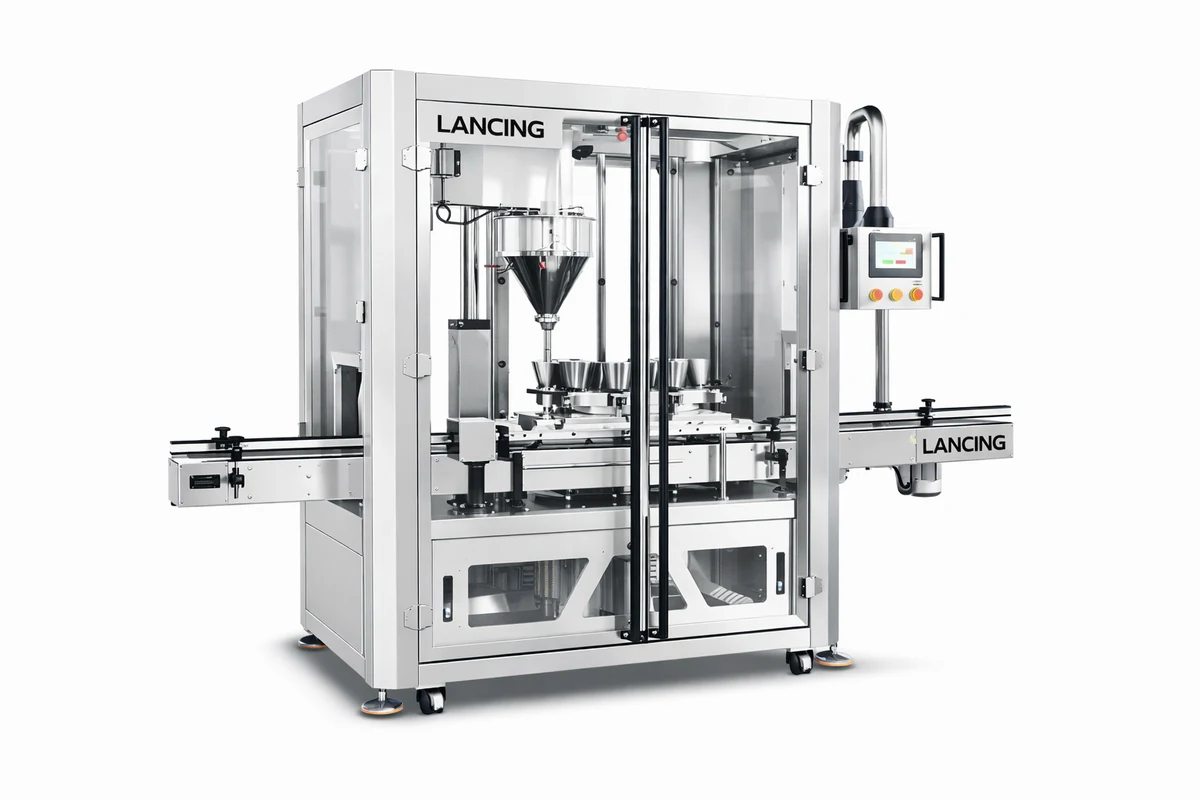 Inline automation
Conveyor-fed auger filling routes for powders that need repeatable dosing, container handling and integration with closing or labelling.
View route
Bagging / roll film
Auger dosing integrated with vertical form fill seal bagging for powder pouches, sachets and formed bags from roll film.
View route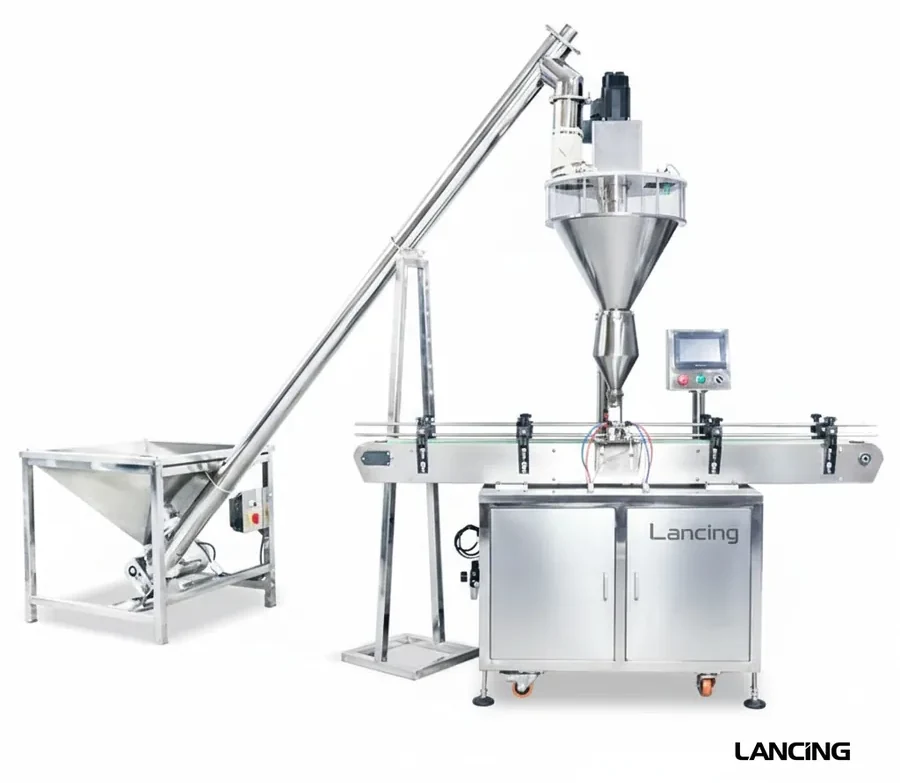 Line planning
Product feed, filling, settling, capping, sealing, labelling, coding and checking planned as one dry-product route.
View routeAuger fillers are normally used for powders and some fine granules where controlled screw dosing gives a more suitable route than a pump, cup filler or basic gravity feed.
Yes, but the container handling and discharge setup changes. Rigid containers, premade pouches, VFFS bags and sachets all need different presentation and sealing arrangements.
Send the product name, sample behaviour, fill weight range, pack dimensions, target output, accuracy requirement, available space and any sealing, capping, labelling or coding steps.
Send the product, pack format, target fill weight and required output so Lancing can suggest the most suitable auger filler route.
A repeatable bench method gives the machinery trial a better starting point. Use representative product, record the batch and conditions, and apply the same handling method to each repeat.
Allow the sample to reach the intended test condition and record batch, storage and any visible clumps or separation.
Fill a clean container of known volume without deliberate compaction, level consistently and record net mass.
Apply an agreed repeatable settling method, record the final volume or mass relationship and repeat it.
Observe pouring, outlet flow, residue, clumping, rat-holing, bridging and the response to gentle agitation.
Evaluate the proposed auger, tube, outlet and hopper presentation using the actual fill range.
Record consecutive fills, sequence, target, actual weights, rate, hopper state and any adjustments or rejects.
Remove, clean, inspect and refit the agreed contact parts, then verify the first accepted packs after restart.
| Field | Record |
|---|---|
| Product identity | Product name, formulation or grade, batch, storage condition and sample date. |
| Density method | Container volume, filling method, settling method, repeat measurements and calculated values. |
| Flow observations | Pouring behaviour, bridging, rat-holing, flooding, clumping, dust, static and response to agitation. |
| Pack details | Opening, dimensions, rigidity, headspace, closure or film and how the pack is supported. |
| Tooling | Auger, tube, spout or nozzle identity, hopper arrangement and agitator setting. |
| Fill data | Target and limits, scale resolution, results in sequence, output condition, adjustments, rejects and observations. |
| Changeover | Parts removed, cleaning method, inspection, reassembly checks and first-off result. |
A large difference between loose and settled density indicates that aeration or compaction may change the weight delivered for a fixed auger movement. Bridging or rat-holing indicates that consistent screw charging may be difficult. Those observations guide hopper, agitator, tooling and weighing-feedback decisions, but they do not replace the production-pack trial.
Continue to the auger versus weigh comparison if the product is a free-flowing granule or mixed particulate, or use the enquiry checklist to prepare samples.
Use a clean container of known volume, fill it without deliberate compaction, level the surface consistently and record the net product mass. Repeat the method and identify the product batch and conditions.
The difference shows how much the product can compact or deaerate. A powder that changes density substantially may need controlled hopper presentation, agitation and weight verification.
Bridging is when product forms a stable arch or obstruction above an outlet, interrupting feed to the auger. The trial should record where it occurs and whether gentle agitation restores flow.
The run length should be agreed from the product risk, tolerance and production requirement. It must be long enough to establish stable feed, capture start-up and steady-state results and reveal drift rather than relying on one or two favourable fills.
Yes. The actual opening, rigidity, headspace, static behaviour and closing or sealing route can affect the practical filling result.
Record the product batch, target, tooling, hopper condition, machine settings, scale resolution, number and sequence of fills, output rate and any rejected or adjusted results.
Lancing can use the density measurements, flow observations, fill range and actual packs to define the next auger test.
| Production condition | Model or route to examine | Proof required |
|---|---|---|
| Short campaigns, varied rigid packs | LU-FM710 | Pack support, tooling, operator cycle and weight-check method. |
| Broader fill range or larger supported bags | LU-FM750F | Auger bands, hopper feed, net-weight option, dust capture and closing route. |
| Indexed automatic bottles | LU-FM4A | Bottle-location, line-rate, downstream and FAT evidence. |
| Uncertain product behaviour | Sample trial | Density, flow, consecutive fills, refill and restart conditions. |
A buyer can choose the wrong size or configuration if the powder is described only by name. Add a simple bulk-density and flowability check before the enquiry, then decide whether final packs require checkweighing after auger filling.
This helps separate the dosing challenge from the acceptance challenge. The same auger filler can behave differently when the powder settles, floods, bridges or reaches a narrow pack opening.