 Route
Route
How to choose an auger filler
A buyer guide to matching auger fillers to product behaviour, pack format and output.
View routeCompare auger dosing with weigh-head, multihead and cup-filling routes so the filler is selected around the real dry product rather than a generic machine name.
Auger filling can be a practical route for powders that need metered discharge into a container or pack. Weigh filling may suit products where final weight correction is the main concern, while multihead weighing is often used for free-flowing granules and piece products.
The wrong principle can create poor accuracy, dust, slow settling or unreliable discharge.
A product that works in a jar line may need a different route in a pouch or VFFS system. Container mouth size, bag opening, seal contamination and product drop all influence the filler choice.
Compare principles using the actual powder and pack, not the product name alone.
Route
A buyer guide to matching auger fillers to product behaviour, pack format and output.
View route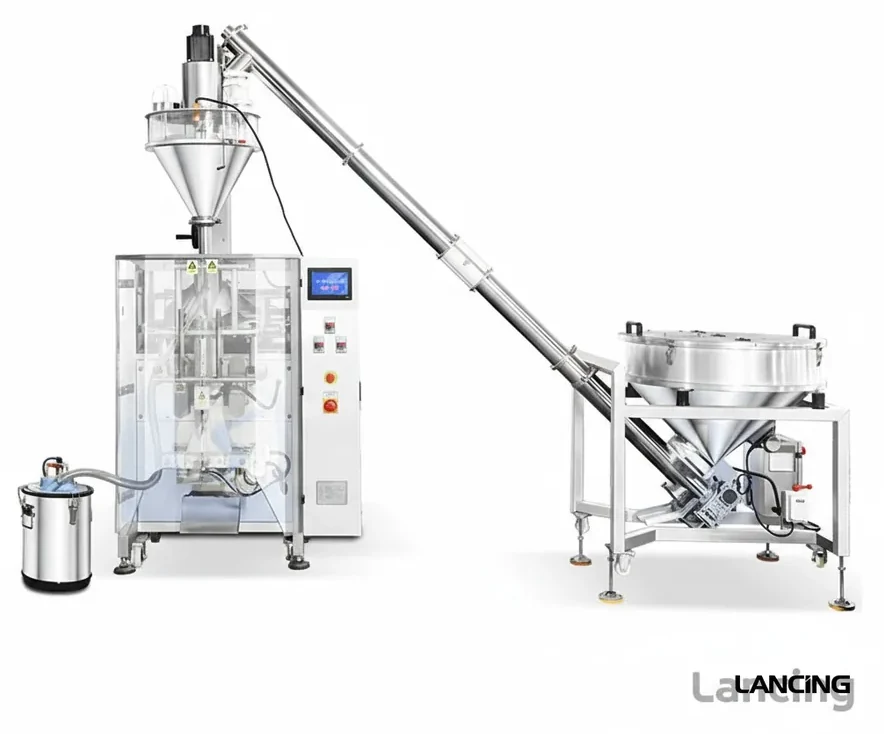 Route
Route
Plan hopper design, filling head, extraction and line layout around dusty powders.
View route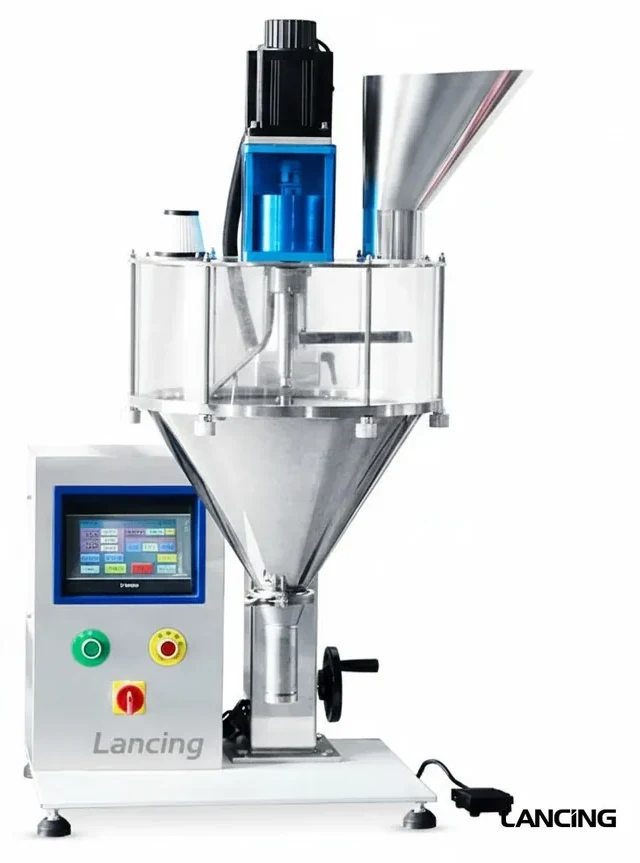 Route
Route
What to send before asking for an auger filling machine quotation.
View route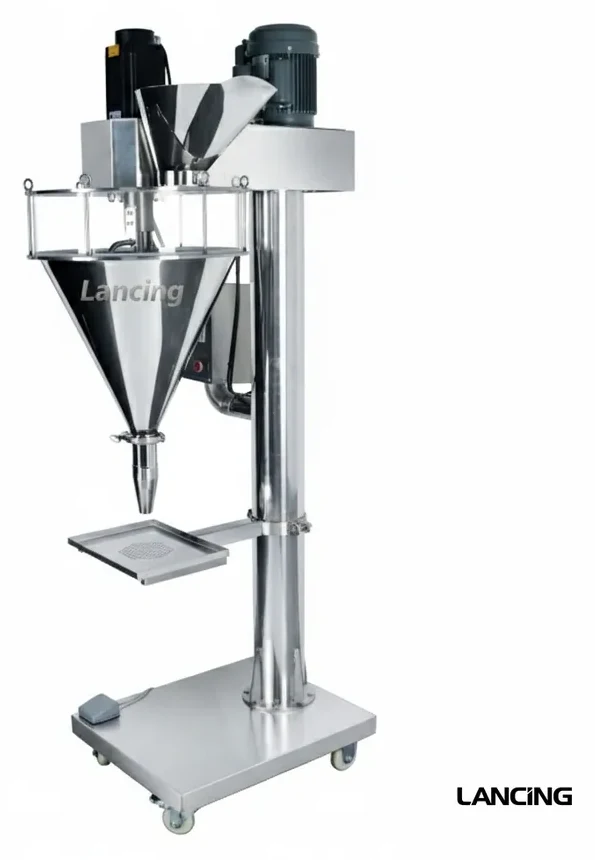 Bench / compact
Compact auger filling for short runs, product trials, smaller batches and operator-presented jars, bottles, tubs or pouches.
View route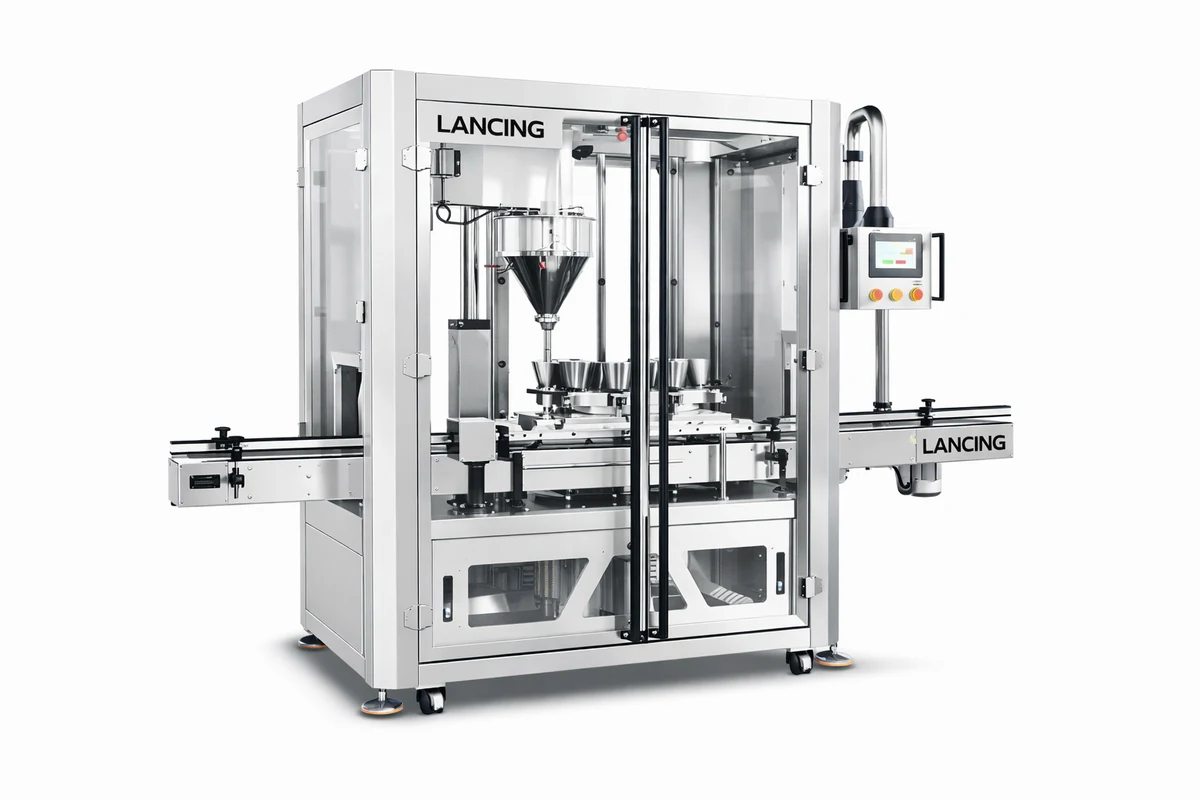 Inline automation
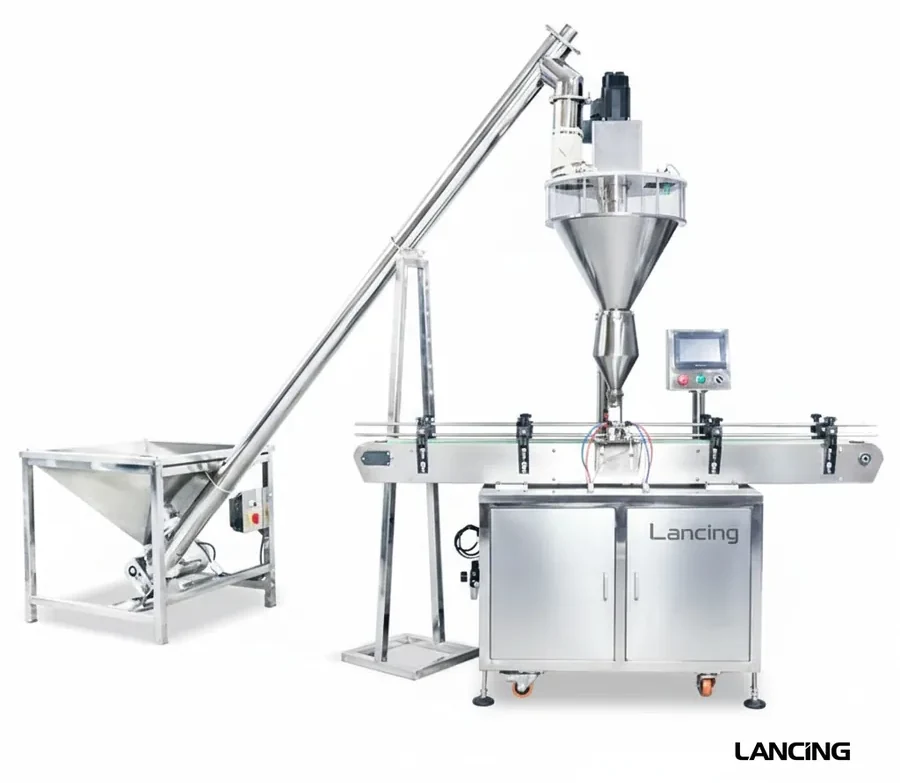
Conveyor-fed auger filling routes for powders that need repeatable dosing, container handling and integration with closing or labelling.
View route
Bagging / roll film
Auger dosing integrated with vertical form fill seal bagging for powder pouches, sachets and formed bags from roll film.
View route
Line planning
Product feed, filling, settling, capping, sealing, labelling, coding and checking planned as one dry-product route.
View routeAuger fillers are normally used for powders and some fine granules where controlled screw dosing gives a more suitable route than a pump, cup filler or basic gravity feed.
Yes, but the container handling and discharge setup changes. Rigid containers, premade pouches, VFFS bags and sachets all need different presentation and sealing arrangements.
Send the product name, sample behaviour, fill weight range, pack dimensions, target output, accuracy requirement, available space and any sealing, capping, labelling or coding steps.
Send the product, pack format, target fill weight and required output so Lancing can suggest the most suitable auger filler route.
Auger, linear weigh, multihead weigh and volumetric cup systems control product differently. The best route depends on whether the product can be presented consistently to a screw, separated into weigh hoppers or metered by a simple fixed volume.
| Dosing route | Control principle | Often evaluated for | Important limitations to test | Pack integration |
|---|---|---|---|---|
| Auger filler | Controlled screw movement displaces a volume of product. | Fine, cohesive, controlled-flow and many powder products. | Bulk-density change, screw charging, bridging, dust, product cut-off and tooling range. | Jars, bottles, tubs, manually held pouches and integration with VFFS or pouch systems. |
| Linear weigh filler | Product is fed into one or more weigh hoppers until the target is reached. | Free-flowing granules, seeds, pieces and some dry particulates. | Product feed consistency, vibration response, sticking, breakage and practical cycle time. | Rigid packs, pouches or baggers where the weighed discharge can be transferred cleanly. |
| Multihead weigher | Several partial weights are combined to approach the target. | Higher-output free-flowing pieces or granules that separate consistently. | Product distribution, hopper feeding, fragile product damage, minimum piece size and discharge control. | Frequently integrated with VFFS and other automated pack-handling systems. |
| Volumetric cup filler | A fixed cup volume is filled and discharged. | Simple, consistent, free-flowing products where density remains stable. | Density variation, product level, cup fill consistency and limited correction for changing product. | Often used with compact or automatic bagging routes. |
This guide explains where an auger should be compared with a weight-led route. For linear and general weigh-filling machinery, continue to Weigh Fillers UK. For multihead and combination weighing, use Lancing Combiweigh. For a broad powder-machine shortlist covering both principles, use Powder Fillers UK.
The auger normally meters a controlled volume through screw rotation. The resulting weight depends on powder bulk density and how consistently product is presented to the screw.
Linear weighing is commonly compared for free-flowing granules, seeds and pieces where product can be vibrated or fed into a weigh hopper without unstable dust or sticking.
Multihead weighing is normally associated with higher-speed combinations of free-flowing pieces or granules. The product must separate and feed consistently into multiple weigh hoppers.
Yes. A weighing station or checkweigher can be used to verify fills and support correction, but its role and response method need to be defined in the controls and acceptance plan.
There is no universal answer. Separation, particle damage, flow, density variation and the required pack appearance should be checked with representative samples.
A product can behave differently at a small dose, a large dose or through a narrow opening. A direct trial gives better evidence than choosing from the product name alone.
Lancing can identify whether an auger, linear weigh or multihead route should be trialled before a machine is selected.
| Observed product behaviour | Auger route | Weigh route |
|---|---|---|
| Fine, cohesive or dusty powder | Often controllable with product-matched screw, agitation, outlet and dust capture. | May not feed or release cleanly from vibratory channels; must be trialled. |
| Free-flowing granules or pieces | Possible only if screw handling does not damage or segregate the product. | Linear or multihead weighing may offer a more direct weight-led route. |
| Large density variation | Volumetric dosing needs controlled hopper presentation or weigh feedback. | Direct weighing can compensate for mass variation if the product feeds consistently. |
| Mixed particle sizes | Check segregation and screw damage. | Check channel distribution, piece count variation and clean discharge. |
Use the actual product and pack. A product name does not determine the correct technology.
Use the same product batch, target, pack, scale and acceptance method for both routes. Record output, rejects, operator interventions, cleanability and product damage alongside weight results. See the sample trial guide.
Many powder filling enquiries start as a choice between an auger filler and a weigher, but a complete comparison should also consider cup dosing, net-weight feedback and checkweighing. Cup filling may suit simple free-flowing products, while net-weight or weigh-assisted routes may be considered where acceptance evidence matters.
For a broader method comparison, use the new volumetric versus gravimetric powder filling guide.