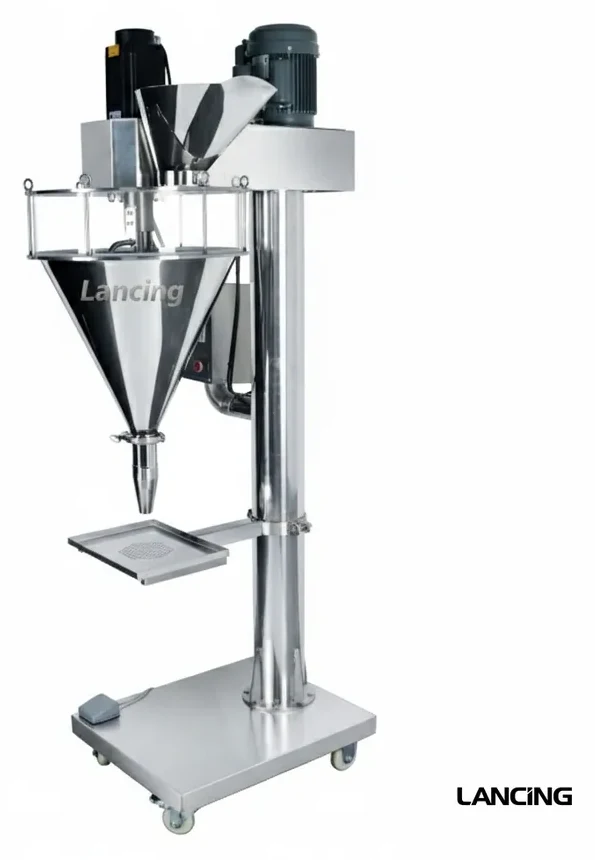
 Bench / compact
Semi-automatic auger fillers
Compact auger filling for short runs, product trials, smaller batches and operator-presented jars, bottles, tubs or pouches.
View routeAuger filling routes for spices and seasonings where dust, aroma, clean-down, fill accuracy and frequent product changeovers need practical planning.
The right auger filler depends on how the product behaves in the hopper and at the fill point. Free-flowing, dusty, cohesive, aerated or settling powders can require different screw, agitation, feed and discharge arrangements.
Real product samples help confirm the hopper, auger and fill-head setup before the final specification.
Spices, seasonings and dry mixes often need careful changeover planning, dust control and container handling around jars, tubs or pouches.
Jars, bottles, tubs, pouches, sachets and VFFS bags each create different positioning, filling, settling and closing requirements. The pack format should be reviewed with the powder before equipment is shortlisted.
Send pack drawings, photos or samples alongside product details to avoid a generic recommendation.
Bench / compact
Compact auger filling for short runs, product trials, smaller batches and operator-presented jars, bottles, tubs or pouches.
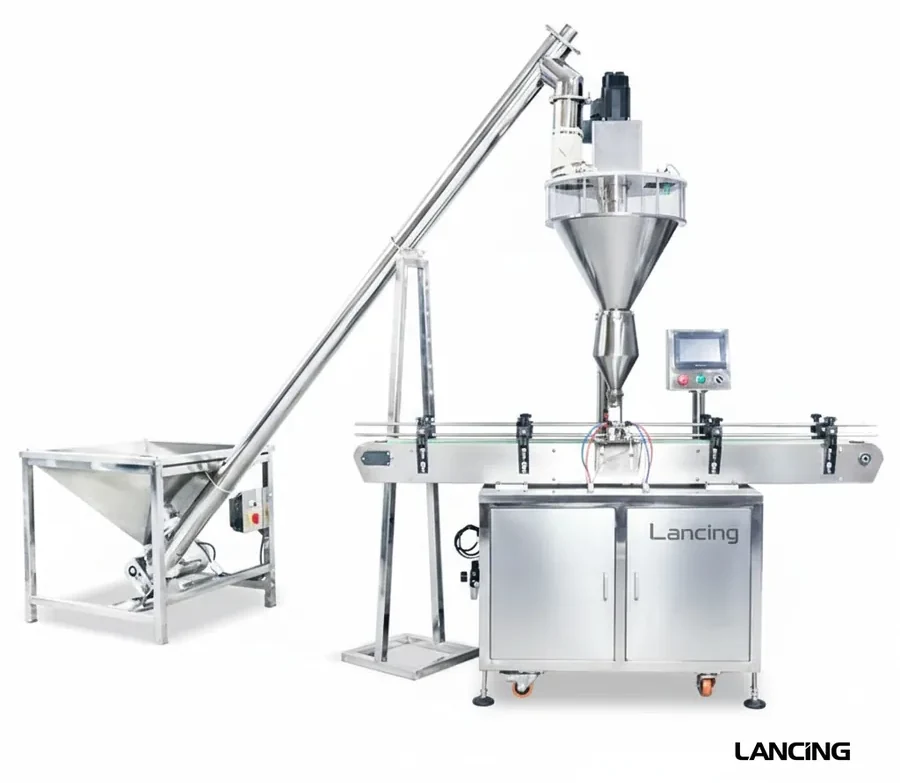
View route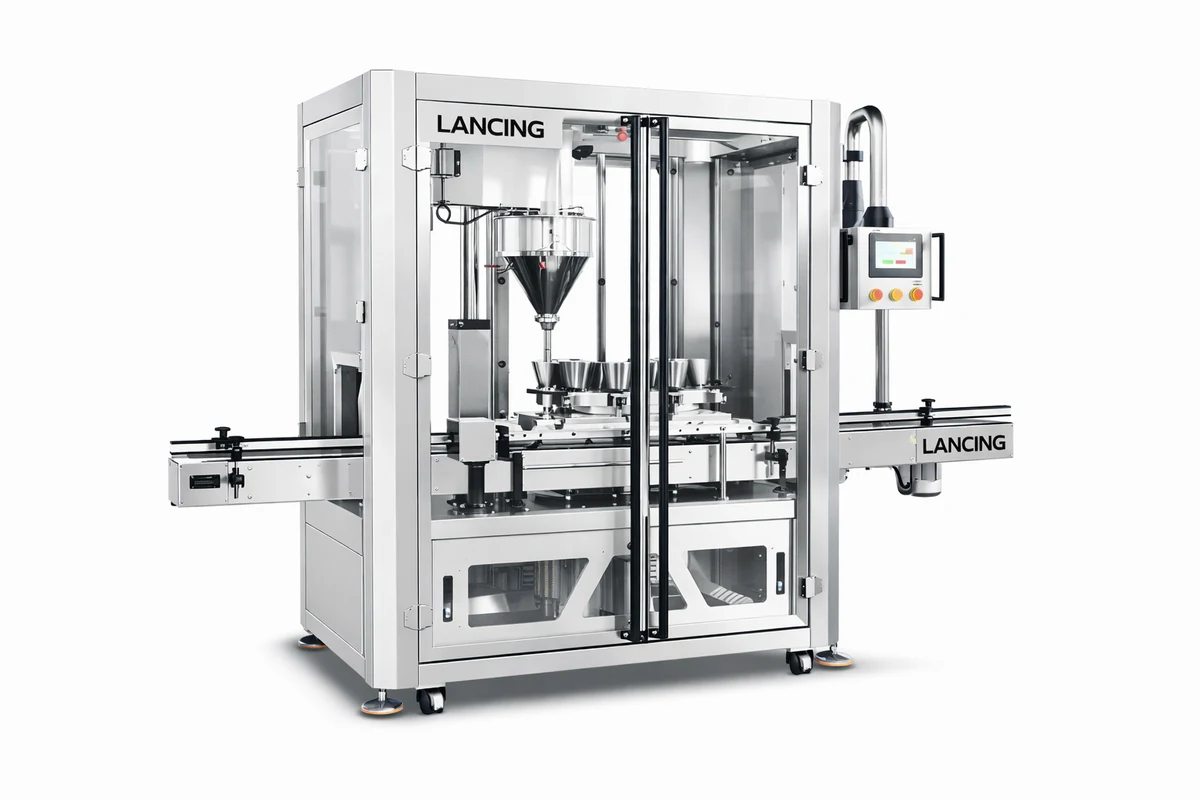 Inline automation
Conveyor-fed auger filling routes for powders that need repeatable dosing, container handling and integration with closing or labelling.
View route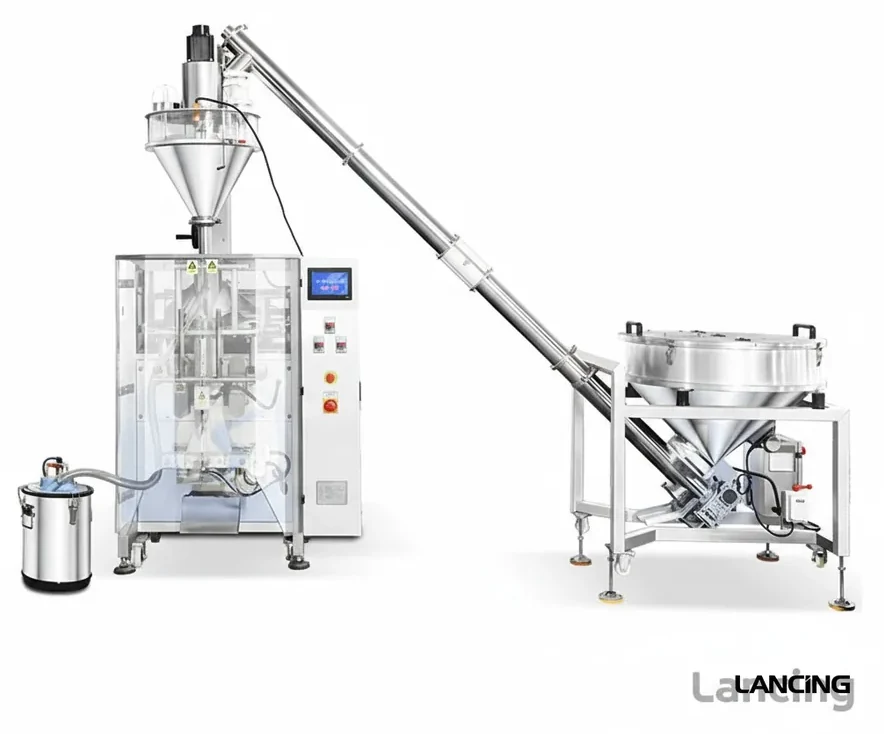 Bagging / roll film
Auger dosing integrated with vertical form fill seal bagging for powder pouches, sachets and formed bags from roll film.
View route
Line planning
Product feed, filling, settling, capping, sealing, labelling, coding and checking planned as one dry-product route.
View route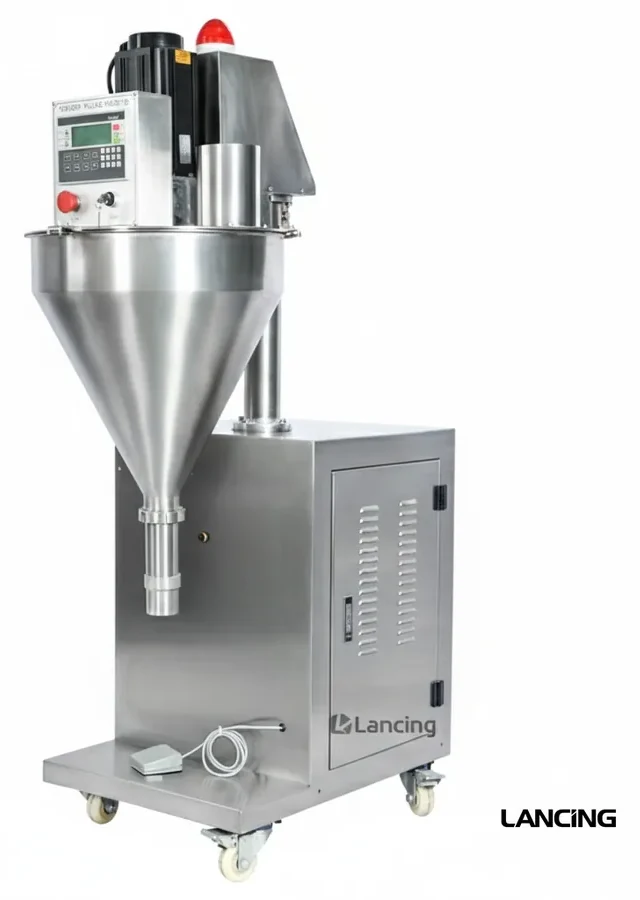 Route
Route
General powder dosing where flow, dust and fill consistency decide the auger route.
View route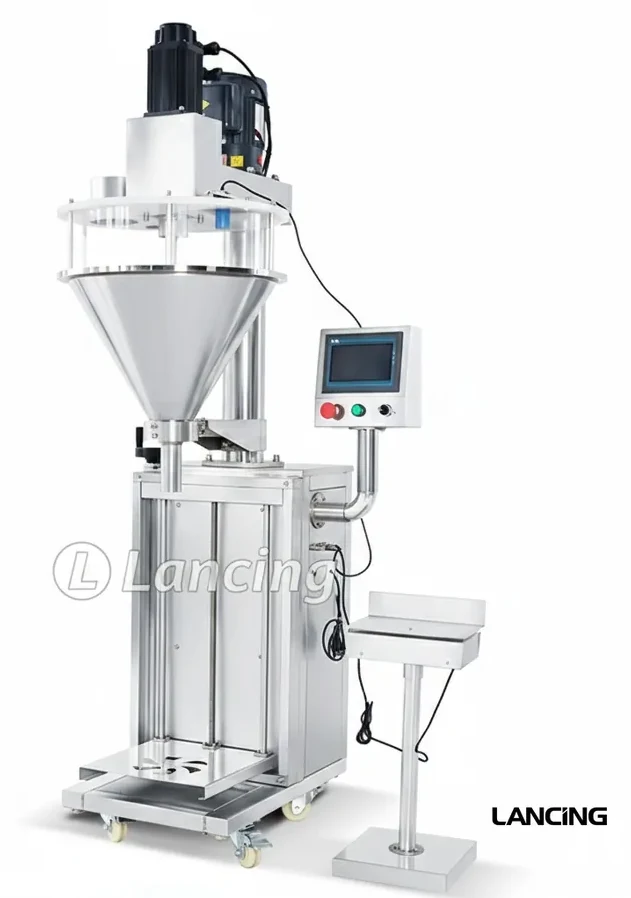 Route
Route
Dry-powder filling for sports nutrition, supplement tubs, pouches and jars.
View route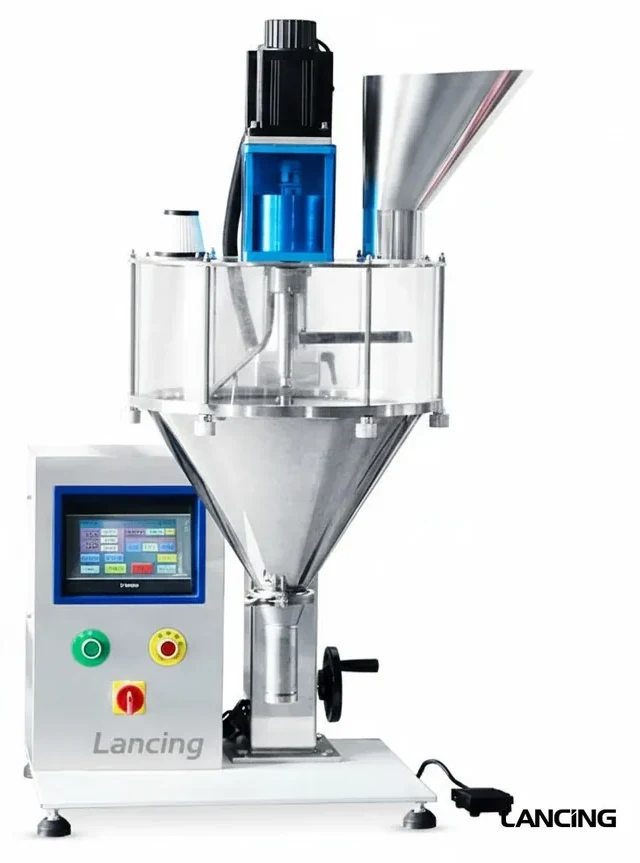 Route
Route
Powder filling layouts for flour, starches, baking powders and dry mixes.
View route
Route
Practical auger-filling considerations for detergent, cleaning and industrial powders.
View routeAuger fillers are normally used for powders and some fine granules where controlled screw dosing gives a more suitable route than a pump, cup filler or basic gravity feed.
Yes, but the container handling and discharge setup changes. Rigid containers, premade pouches, VFFS bags and sachets all need different presentation and sealing arrangements.
Send the product name, sample behaviour, fill weight range, pack dimensions, target output, accuracy requirement, available space and any sealing, capping, labelling or coding steps.
Send the product, pack format, target fill weight and required output so Lancing can suggest the most suitable auger filler route.
Spice powders, herbs and seasoning blends should not be treated as one flow class. Fine dust, coarse flakes, salt or sugar crystals and oil-bearing ingredients can change hopper flow, screw charging, product cut-off and cleaning requirements.
Fine or controlled-flow spice powders are often evaluated on an auger. Free-flowing seeds, pieces or coarse blends may be better suited to direct weighing. Compare the actual product on the auger versus weigh filling guide and use Lancing Combiweigh for specialist linear and multihead weighing information.
Different particle sizes, oil content, fines and blend ratios can change flow, bridging, dust and bulk density. Two products both called seasoning may need different screws, agitation and settings.
The dosing principle may be shared, but jar handling, pouch support, filling height and closing or sealing requirements are different and need separate tooling or machine arrangements.
Define product-contact boundaries, removable parts, cleaning method, line-clearance checks and first-off approval for every changeover. The required evidence depends on the product and the manufacturer’s own quality system.
Dose size, product flow, settling, dust control, container presentation and the closing or sealing step all affect the sustained line rate.
An auger may not be the best first choice for free-flowing granules or pieces. A linear or multihead weighing route should be compared with the actual product.
Send particle-size information, bulk-density data, photos or video of flow, target weights, pack openings, dust observations and representative product and pack samples.
Lancing can compare auger and weighing routes, then define the product trial, cleaning and pack-handling requirements.
Spice, herb and seasoning products vary widely. A fine paprika, mixed seasoning with salt crystals and flaked herb blend may all require different proof even when the final pack looks similar.
| Product or pack factor | Check during sample review | Specification effect |
|---|---|---|
| Fine dusty spices | Check dust release at the outlet and whether powder settles on the jar thread, cap area or seal surface. | Fill height, local extraction and container cleaning around the closure may need attention. |
| Mixed seasonings | Look for segregation between fine powders, crystals and larger particles during feed and agitation. | Hopper action, screw profile and possibly a weighing comparison may be required. |
| Oil-bearing or clingy powders | Watch for smearing, build-up on the outlet, inconsistent cut-off or product sticking inside tooling. | Tooling access, cleaning frequency and discharge design become important. |
| Small jars and bottles | Confirm the smallest opening, shoulder shape and whether the pack remains stable under the fill head. | Operator presentation, automatic indexing and dust management all depend on the real container. |
| Recipe changeover | Define colour, aroma, allergen and flavour cross-contact controls. | Tool removal, cleaning evidence and first-off checks should be planned before equipment selection. |
For spices in jars or bottles, the practical issues are often the container opening, rim cleanliness and cap or induction-liner quality after filling. For spice sachets or small pouches, the product drop, seal area and pack support become more important. Review pouch, bag and sachet routes when the flexible pack is central to the decision.
Where a spice product is very granular or includes large pieces, compare auger dosing with direct weighing before treating a screw filler as confirmed.
Lancing can check whether a semi-automatic, automatic or integrated auger filling route is suitable for your spice or seasoning product.
| Product condition | Potential effect | Trial focus |
|---|---|---|
| Fine dusty spice | Air displacement, product loss and rim or seal contamination. | Nozzle fit, drop height, capture and pack cleanliness. |
| Oily or clingy blend | Residue, smearing, bridging and difficult line clearance. | Agitation, screw/outlet release and cleaning access. |
| Mixed particle seasoning | Segregation or different component flow. | Feed route, hopper residence, dose samples and blend uniformity. |
| Small jar opening | Spillage, slow discharge or bridging at the outlet. | Custom spout, fill height, jar support and practical output. |
Use the changeover guide for flavour and colour transitions, and the troubleshooting guide if the blend bridges or results drift.
A compact semi-automatic filler can suit dry, reasonably consistent seasonings when the powder feeds into the auger without uncontrolled bridging, the outlet fits the pack opening and the operator can complete weighing and closing at the required batch rate. Oily, sticky, very dusty or uneven blends need representative testing rather than assumption.
Use the documented 6 L platform as a shortlist for focused small-dose work and simple operator-presented packs.
Use the documented 35 L touchscreen platform when recipe control, larger hopper demand or broader tooling windows are important.
Lancing can assess flow, dust, oil content, segregation, cut-off and the cleaning burden before selecting the compact model and tooling.
For a seasoning containing fine powder and larger visible particles, matching jar weights may not demonstrate matching ingredient distribution. A small pack samples only a small portion of the blend, so its apparent variability needs to be considered against the actual formulation and the quality method, not judged from a few attractive finished jars.
Retain incoming blend samples and individual filled packs linked to early, middle and late production. Inspect the discharge path for observed particle damage, deposits and changes in appearance under approved safe access. Record the refill and agitation conditions with the results. A change that improves flow may still need a separate check for intact flakes, seeds or other sensitive components.
A sieve result describes the size fractions recovered by that test. It does not by itself prove ingredient identity, flavour distribution or behaviour through a filling run. Use it as one part of the product description, then agree representative filled-pack checks appropriate to the seasoning.
The segregation investigation guide explains why the path into and through the hopper matters. The existing tooling-selection guide covers the screw and outlet relationship. Where the powder is unsuitable or the required inclusions cannot pass intact, discuss another dosing route rather than forcing a setting change.
Send representative seasoning, pack samples, relevant particle information, refill method and changeover requirements through the existing enquiry form. No universal particle-size or output limit is assumed here.