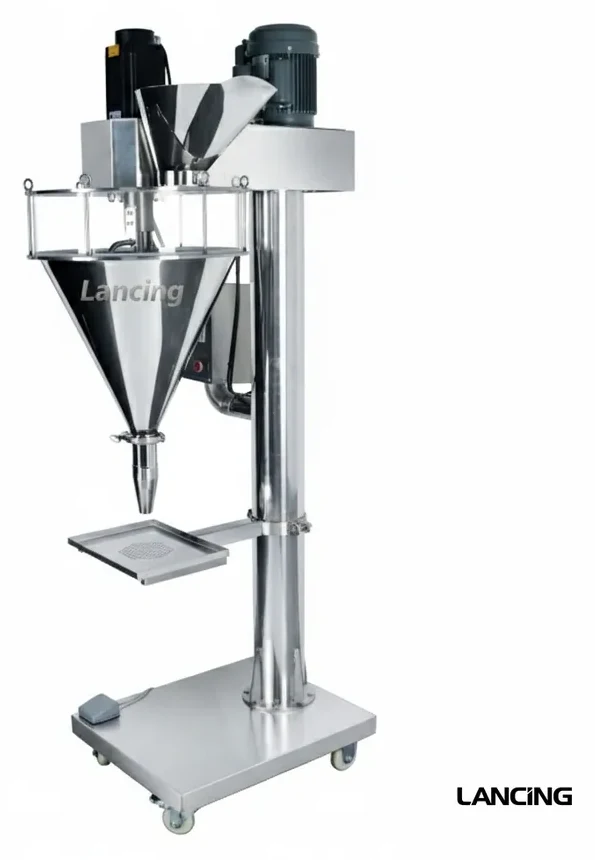
 Bench / compact
Semi-automatic auger fillers
Compact auger filling for short runs, product trials, smaller batches and operator-presented jars, bottles, tubs or pouches.
View routeAuger filling routes for sports nutrition and supplement powders where fill consistency, clean presentation, dust control and pack handling shape the line.
The right auger filler depends on how the product behaves in the hopper and at the fill point. Free-flowing, dusty, cohesive, aerated or settling powders can require different screw, agitation, feed and discharge arrangements.
Real product samples help confirm the hopper, auger and fill-head setup before the final specification.
Sports nutrition powders need dosing consistency, clean product presentation and a line layout that supports tubs, jars, pouches or sachet-style packs.
Jars, bottles, tubs, pouches, sachets and VFFS bags each create different positioning, filling, settling and closing requirements. The pack format should be reviewed with the powder before equipment is shortlisted.
Send pack drawings, photos or samples alongside product details to avoid a generic recommendation.
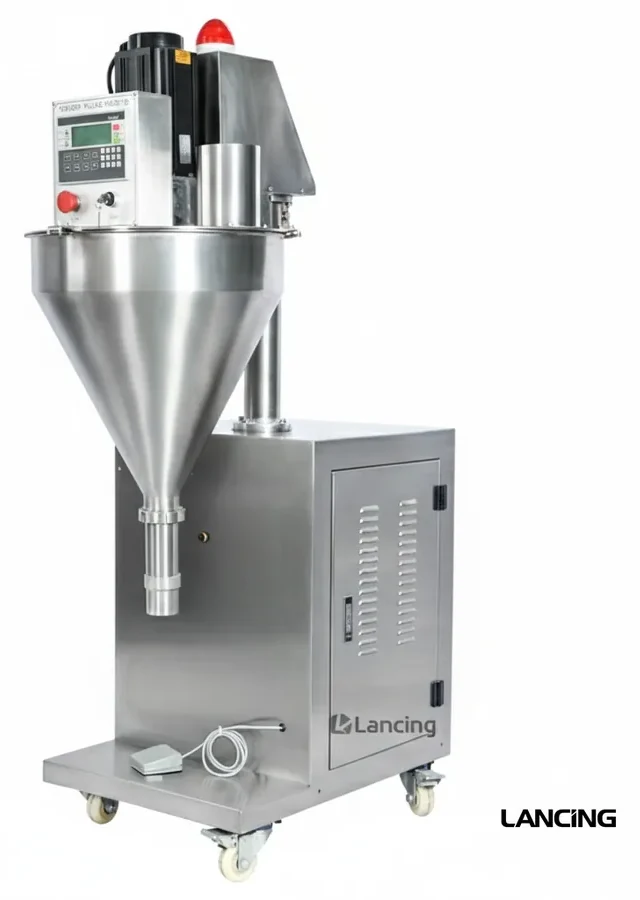
Bench / compact
Compact auger filling for short runs, product trials, smaller batches and operator-presented jars, bottles, tubs or pouches.
View route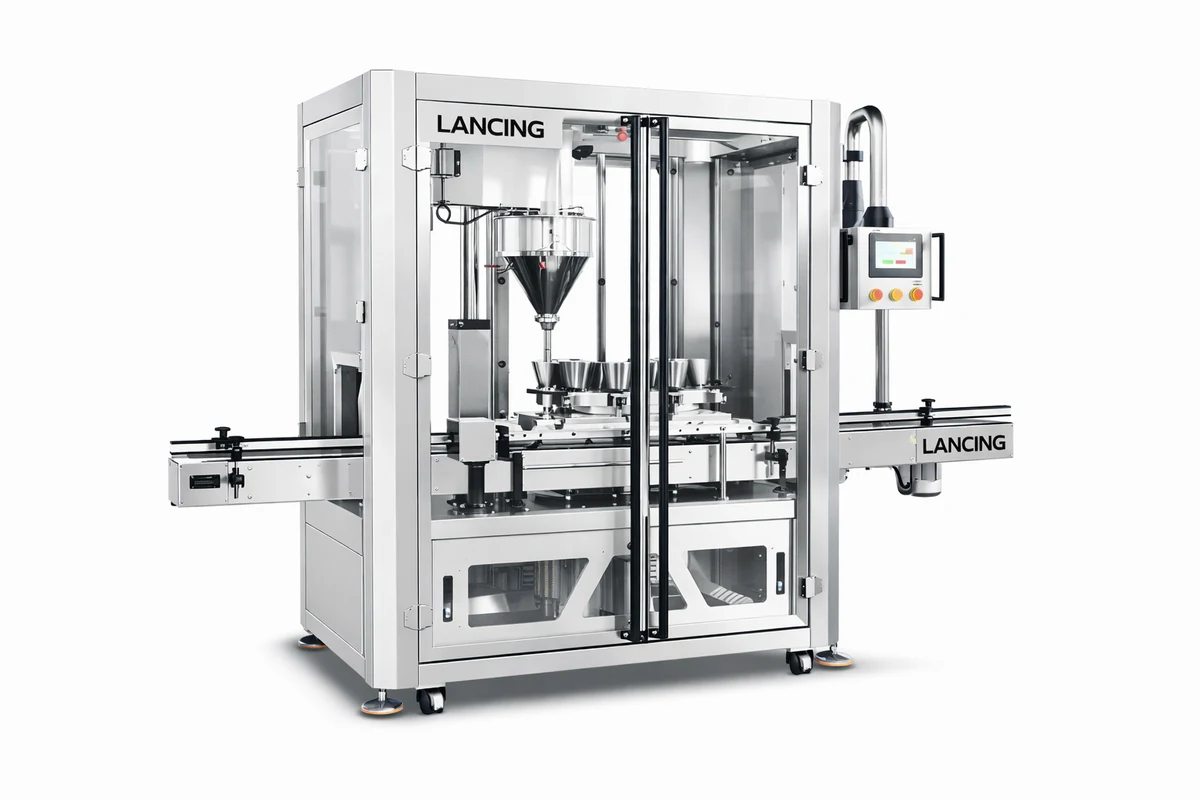 Inline automation
Conveyor-fed auger filling routes for powders that need repeatable dosing, container handling and integration with closing or labelling.
View route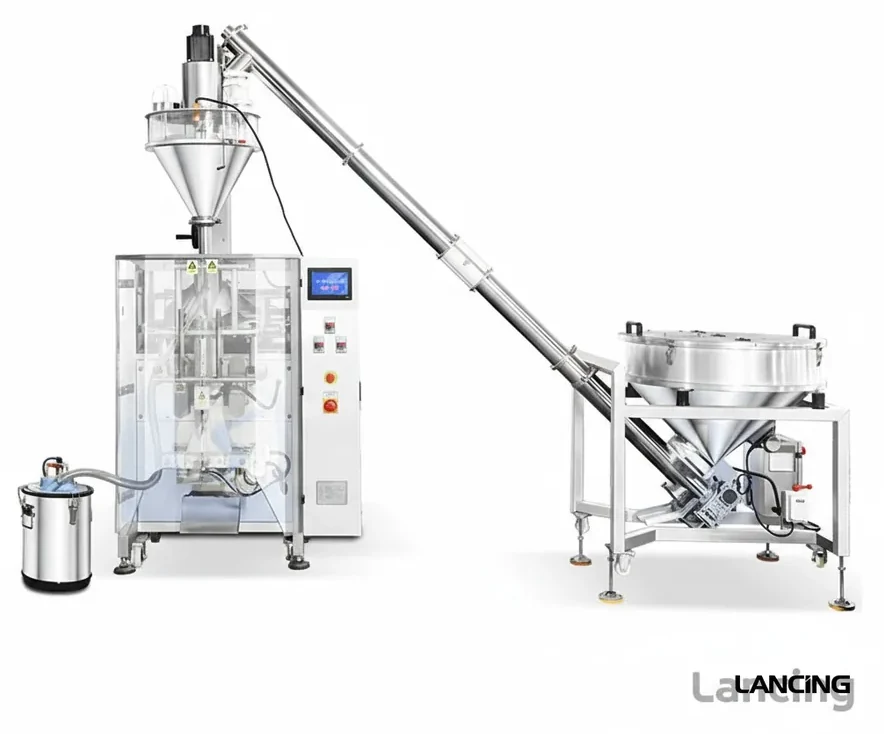 Bagging / roll film
Auger dosing integrated with vertical form fill seal bagging for powder pouches, sachets and formed bags from roll film.
View route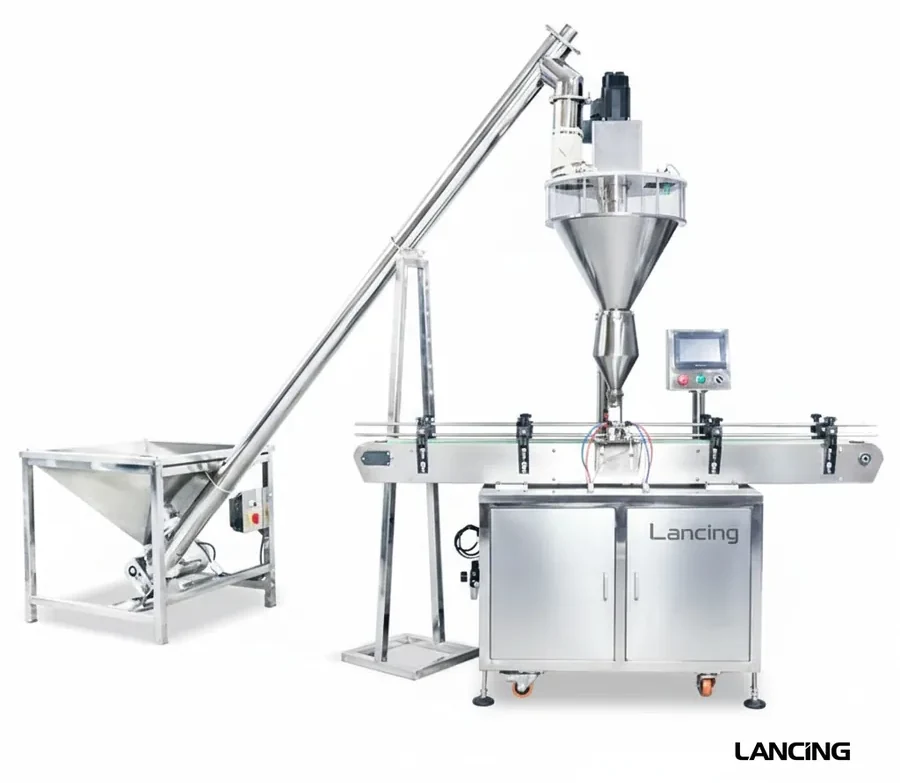 Line planning
Product feed, filling, settling, capping, sealing, labelling, coding and checking planned as one dry-product route.
View route
Route
General powder dosing where flow, dust and fill consistency decide the auger route.
View route
Route
Auger filling routes for spices, seasonings, herbs and mixed dry ingredients.
View route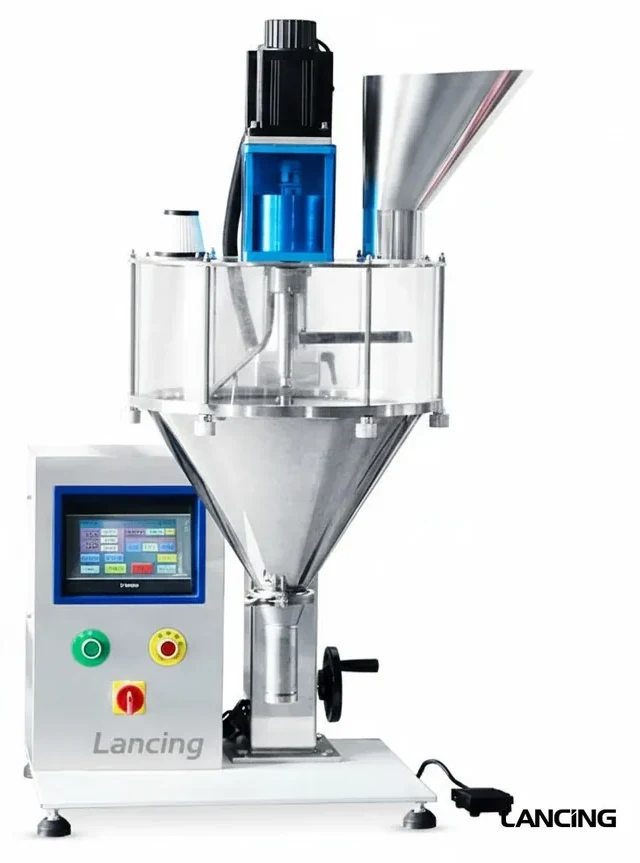 Route
Route
Powder filling layouts for flour, starches, baking powders and dry mixes.
View route
Route
Practical auger-filling considerations for detergent, cleaning and industrial powders.
View routeAuger fillers are normally used for powders and some fine granules where controlled screw dosing gives a more suitable route than a pump, cup filler or basic gravity feed.
Yes, but the container handling and discharge setup changes. Rigid containers, premade pouches, VFFS bags and sachets all need different presentation and sealing arrangements.
Send the product name, sample behaviour, fill weight range, pack dimensions, target output, accuracy requirement, available space and any sealing, capping, labelling or coding steps.
Send the product, pack format, target fill weight and required output so Lancing can suggest the most suitable auger filler route.
Protein and nutrition powders can behave differently between flavours, formulations and batches. The trial should therefore establish the density range, the way product settles after transfer, any bridging or dust and the headspace available before a lid or pouch seal is applied.
| Check | Evidence to collect | Machine effect |
|---|---|---|
| Bulk-density range | Loose and settled measurements for representative formulations. | Tooling, recipe and any weighing feedback must cover the density variation. |
| Aeration and settling | Filled height immediately after dosing and after the normal closing delay. | Fill speed, headspace and line spacing may need adjustment. |
| Dust | Escape at hopper loading, outlet and pack withdrawal. | Containment, extraction and cleaning requirements can change. |
| Pack route | Actual tub, jar or pouch, opening, closure or film and label area. | Container handling, nozzle, support and closing process are pack-specific. |
| Changeover | Approved cleaning method, product-contact boundary and release checks. | Access, removable tooling and operator procedure must support the quality plan. |
A low-density aerated powder and a denser blend can deliver different weights from the same volumetric screw movement. If several recipes share the line, include the extremes in the trial and identify the correct auger set and recipe for each. Record the first fills after refill and restart as well as the steady-state sequence.
Where direct weight dosing is the primary requirement, compare the auger and weigh filling routes before design freeze.
Protein powders can aerate, settle, bridge or change bulk density between formulations and batches. These effects influence hopper presentation, auger selection and the relationship between screw movement and filled weight.
Yes. Tubs need stable container presentation and headspace for closing, while pouches need a reliable open mouth, support during filling and protection of the seal area from powder.
Agree the product-contact parts, cleaning method, allergen and cross-contact controls, line-clearance checks, first-off inspection and the evidence needed before the next recipe is released.
It can support correction where product density varies, but the exact arrangement and sampling plan must be selected for the fill range and production method.
Provide representative product from the intended formulation, the actual tub or pouch, closure or film details and enough material to establish stable feed and repeatable trial results.
Review extraction or containment when powder escapes during hopper loading, dosing or pack withdrawal, or when dust could contaminate the closure, seal area or surrounding equipment.
Lancing can review auger tooling, hopper presentation, dust control and the tub or pouch route using representative samples.
Protein powders and supplement blends can be light, aerated, dusty or sensitive to settling. The sample trial should therefore prove the fill weight and the finished pack condition, not only whether the screw can move the product.
| Check | What to look for | Why it matters |
|---|---|---|
| Loose and settled density | Record whether the powder compacts in the pack or changes volume after vibration or handling. | Headspace, scoop fit, label claim presentation and pack closure can depend on settled volume. |
| Dust and fines | Watch for dust escaping at the fill point and collecting on the tub rim, thread or seal area. | Rim contamination can affect lid fit, foil seal quality and pack appearance. |
| Blend consistency | Check whether inclusions, flavouring particles or fine fractions separate during feed or agitation. | Hopper management and alternative dosing methods may need comparison if the blend segregates. |
| Tub or pouch opening | Confirm the opening, shoulder, headspace and whether a pouch can stand or needs support. | Filling height, nozzle choice, operator access and dust collection are pack-specific. |
| Cleaning regime | Identify flavour, colour, allergen or recipe changes and the required contact-part cleaning method. | Tool removal, dry clean-down and first-off verification should be included before quotation. |
Auger filling is usually considered where repeatable screw dosing can deliver the target powder weight into tubs, jars, bottles or supported pouches. It is strongest when the powder can be kept consistently presented to the screw and the fill point can be controlled.
If the product includes large pieces, fragile inclusions or particles that segregate badly, compare the weighing route before assuming auger filling is the only option. The specialist Lancing weigh filling route is better for detailed weighing-led comparisons.
Lancing can review protein powder behaviour, pack opening, dust, target fill and cleaning requirements before confirming the filler route.
Light, aerated or high-fat blends can settle, cling or bridge differently after transport and hopper agitation. Use the actual formulation and pack rather than a substitute powder.
Compare loose and settled state and record how the sample was conditioned.
Observe segregation, clumps and product damage during feeding and agitation.
Check fill volume, settling and scoop or closure clearance in the production tub or pouch.
Define allergen, flavour and colour changeovers before fixing the contact-part design.
Compare the LU-FM710 for flexible short batches and the LU-FM750F for a broader tooling range or net-weight configuration. Prove the blend with the sample-trial guide.
Use the cleaning guide to map contact parts, line clearance and first-off release.
Food, supplement and ingredient powders can require more than a basic auger filler recommendation. Product-contact access, cleaning method, allergen changeover, dust at the pack mouth and downstream closure checks should be included before a machine route is confirmed.
Use the food-grade hygienic auger filler guide with the cleaning and changeover guide to prepare a stronger enquiry.
A protein product may contain ingredients with different particle sizes, densities or handling sensitivities. Approval of the mixed batch does not automatically qualify transfer into the filler. For the actual formulation, agree whether physical appearance, a marker ingredient or another quality measurement is needed alongside fill weight.
Keep the pre-transfer reference separate from filled-tub samples. Link each retained sample to its batch, sequence position, refill or restart event and relevant machine setting. Do not use one pooled sample to conceal a start-to-finish change. The product owner should set the sample quantity, test method and acceptance criteria; the filler specification should explain how those samples can be collected safely and consistently.
A scoop is a volume reference, not proof of net weight or ingredient composition. Aerated and settled powder can occupy different volumes at the same mass. Verify the pack weight with the agreed weighing method and assess formulation uniformity separately where the product requires it.
Review powder-blend segregation during auger filling when several ingredients or fragile agglomerates are involved. For a commercial comparison, record product use and rejected production separately from accepted tub output. Do not claim a formulation is suitable for a particular machine until its powder and pack have been reviewed.
For an enquiry, provide the relevant physical differences in the blend, smallest pack opening, fill range, transfer method and existing quality checks. Confidential recipe details need not be published on the website. Send the product and packing requirements to Lancing.
For a protein powder tub, state whether the finished pack contains a scoop, leaflet or other insert and when it is introduced. Ask the supplier to show where that task sits relative to filling, checking and closure application. Use the intended pack and complete formulation range in the discussion, including products sold in both tubs and refill pouches. The acceptance record should identify the version actually demonstrated rather than describing the result simply as a protein-powder trial.
Ask for the difference to be assessed explicitly. The filling access, final headspace and pack-check method should correspond to the actual pack contents rather than an assumed common format.