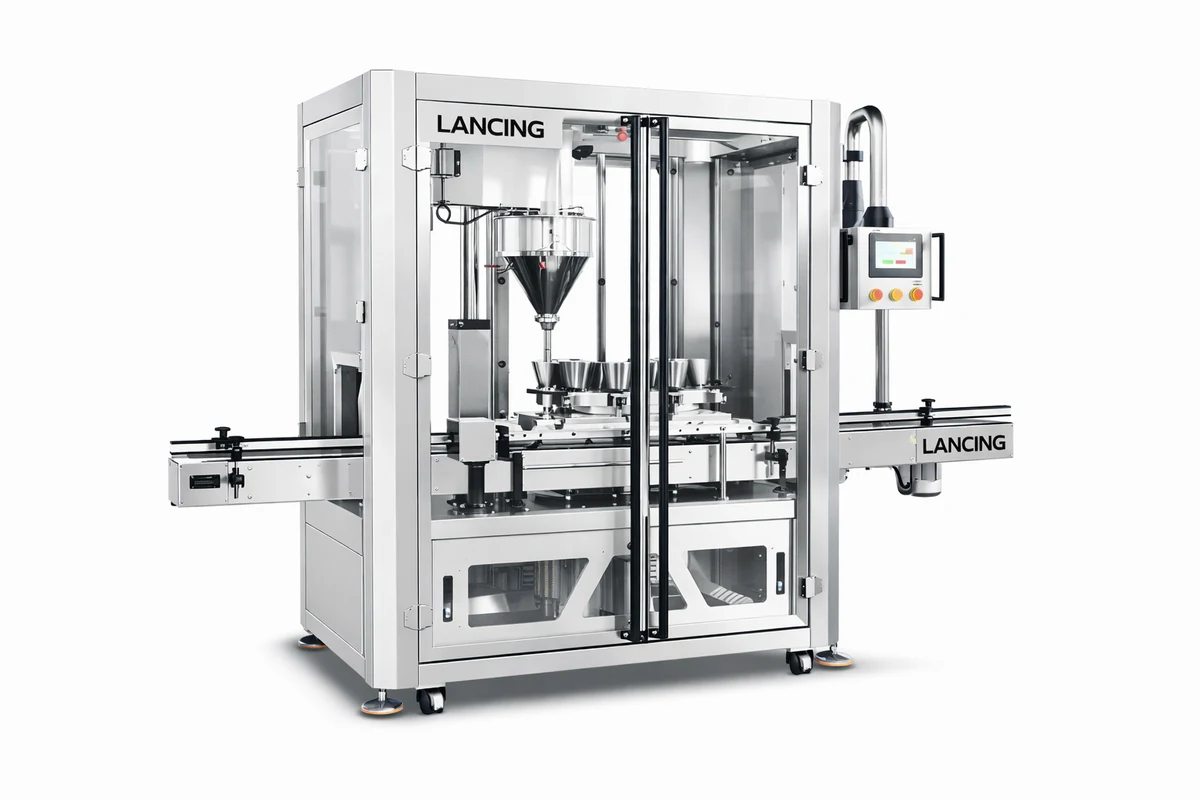
 Inline automation
Automatic auger filling machines
Conveyor-fed auger filling routes for powders that need repeatable dosing, container handling and integration with closing or labelling.
View routeCompact powder filling machinery for operator-presented containers, lower-volume production, product trials and flexible dry-product batch work.
Semi-automatic auger fillers are suitable when operators can present the container, trigger the fill and manage changeovers manually. They are often a practical starting point for powders sold in multiple pack sizes or smaller batch runs.
Start-ups, laboratories, product trials, short runs and production rooms with limited space.
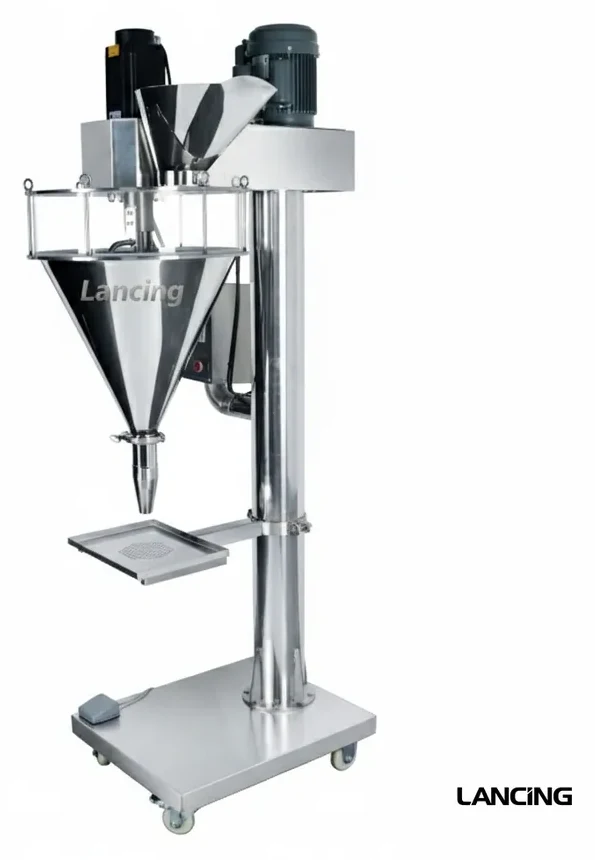
A practical route for operator-presented containers, smaller batches and powders that need repeatable dosing without a full automatic line.
The quote should not be based on the auger filler alone. Hopper loading height, product top-up method, dust control, container height range and the operator’s working rhythm all affect daily usability.
Do not choose a compact filler before checking how the powder will be loaded and how often the format changes.
Inline automation
Conveyor-fed auger filling routes for powders that need repeatable dosing, container handling and integration with closing or labelling.
View route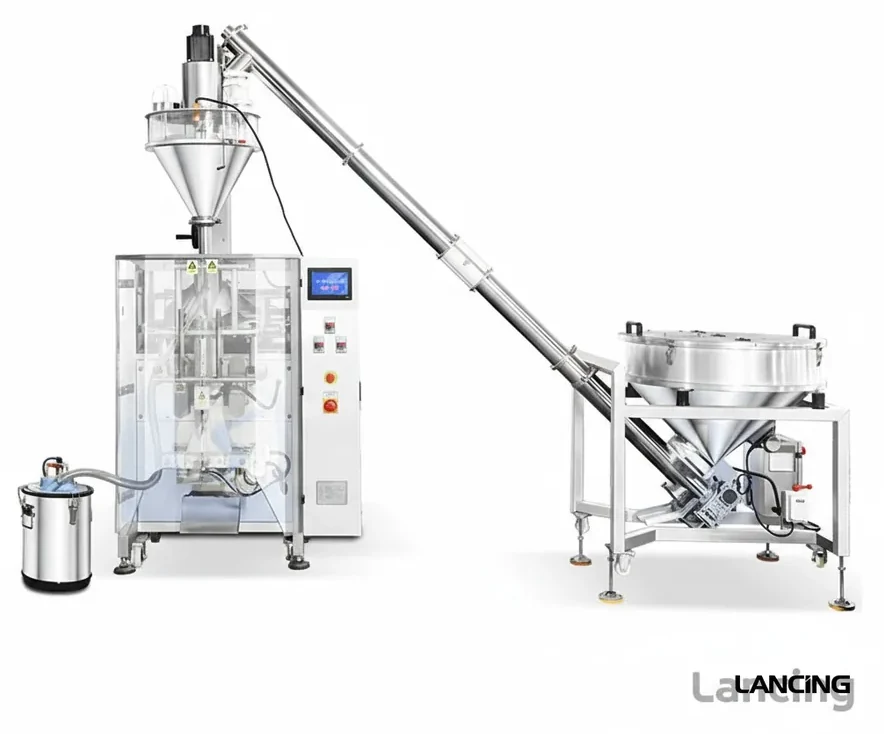 Bagging / roll film
Auger dosing integrated with vertical form fill seal bagging for powder pouches, sachets and formed bags from roll film.
View route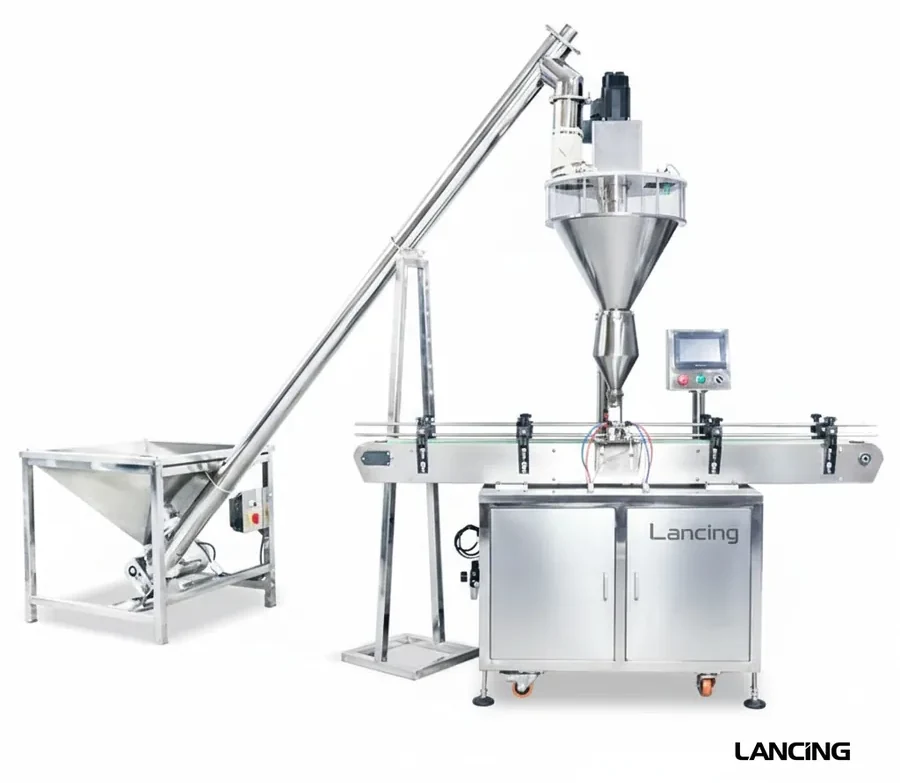 Line planning
Product feed, filling, settling, capping, sealing, labelling, coding and checking planned as one dry-product route.
View route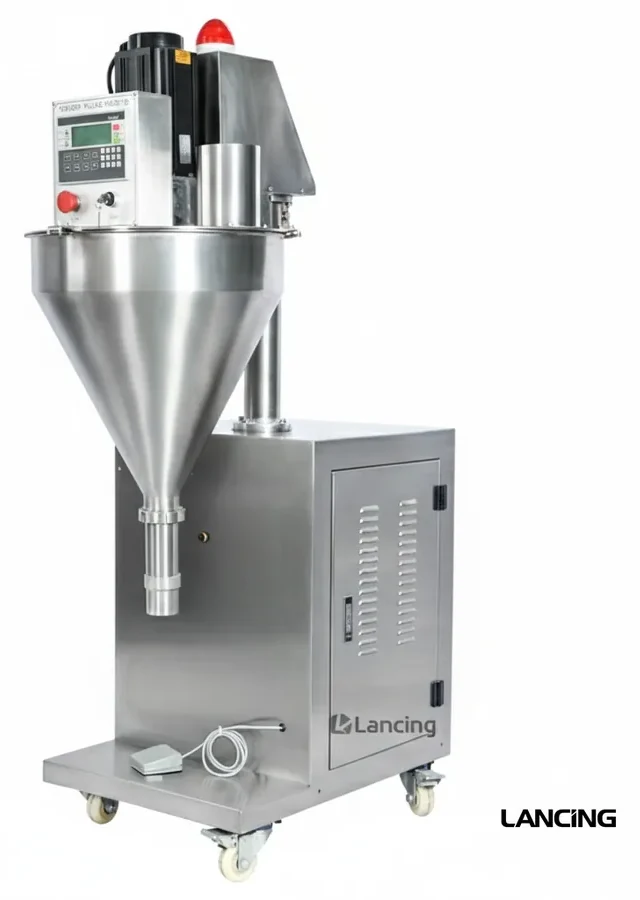 Route
Route
General powder dosing where flow, dust and fill consistency decide the auger route.
View route
Route
Auger filling routes for spices, seasonings, herbs and mixed dry ingredients.
View route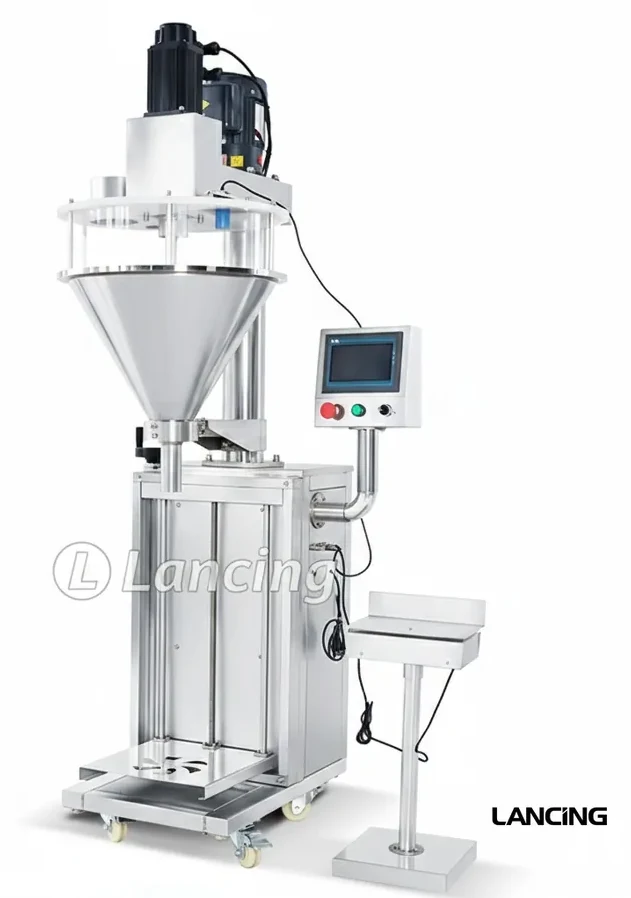 Route
Route
Dry-powder filling for sports nutrition, supplement tubs, pouches and jars.
View route
Route
Rigid-container auger filling routes for wide-neck jars, bottles, tubs and pots.
View routeConsider it when an operator can present and remove each pack, trigger the dose and manage checks and changeovers. Compare the complete operator cycle, including weighing and closing, with the required accepted-pack output.
Compare automatic filling when container indexing, operator workload or downstream closing limits the process. If bags are formed from roll film, compare an auger integrated with VFFS rather than treating it as a manually presented pouch.
Send representative powder, the smallest and largest intended packs, target fill range, accepted limits and batch requirements. Include how the operator will refill, weigh, close and change the product so tooling and the full work cycle can be reviewed.
Send the product, pack format, target fill weight and required output so Lancing can suggest the most suitable auger filler route.
This documented configuration is for manually presented pouches or containers and combines servo auger dosing with interchangeable tooling, a product hopper and operator weighing feedback. Final tooling and performance remain sample-dependent.
| Function | Semi-automatic dry-powder dosing into manually presented pouches or containers. |
|---|---|
| Filling system | Servo auger filling with interchangeable auger, tube and filling-spout tooling and a weighing-feedback arrangement. |
| Hopper | Approx. 50 L product hopper. A documented 100 g–5 kg configuration included an internal motorised agitator to maintain product presentation; it is not a batch-blending system. |
| Documented tooling bands | 5–50 g, 50–300 g, 300–1000 g and 1000–5000 g by auger change. The final screw and spout sizes depend on powder density, pack opening and trials. |
| Controls | PLC touchscreen, foot-pedal operation, agitator control where fitted and weighing-feedback interface. |
| Accuracy basis | Supplier reference measurement error ±1%; final accuracy is subject to the product, tooling, bulk density, weighing arrangement and agreed trial conditions. |
| Output basis | Indicative operator-cycle output of 1–8 fills/min depending on fill weight, powder flow, pouch or container handling and settling time. |
Begin with a representative powder batch and production pack. Record loose and settled bulk density, tooling identity, hopper condition, recipe and scale resolution. Establish stable feed, then record consecutive fills in sequence rather than selecting only acceptable results. Include the smallest and largest approved target, hopper replenishment and restart after a normal pause.
The acceptance record should state the target, permitted limits, actual results, output condition and any adjustment made. This is the evidence behind an accuracy statement.
Agree which product-contact parts are removed, how the hopper and agitator are cleared, whether the product permits dry or wet cleaning and how the cleaned parts are inspected. Identify each auger, tube and spout set so the operator can match it to the correct recipe and pack.
After reassembly, use a controlled first-off check to confirm the tooling, dose and pack presentation before normal production resumes. No universal changeover time should be quoted without observing the approved method.
Auger dosing is often a strong route for powders, but free-flowing granules or pieces may be better evaluated on a linear or multihead weighing system. Use the auger versus weigh guide, or review the specialist weigh filling machinery route before committing to screw tooling.
No. The documented LU-FM750F route uses interchangeable auger, tube and filling-spout tooling. The final set sizes are selected from the powder bulk density, target weights, pouch or container opening and trial results.
The operator checks the filled pack on the weighing platform and the measured result can support dose correction. It is not an in-line automatic checkweigher and is not described as a legal-for-trade scale.
Output depends on fill weight, powder flow, settling time, how quickly the operator presents and removes the pack, and any separate weighing or sealing step. The documented LU-FM750F basis is an indicative 1–8 fills per minute, subject to those conditions.
Record the tooling set and recipe, empty and isolate the machine, remove the agreed product-contact parts, clean and inspect them using the approved product method, reassemble, run a controlled test fill and verify the first accepted packs before restarting production.
A weight-led filler may be preferable for products that flow reliably as granules or pieces, or where direct weight control is more important than screw-based volumetric dosing. The decision should be confirmed using the actual product and pack.
Provide enough product and empty packs to establish stable feeding, select tooling, make adjustments and run the agreed repeatability study. Lancing should confirm the quantity from the fill weight, product behaviour and trial plan before samples are sent.
Lancing can review the required tooling sets, hopper presentation, weighing feedback and operator cycle around your production method.
A semi-automatic auger filler is often the sensible step when hand filling has become slow, inconsistent or too dusty, but the production run does not yet justify full container automation.
| Check | Why it matters | What to send or test |
|---|---|---|
| Operator presentation | The operator must be able to place, hold and remove the pack consistently without fighting the filler. | Actual jars, bottles, tubs or pouch samples and the expected operator position. |
| Pack opening | A narrow neck, soft pouch or shallow tub can change the discharge tube, filling height and dust control. | Smallest and largest openings, drawings and headspace after filling. |
| Powder feed stability | The screw can only dose consistently when the product is presented consistently in the hopper. | Bulk density checks, flow observations and any bridging or aeration notes. |
| Weigh checking | Many semi-automatic installations rely on separate scale checks to confirm weight. | Target weight, permitted tolerance, scale resolution and sampling frequency. |
| Cleaning and tooling | Short runs may need frequent recipe changes, so access can matter as much as output. | Products, allergen or colour changes, contact-part cleaning method and tooling storage needs. |
If the operator cannot keep up with the desired output, if each container needs controlled indexing, or if closing and labelling must be tied directly to filling, the project should move to the automatic auger filling machine route. If the pack is a formed bag from roll film, review VFFS auger filling instead of forcing pouch handling onto a bench-style process.
This avoids buying a compact machine that fills accurately in isolation but becomes the bottleneck once the full packing process is considered.
Send your powder, pack and target batch size so the semi-automatic route can be checked against output, accuracy, cleaning and operator workload.
| Model | Documented starting point | Use the full page to confirm |
|---|---|---|
| LU-FM710 | 25 L agitated hopper, nominal 10–2000 g with matched tooling, programmed or weigh-assisted operation. | Pack envelope, output conditions, weighing method and cleaning access. |
| LU-FM750F | 50 L hopper with tooling bands from 5 g to 5 kg, servo controls and weighing-feedback options. | Tooling set, feeder, bag or container support, dust capture and operator cycle. |
Ranges are not promises that one auger set covers every product or weight. Final performance is established from representative powder, packs and an agreed trial.
Use the hopper feeding and level-control guide to assess manual loading, screw feeding, vacuum transfer and refill effects.
Use the cleaning and changeover guide to define contact parts, tooling identity, line clearance and first-off release.
The machine, operator, powder supply and pack support must be treated as one repeatable working cycle.
A semi-automatic auger filler normally relies on an operator to present and remove each pack, confirm that it is correctly positioned and keep the product and empty-pack supply available. The exact task depends on the pack support, start signal, weighing method and any connected conveyors or closing equipment.
Trial the operator sequence at the intended work height and include realistic refilling, checks and changeovers.
Direct link to answerA bag clamp or container support is needed when the pack cannot remain open, centred and stable throughout dosing. Flexible pouches, narrow openings, tall containers and powders that displace air may need different support from a rigid wide-mouth jar.
The powder-suitability guide and production pack samples should be reviewed together.
Direct link to answerTrial the complete operator cycle: obtain the empty pack, present it, trigger the fill, allow powder to settle, check or correct the result, remove the pack and pass it to the next operation. Include hopper refill and planned pauses because these events can alter both output and fill consistency.
Use the sample-trial and FAT method to record the evidence.
Direct link to answerLancing can review pack support, tooling, weighing and downstream handling as one practical station.
A semi-automatic filler is appropriate only when the operator can present, check and remove packs at the required sustained rate. Compare hopper demand, dose window, product behaviour, weighing method and closing time rather than choosing from the widest catalogue range.
Compact 6 L route for focused small-dose work and simple operator-presented packs.
35 L touchscreen route for development batches and several approved tooling windows.
25 L route where a separate weighing device supports setup and routine checks or agreed correction.
50 L servo route for larger fills and more substantial bag or container duties.
Time pack presentation, dosing, settling, scale checks, removal and closing. Include hopper refills and the first fills after restart. The output and capacity planning guide separates fill cycles from accepted finished packs.
Send one representative powder batch, the full fill range, actual packs, the smallest opening and the intended quality-control method. The sample-trial guide explains how to retain comparable evidence.
Lancing can review the model, tooling, weighing, support and closing scope against the real powder and pack sequence.