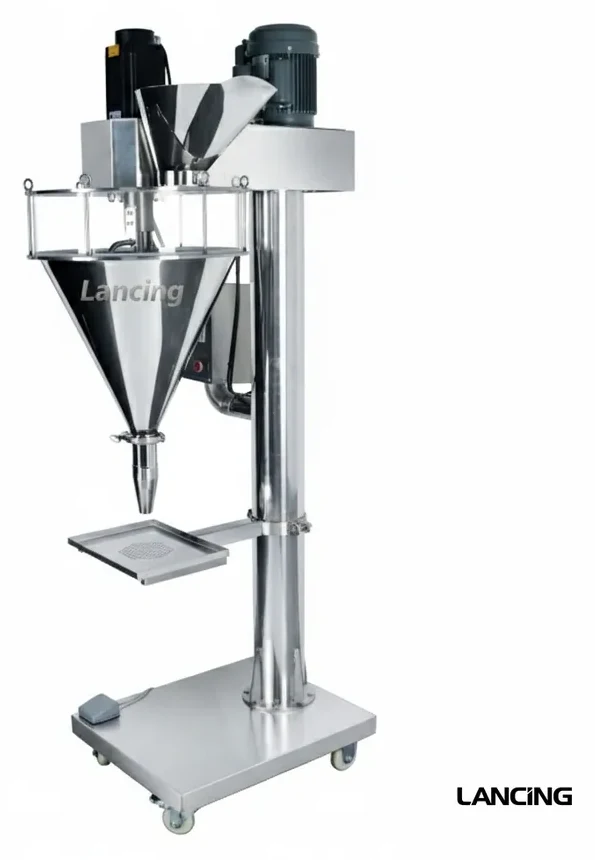
 Bench / compact
Semi-automatic auger fillers
Compact auger filling for short runs, product trials, smaller batches and operator-presented jars, bottles, tubs or pouches.
View routePlan the auger filler as part of a finished dry-product packaging line, including feeding, filling, container handling, closing, labelling, coding and aftercare.
A full dry-product packaging line may include product feed, dosing, container or pouch handling, settling, capping, induction sealing, heat sealing, labelling, coding, checkweighing, accumulation and end-of-line packing.
Map each stage before asking for a machine price so the quote covers the finished pack.
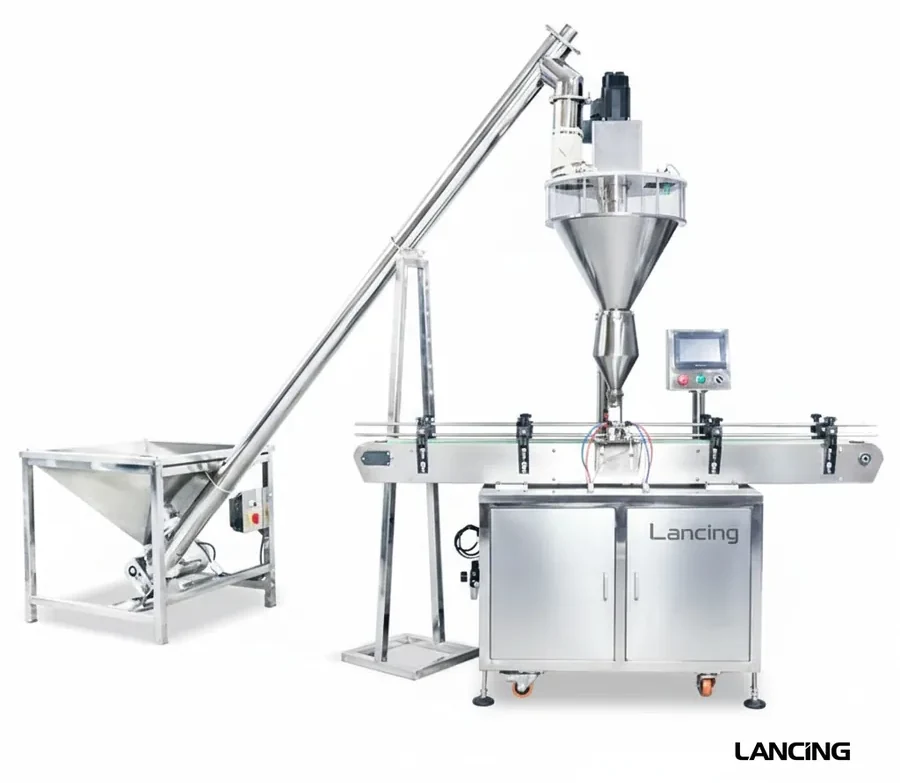
The filling head, screw feeder, hopper, conveyor, closing, labelling, coding and checking stages should be considered as one production line.
The strongest brief includes product behaviour, container dimensions, fill range, closure details, labelling and coding needs, utilities, space limits and desired production output. This lets the line be scoped around real constraints.
Use the enquiry checklist to prepare the information required for a useful line recommendation.
Bench / compact
Compact auger filling for short runs, product trials, smaller batches and operator-presented jars, bottles, tubs or pouches.
View route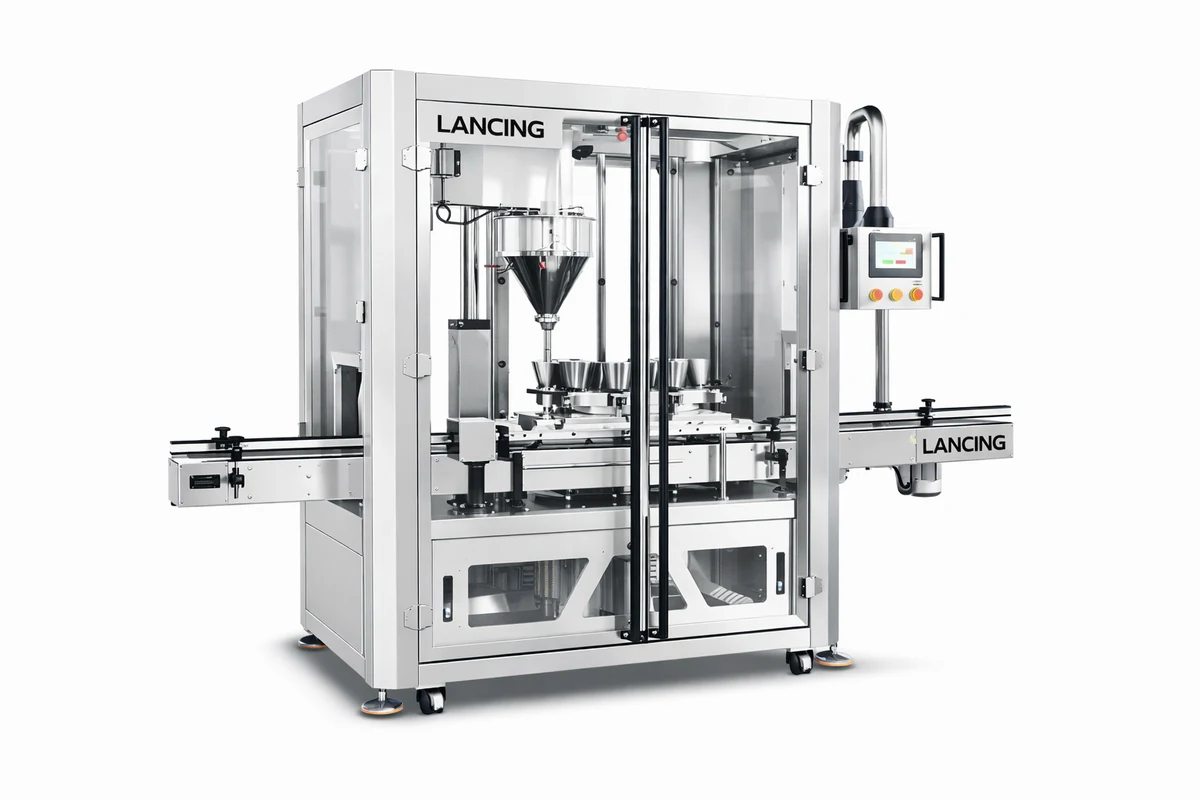 Inline automation
Conveyor-fed auger filling routes for powders that need repeatable dosing, container handling and integration with closing or labelling.
View route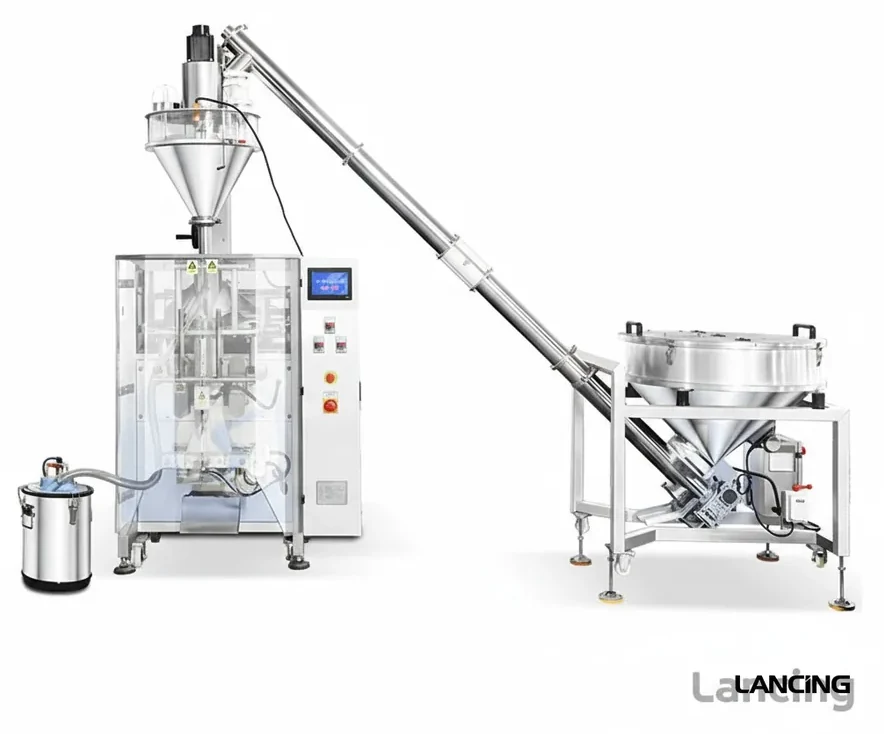 Bagging / roll film
Auger dosing integrated with vertical form fill seal bagging for powder pouches, sachets and formed bags from roll film.
View route
Route
A buyer guide to matching auger fillers to product behaviour, pack format and output.
View route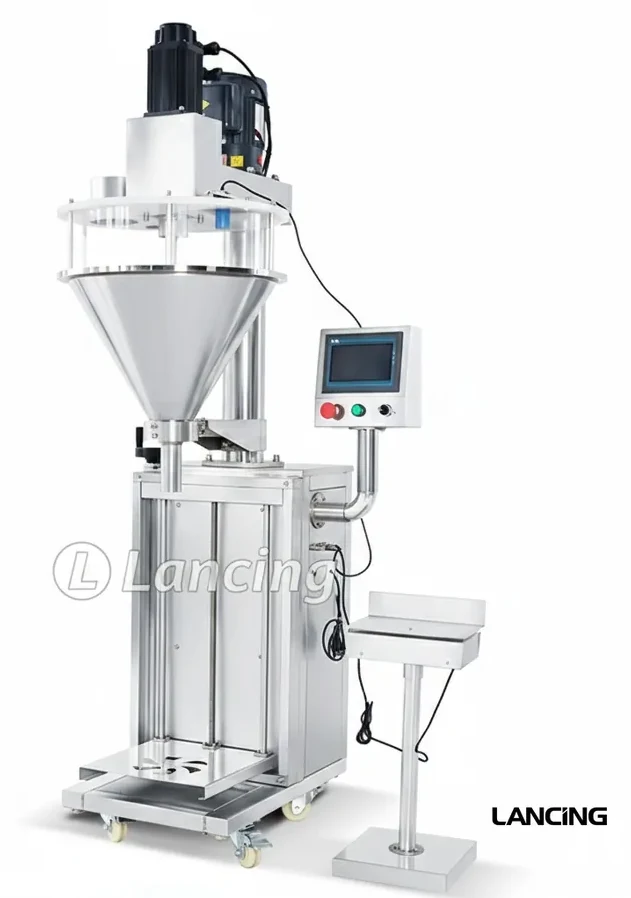 Route
Route
Compare auger filling with weigh-head, multihead and cup-dosing routes.
View route
Route
Plan hopper design, filling head, extraction and line layout around dusty powders.
View route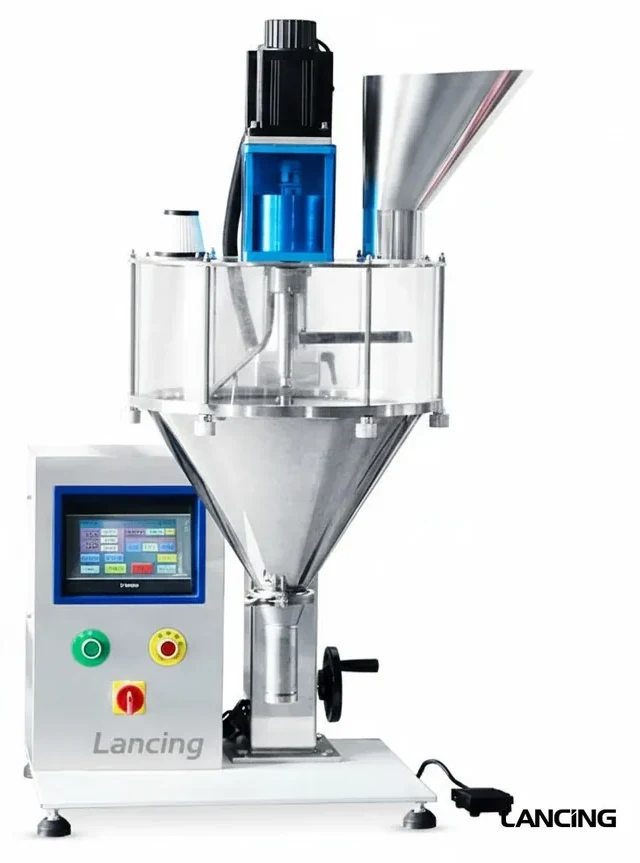 Route
Route
What to send before asking for an auger filling machine quotation.
View routeAuger fillers are normally used for powders and some fine granules where controlled screw dosing gives a more suitable route than a pump, cup filler or basic gravity feed.
Yes, but the container handling and discharge setup changes. Rigid containers, premade pouches, VFFS bags and sachets all need different presentation and sealing arrangements.
Send the product name, sample behaviour, fill weight range, pack dimensions, target output, accuracy requirement, available space and any sealing, capping, labelling or coding steps.
Send the product, pack format, target fill weight and required output so Lancing can suggest the most suitable auger filler route.
A complete line must deliver an acceptable finished pack, not simply complete an auger cycle. The specification should identify the limiting process, the control responsibilities and the evidence required at factory acceptance testing.
Confirm loading height, transfer method, sieve or screen, hopper level and refill behaviour.
Review agitation, bridging, aeration, segregation and the powder state presented to the screw.
Select auger, tube and outlet, then record dose results with the stated test conditions.
Locate the jar, bottle, tub, pouch or bag reliably before, during and after filling.
Allow settling and protect the cap, induction seal, heat-seal or stitched closure area from product.
Define coding, checkweighing, metal detection, rejection, accumulation and finished-pack discharge.
| Test area | Evidence to agree |
|---|---|
| Approved materials | Named powder batch, smallest and largest approved pack, closure or film, labels and coding consumables. |
| Dose study | Target, limits, scale resolution, consecutive results, tooling, hopper condition, settings and output. |
| Sustained run | Agreed duration or pack count, refill events, normal operator actions, stops, restarts and recorded line interruptions. |
| Dust and presentation | Visible emissions, deposits, pack cleanliness, closure or seal contamination and extraction behaviour. |
| Controls | Start/stop sequence, no-product or no-pack logic, alarms, machine-ready signals, emergency-stop interface and recovery. |
| Changeover | Identified parts, removal and access, approved clean-down method, reassembly and first-off release checks. |
AugerFillers.co.uk owns the screw-dosing and powder-line interface. Use Form Fill & Seal for roll-film bag forming, Pouch Fillers for premade-pouch handling, and Weigh Fillers when direct weight dosing is the primary technology. Broader packaging-line machinery is available through Lancing UK.
Depending on the product and layout, the line may include floor-level loading, a screw or vacuum transfer system, a sieve, hopper level control and an agitator or conditioning arrangement.
The useful figure is the sustained output of the complete approved route. Feeding, container presentation, filling, settling, closing, inspection and discharge can each become the limiting step.
Checkweighing may be specified when the process needs automatic weight verification, rejection or production records. The required capacity, resolution, reject method and product effect must be agreed separately.
Define product-contact boundaries, access, removable parts, dry or wet cleaning restrictions, dust collection, line clearance and restart checks for every connected machine rather than considering only the auger filler.
Typical integration uses product sensors, machine-ready and fault signals, coordinated start and stop logic, emergency-stop interfaces and accumulation rules. The final control philosophy belongs in the agreed line specification.
Provide the available footprint and height, access routes, floor loading, electrical and air services, extraction provision, operator positions, product supply point and the location of upstream and downstream machinery.
Include product feeding, the real pack, closing, inspection, available space and required shift output so the line can be scoped without missing interfaces.
A complete auger filling line should be accepted against the real process sequence: product feed, dosing, pack handling, closure, coding, inspection and controlled restart after interruptions.
| Evidence area | What to record | Why it matters |
|---|---|---|
| Product feed | How the powder is loaded, how the hopper is topped up and whether level changes affect dosing. | Feed route and hopper management can decide whether the auger remains consistently charged. |
| Consecutive fills | Start-up fills, stable production fills and fills after a stop or refill should be identified separately. | This prevents a single favourable result being treated as proof of full production behaviour. |
| Pack handling | Container or pouch presentation, support, transfer and rejection points. | The dosing station must leave the pack stable enough for downstream closing and checking. |
| Closure and coding | Whether product dust affects caps, lids, seals, labels, print or inspection. | Filling quality is only useful when the finished pack can be closed and marked correctly. |
| Operator access | Cleaning points, guards, adjustments, tooling removal and first-off checks after changeover. | Safe, repeatable access reduces downtime and avoids uncontrolled reassembly after cleaning. |
Video is useful when comparing a proposed line because it shows the timing relationship between product feed, auger dosing, pack position and machine handling. It should not replace a sample trial, but it can identify practical questions before a final specification is agreed.
When sending your enquiry, include any existing process videos that show hand filling, powder transfer, dust points, closing difficulties or operator movement around the current line.
Powder-filling video supplied for auger filling route review.
Send the powder, fill target, pack samples, closing step, line layout and acceptance requirements so the auger filling line can be reviewed as one process.
| Interface | Questions to settle | Evidence |
|---|---|---|
| Product feed to filler | Who supplies the powder, controls level and handles feed faults? | Feeder duty, level logic, alarms and refill tests. |
| Filler to pack transport | How are containers or bags located, supported and released? | Production samples at limits and recovery after stops. |
| Filler to closer | What settling, cleaning or inspection is needed before capping or sealing? | Rim/seal-area checks at the agreed line rate. |
| Machine controls | Which ready, run, fault, accumulation and emergency signals are exchanged? | Interface schedule and witnessed line sequence. |
| Operator and maintenance | Who loads, samples, clears faults, cleans and changes tooling? | Work sequence, access review and training record. |
Use the FAT guide to test feed, fill, pack handling, closure, restart and evidence retention.
Use the site-preparation guide to define access, utilities, extraction, controls and training.
A complete powder filling line should prove more than the screw dose. The useful acceptance test records product feed, auger filling, pack settling, weight check, reject method, closing, coding and accepted-pack outfeed as one process.
Plan inline or offline weight verification after the auger filling head.
Review checkweighing →Use bulk-density and flowability observations to test refill and restart conditions.
Review powder testing →A complete powder line needs a route for product feed, filling, settling, closing, coding, inspection, reject handling and finished-pack movement. It also needs the services and access that let the line be installed, cleaned and supported in the real factory.
The powder filling line utilities guide sets out the power, compressed air, extraction, access and signal information that should be sent with a layout enquiry. Where acceptance evidence is required, add the IQ/OQ and production-evidence requirements to the trial and FAT plan.