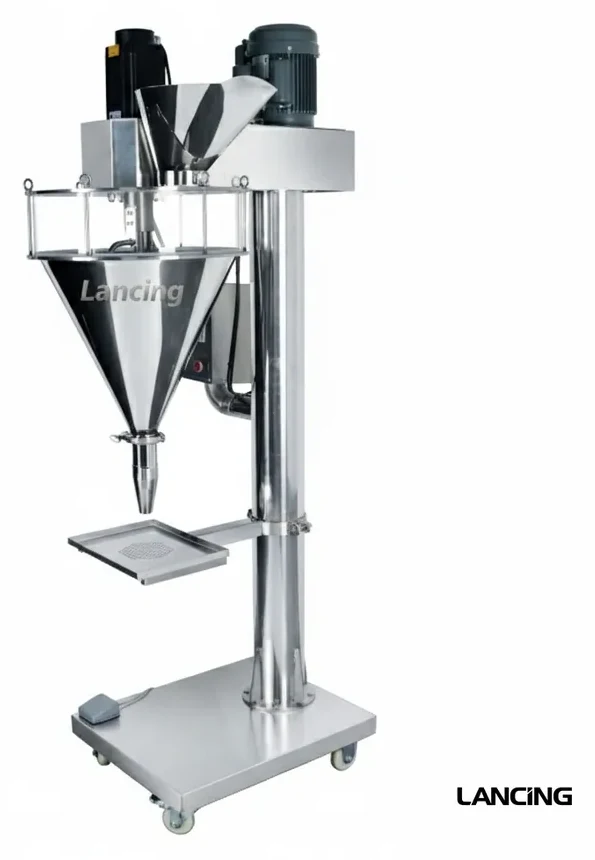
 Bench / compact
Semi-automatic auger fillers
Compact auger filling for short runs, product trials, smaller batches and operator-presented jars, bottles, tubs or pouches.
View routeRigid-container auger filling routes for powders filled into jars, bottles, tubs and pots, with support for handling, settling, capping, sealing and labelling.
The right auger filler depends on how the product behaves in the hopper and at the fill point. Free-flowing, dusty, cohesive, aerated or settling powders can require different screw, agitation, feed and discharge arrangements.
Real product samples help confirm the hopper, auger and fill-head setup before the final specification.
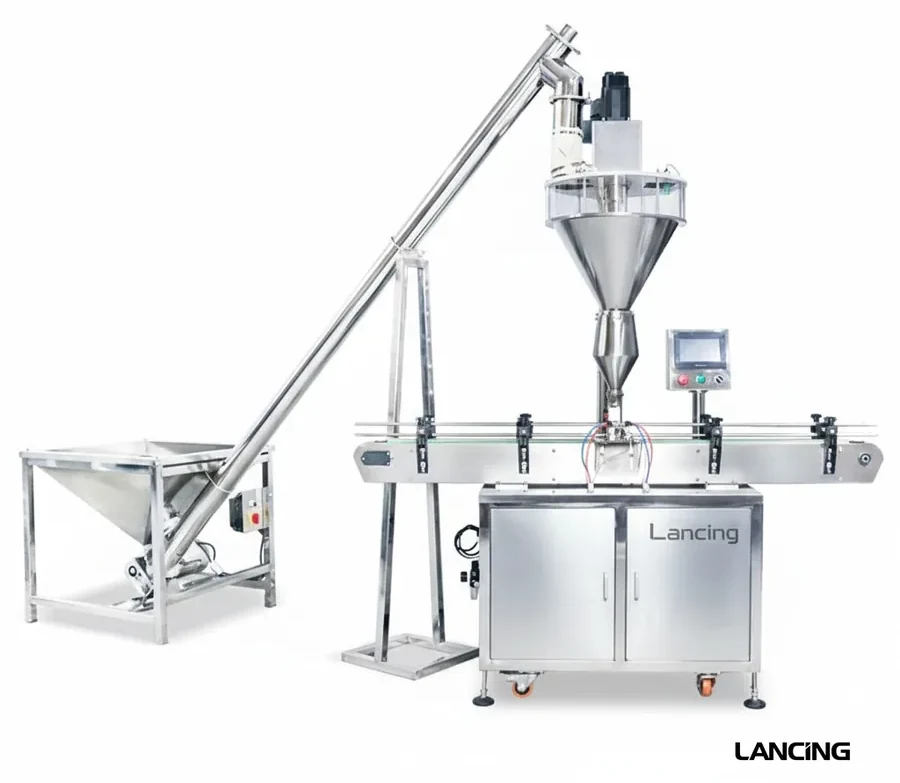
Rigid-container powder filling depends on container stability, filling height, settling, closing, labelling and coding as much as the auger filler itself.
Jars, bottles, tubs, pouches, sachets and VFFS bags each create different positioning, filling, settling and closing requirements. The pack format should be reviewed with the powder before equipment is shortlisted.
Send pack drawings, photos or samples alongside product details to avoid a generic recommendation.
Bench / compact
Compact auger filling for short runs, product trials, smaller batches and operator-presented jars, bottles, tubs or pouches.
View route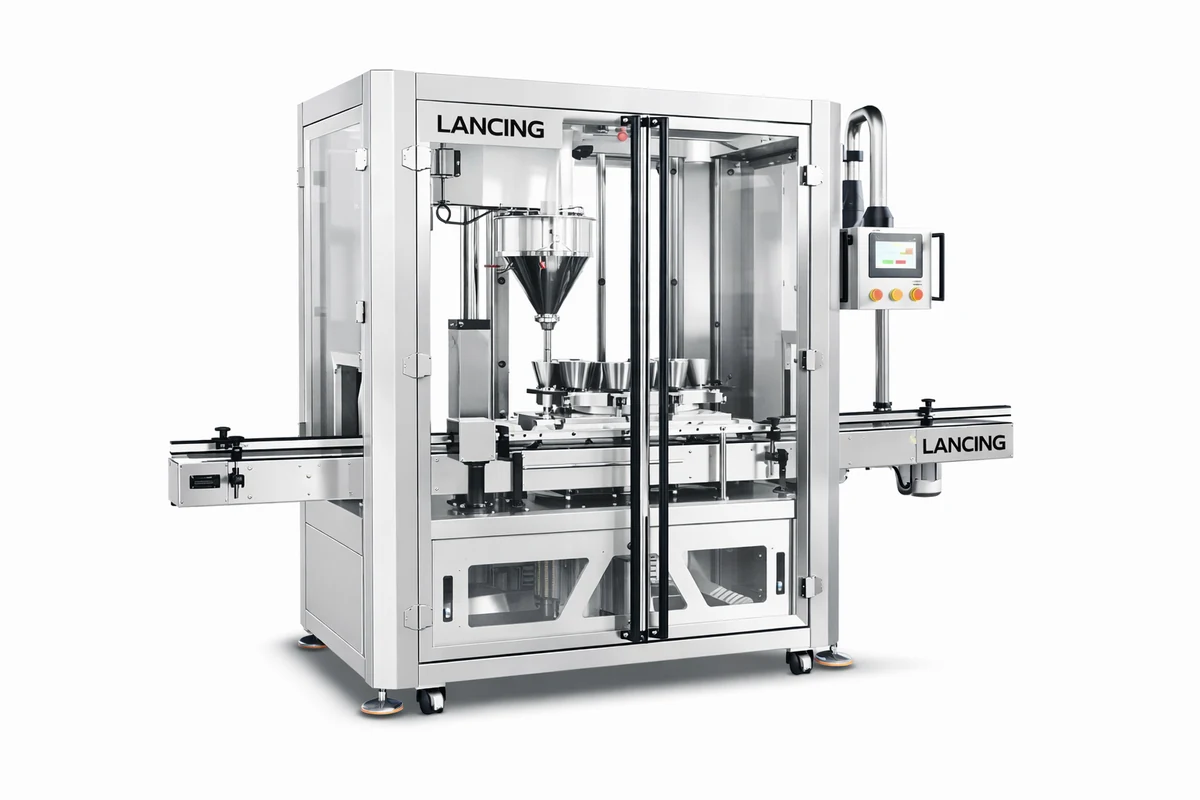 Inline automation
Conveyor-fed auger filling routes for powders that need repeatable dosing, container handling and integration with closing or labelling.
View route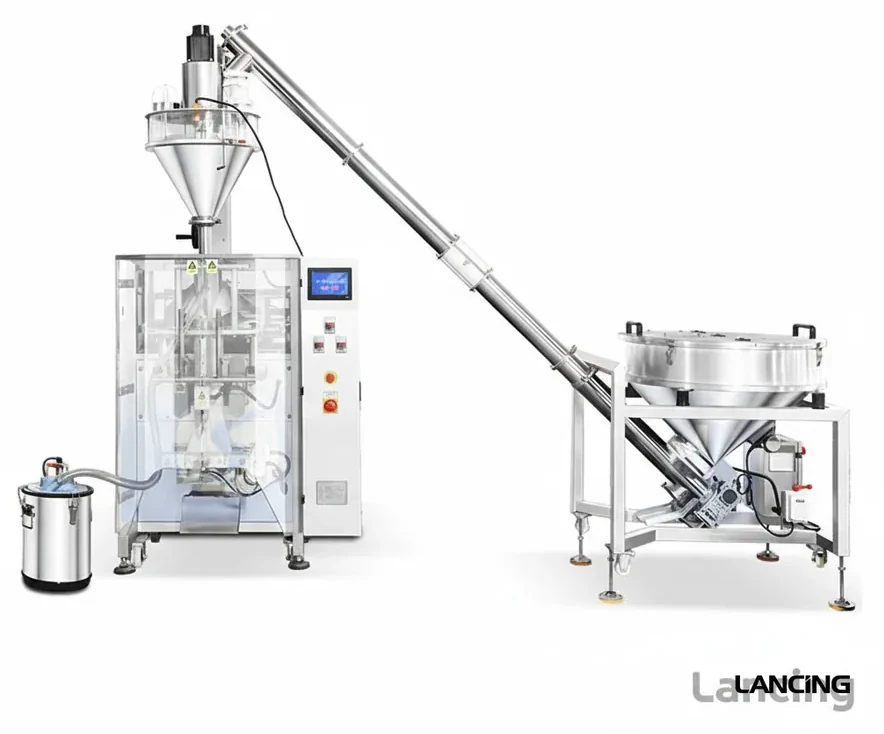 Bagging / roll film
Auger dosing integrated with vertical form fill seal bagging for powder pouches, sachets and formed bags from roll film.
View route
Line planning
Product feed, filling, settling, capping, sealing, labelling, coding and checking planned as one dry-product route.
View route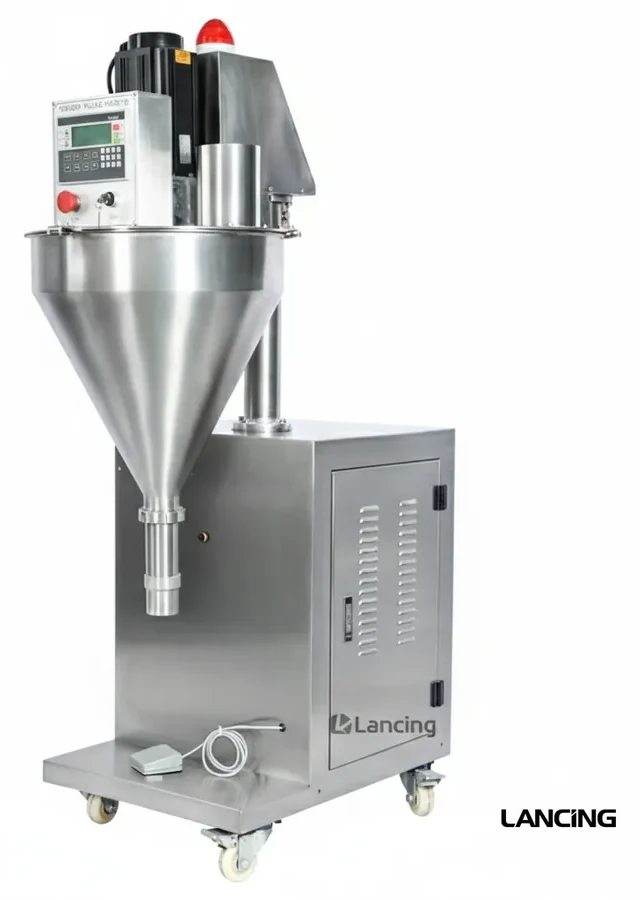 Route
General powder dosing where flow, dust and fill consistency decide the auger route.
View route
Route
Auger filling routes for spices, seasonings, herbs and mixed dry ingredients.
View route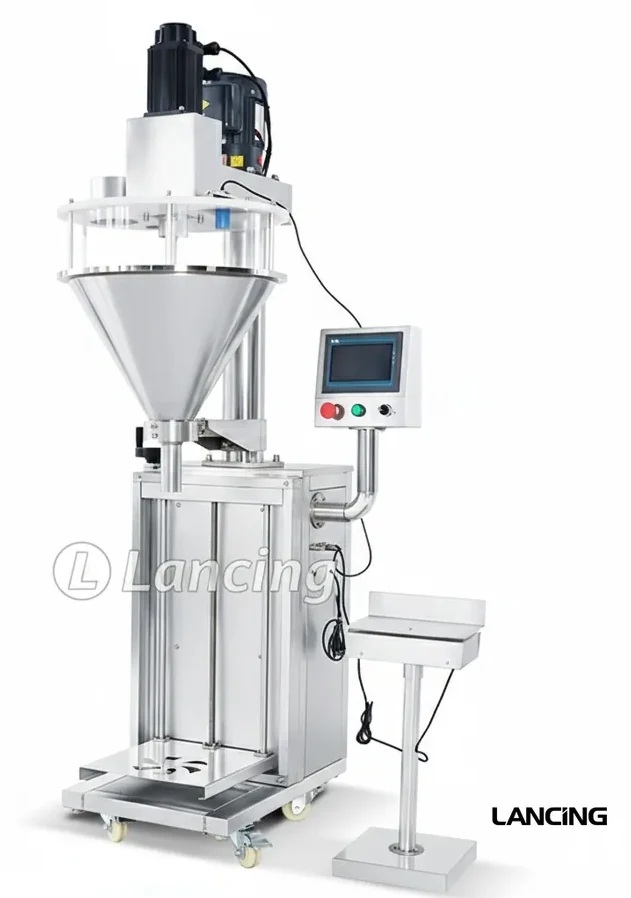 Route
Dry-powder filling for sports nutrition, supplement tubs, pouches and jars.
View route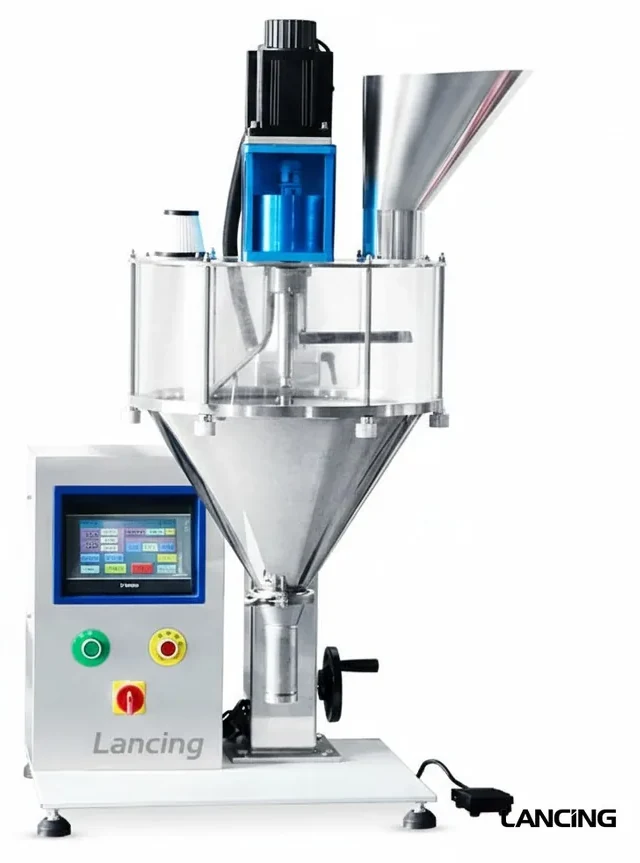 Route
Powder filling layouts for flour, starches, baking powders and dry mixes.
View routeSend the actual jar, bottle or tub, its opening, height, stability, tare range and closure. The nozzle, fill height, container support and settling allowance need to work with the production pack.
Define the acceptable headspace and condition of the rim, thread, sealing land and outside wall. Retain trial packs before fitting the closure so dosing and transfer issues can be distinguished from closing issues.
Plan the sampling or inline checkweighing method, including tare variation, accepted limits and how held or rejected packs are handled. The method should be agreed with the product, pack and line requirements rather than assumed from the filler name.
Send the product, pack format, target fill weight and required output so Lancing can suggest the most suitable auger filler route.
Rigid containers can make auger filling easier to present than flexible packs, but the neck or opening, tare variation, fill height and downstream closure still decide the route. If the product is sold by weight, plan whether the filled jar, bottle or tub will be spot checked or inline checkweighed.
Use checkweighing after auger filling for finished-pack evidence and bulk-density testing for product behaviour.
Rigid powder packs need a clearly defined condition at the handover to capping or sealing. Specify what is acceptable on the rim, thread, sealing surface and outside wall of the container. Ask the trial team to retain examples that show both the filled pack and its condition before the closure is fitted. This makes it easier to distinguish a dosing issue from a later closing or presentation issue during commissioning.
Include the areas involved in closing the pack as well. Ask the team to review the rim or sealing land, the required headspace and any insert location using the actual jar and closure combination.