 Route
Route
How to choose an auger filler
A buyer guide to matching auger fillers to product behaviour, pack format and output.
View routeUse these guides to prepare a stronger brief before comparing auger filling machines, powder fillers, VFFS systems or complete dry-product lines.
These guides explain the main choices before you request prices, send samples or compare machinery. They help you describe the product, pack and output target clearly.
Use the guides to decide what information to send with your auger filler enquiry.
Route
A buyer guide to matching auger fillers to product behaviour, pack format and output.
View route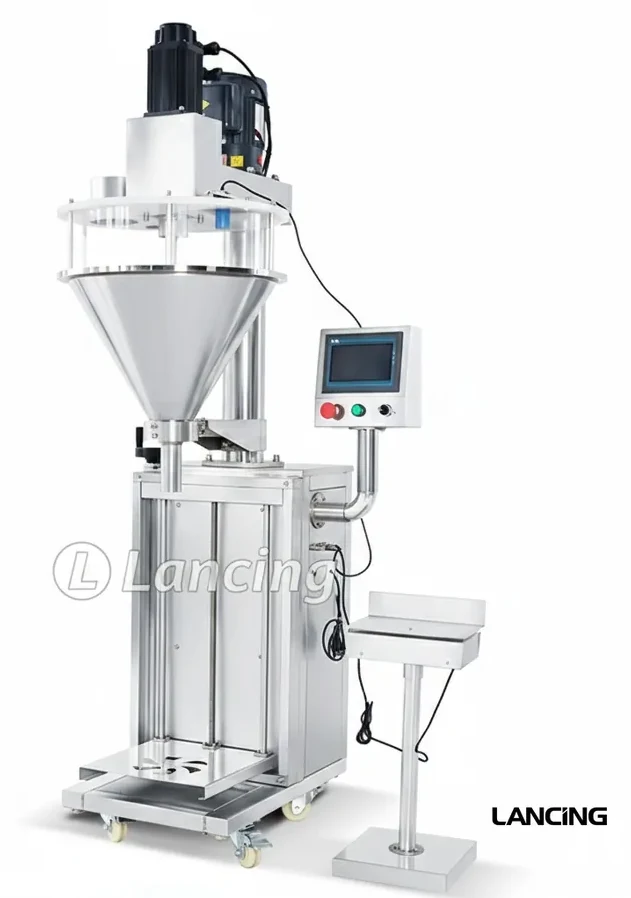 Route
Route
Compare auger filling with weigh-head, multihead and cup-dosing routes.
View route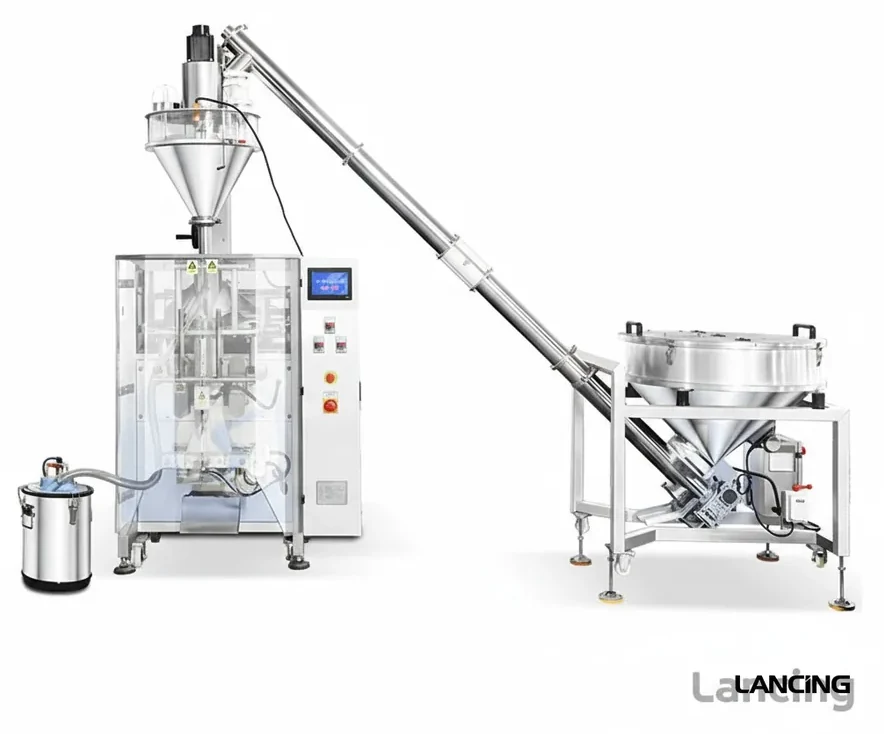 Route
Route
Plan hopper design, filling head, extraction and line layout around dusty powders.
View route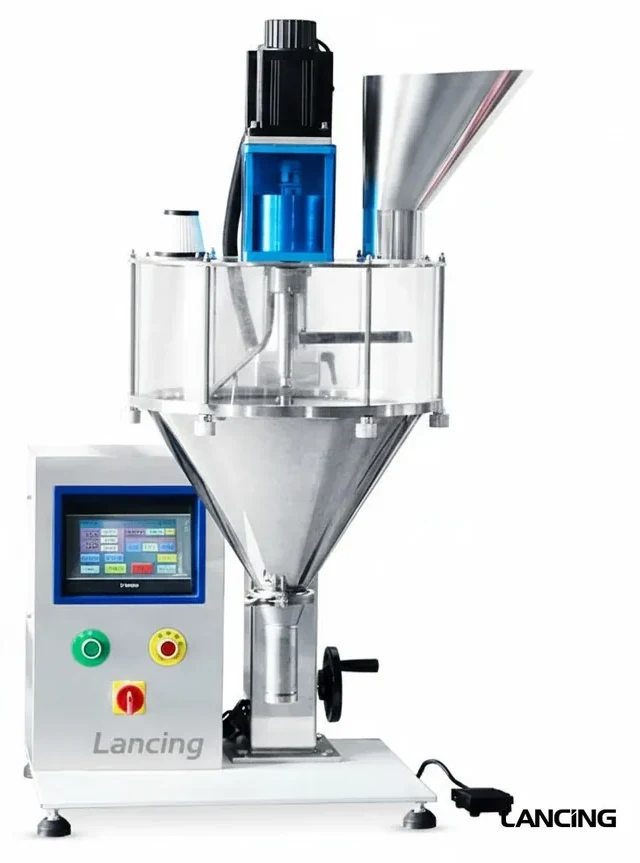 Route
Route
What to send before asking for an auger filling machine quotation.
View route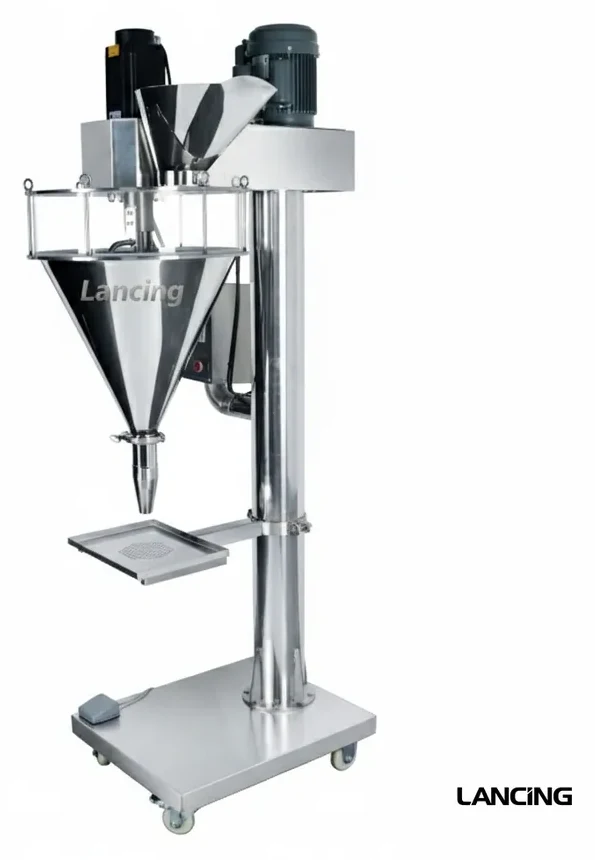 Bench / compact
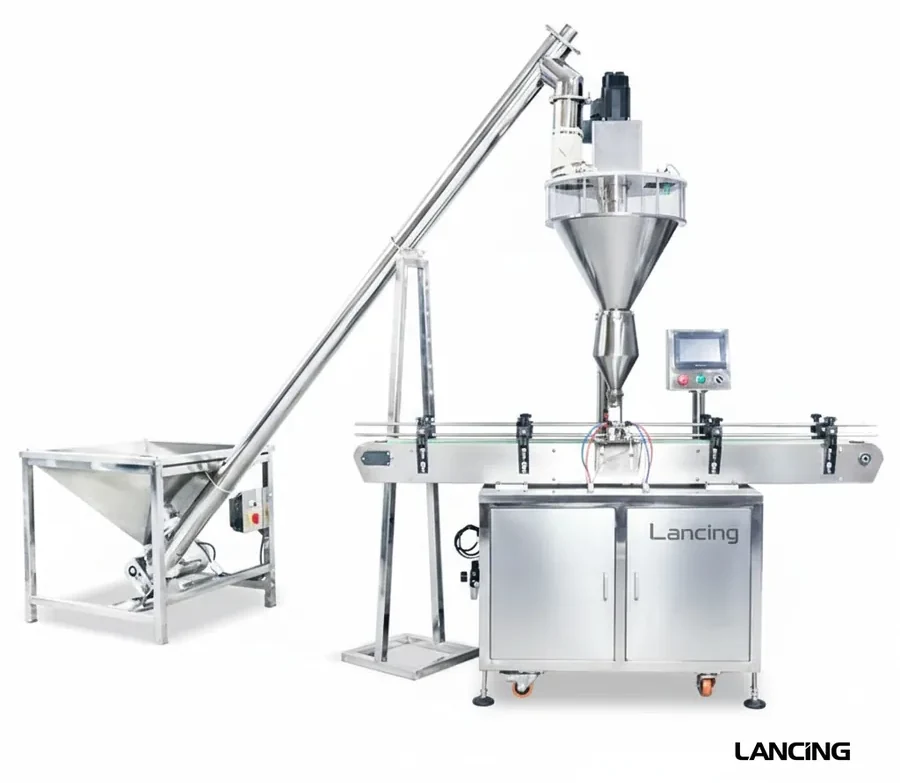
Compact auger filling for short runs, product trials, smaller batches and operator-presented jars, bottles, tubs or pouches.
View route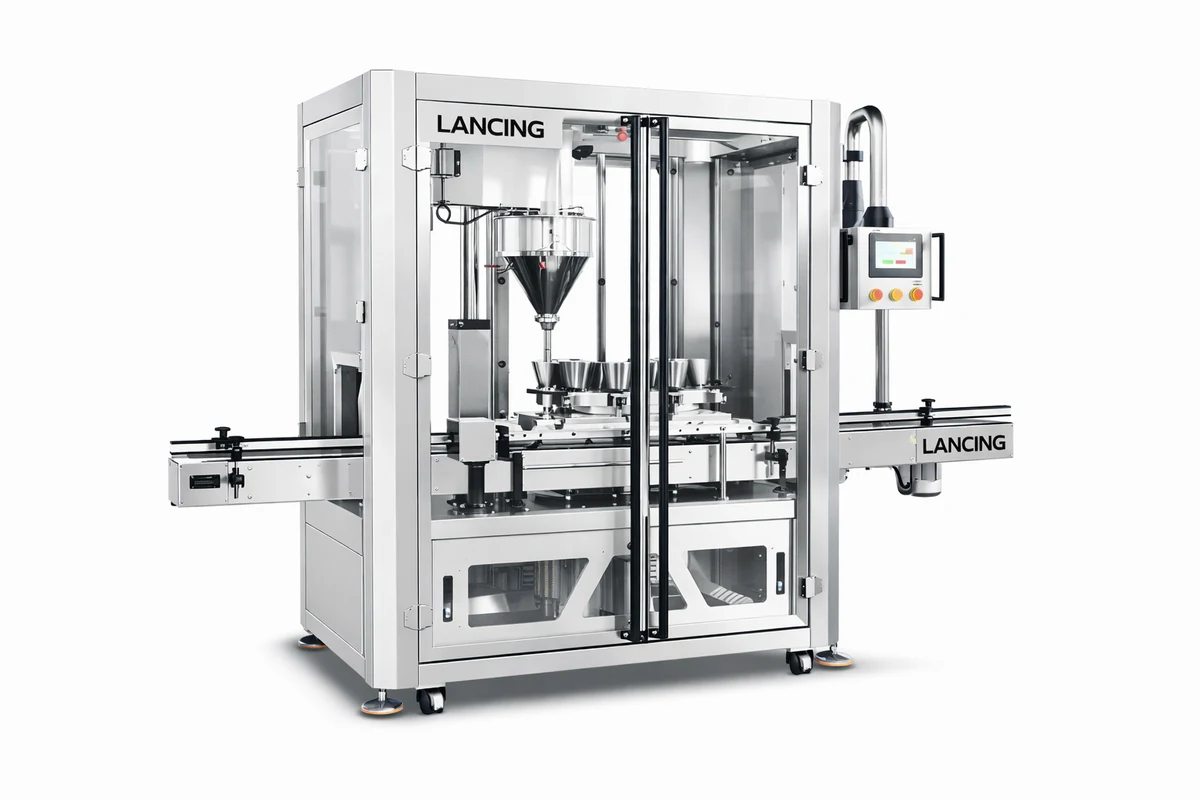 Inline automation
Conveyor-fed auger filling routes for powders that need repeatable dosing, container handling and integration with closing or labelling.
View route
Bagging / roll film
Auger dosing integrated with vertical form fill seal bagging for powder pouches, sachets and formed bags from roll film.
View route
Line planning
Product feed, filling, settling, capping, sealing, labelling, coding and checking planned as one dry-product route.
View routeAuger fillers are normally used for powders and some fine granules where controlled screw dosing gives a more suitable route than a pump, cup filler or basic gravity feed.
Yes, but the container handling and discharge setup changes. Rigid containers, premade pouches, VFFS bags and sachets all need different presentation and sealing arrangements.
Send the product name, sample behaviour, fill weight range, pack dimensions, target output, accuracy requirement, available space and any sealing, capping, labelling or coding steps.
Send the product, pack format, target fill weight and required output so Lancing can suggest the most suitable auger filler route.
The strongest enquiry is not a list of machine features. It is a chain of evidence linking the powder, the dosing principle, dust controls, tooling, pack route and acceptance plan.
Use the selection guide to record bulk density, flow, bridging, dust and pack details.
Use the auger versus weigh guide when the dosing technology is not yet proven.
Use the dust-control guide to define containment, extraction, settling and cleaning evidence.
Use the enquiry checklist to send the product, pack, output, site and acceptance inputs.
Bulk density, output and fill accuracy only become useful when the product batch, method, tooling, scale, pack, rate and sample sequence are recorded. The guides therefore treat measurements as application evidence rather than universal machine claims.
For a broad comparison beyond auger dosing, use Powder Fillers. For specialist weight-led routes, use Weigh Fillers or Combiweigh.
Send the completed product, pack and acceptance information so Lancing can identify the most suitable auger route and sample requirement.
Each page answers a separate engineering or procurement question and links back to the most relevant machine route.
Diagnose weight drift, bridging, flooding, dust and pack-presentation problems.
Open guidePlan line clearance, contact-part removal, tooling control and first-off verification.
Open guideDefine samples, test conditions, consecutive fills, restart tests and acceptance records.
Open guidePrepare access, utilities, extraction, controls, commissioning and training.
Open guideMatch manual loading, screw feeding, vacuum transfer and agitation to the product.
Open guideThe question library explains the operating principle, powder suitability, accuracy evidence, tooling selection, automation choice and packaging-line interfaces in clear, quotable sections.
Use the direct answers first, then follow the links into model, application, trial and troubleshooting detail.
The new output guide connects product feed, dosing, operator work, pack closing, refills, stops and changeovers so buyers can compare semi-automatic and automatic routes on accepted finished packs.
A step-by-step method for measuring good-pack rate, line bottlenecks and shift capacity.
View resourceVerified 35 L touchscreen model data, tooling windows and trial conditions.
View resourceVerified 6 L compact model data and small-dose application boundaries.
View resourceLancing can help turn the guide inputs into a model shortlist and a representative powder trial.
Use these guides to compare dosing methods, prepare dust-control information and plan maintenance requirements before requesting a quotation.
Understand when screw dosing, weighing, cup filling or checkweighing should be trialled.
Read comparison →Prepare SDS, dustiness, LEV and risk-assessment information before specifying a filling head.
Read dust guide →Plan auger tooling, cleaning checks, wear parts and support expectations before installation.
Read support guide →Use these checks to describe powder behaviour and plan finished-pack weight verification before quotation.
Prepare a product behaviour note before the auger screw, hopper and sample trial are specified.
Read the powder behaviour guide →Plan final weight checks, reject handling and accepted-pack evidence after the filling head.
Read the checkweighing guide →These extra guides help buyers prepare the evidence needed when a powder filling project has food-contact, allergen, cleaning, calibration or finished-pack weight requirements.
Check product-contact access, cleaning method, allergen changeover, dust and pack-closing requirements before selecting a filler.
Read hygiene guide →Record product condition, tooling, recipe, scale setup and verification sequence before accepting production.
Read calibration guide →These guides help production, engineering and quality teams move from a machine idea to a buildable and testable auger filling project.
Plan FAT, SAT, installation checks, operating checks and production evidence for quality-managed powder filling projects.
Read validation guide →Check power, compressed air, extraction, access, line signals and responsibilities before installation.
Read utility guide →Use separate records for fill mass, ingredient distribution and material use. A satisfactory result in one category does not prove the others. These guides complement the existing calibration, checkweighing and sample-trial resources without treating every production issue as a dosing-setting problem.
| Question to resolve | Guide | Evidence to prepare |
|---|---|---|
| Packs weigh correctly but a blend appears to change | Powder blend segregation | Transfer route, incoming reference and individually identified production samples. |
| Product consumption seems high for the accepted output | Powder giveaway and yield | Issued mass, accepted net weights, rejects, recovered stock and residual product. |
Send the records you already have with your machine enquiry. A missing measurement is a trial requirement, not a reason to assume a performance figure.