 Route
Route
How to choose an auger filler
A buyer guide to matching auger fillers to product behaviour, pack format and output.
View routePlan dust control around the powder, hopper, fill head, container, sealing stage and operator workflow before specifying an auger filling machine.
Dust is not only a housekeeping issue. It can affect fill accuracy, operator comfort, machine wear, container presentation, seal quality and finished-pack appearance.
Dust behaviour should be described before hopper and fill-head choices are finalised.
For pouches and VFFS bags, powder in the seal area can create failures. For jars and bottles, dust around the neck finish may affect cap seating, induction sealing or label presentation.
Include photos or a sample video showing how the powder behaves during filling or pouring.
Route
A buyer guide to matching auger fillers to product behaviour, pack format and output.
View route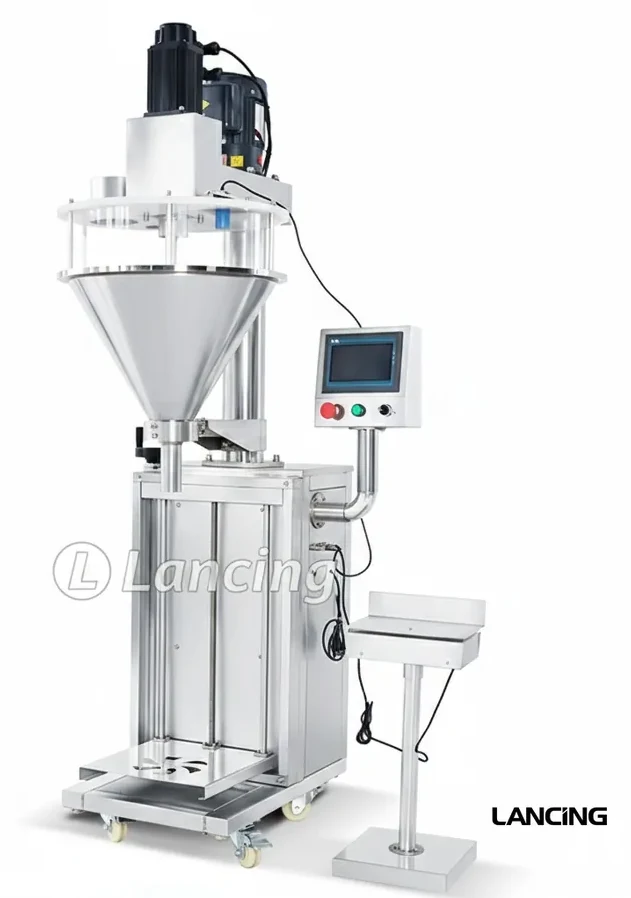 Route
Route
Compare auger filling with weigh-head, multihead and cup-dosing routes.
View route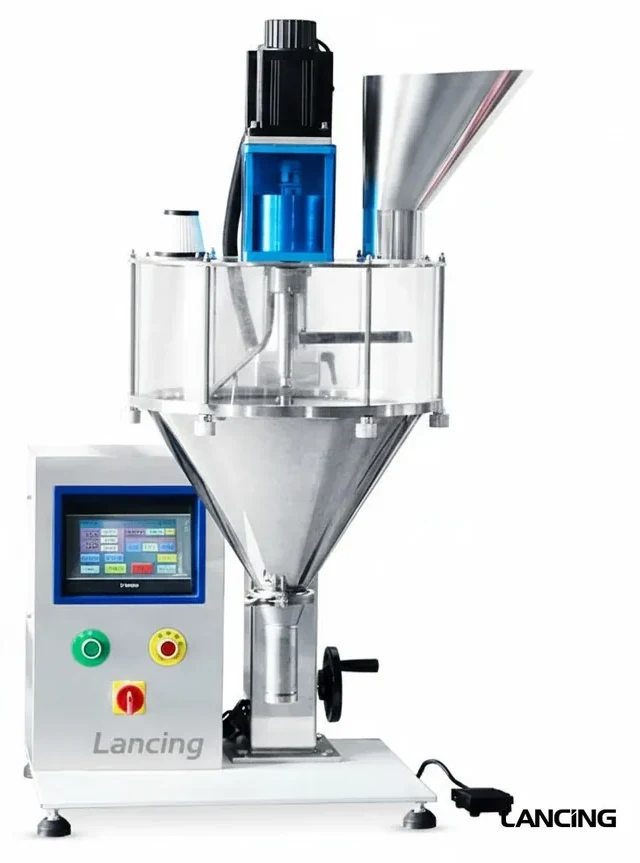 Route
Route
What to send before asking for an auger filling machine quotation.
View route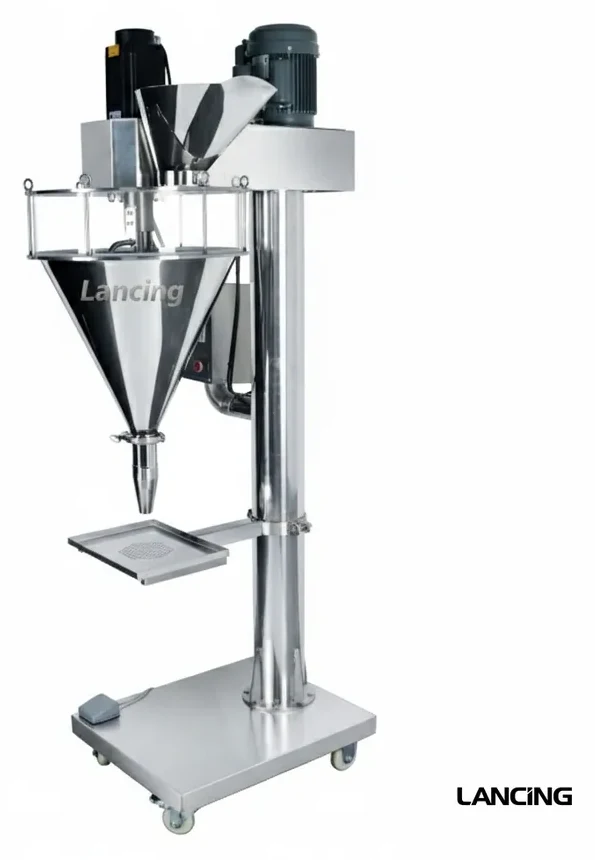 Bench / compact
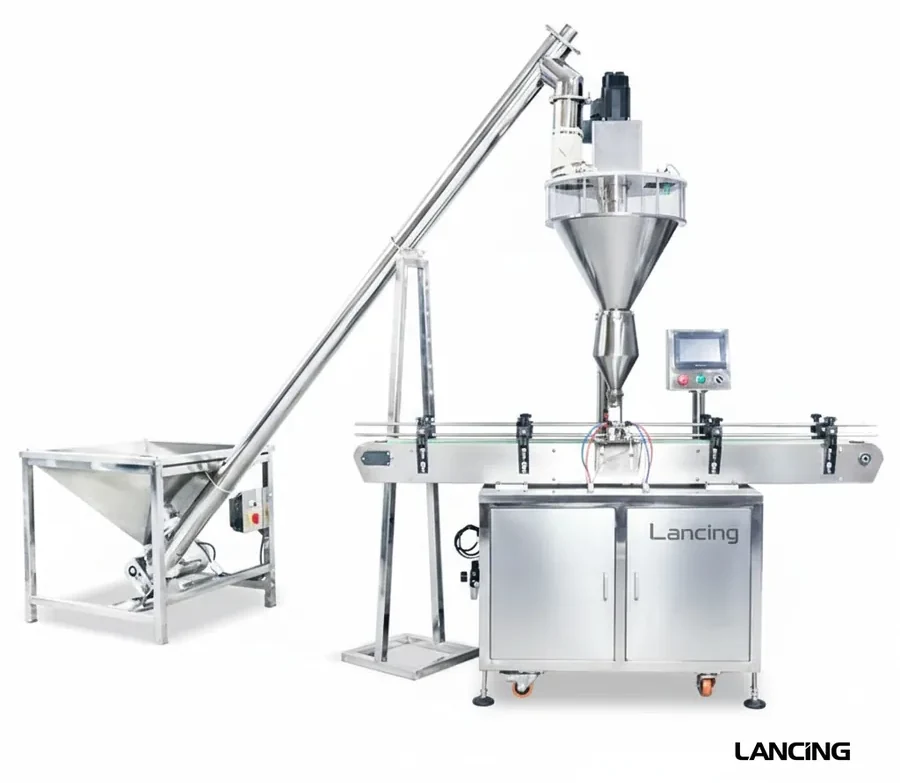
Compact auger filling for short runs, product trials, smaller batches and operator-presented jars, bottles, tubs or pouches.
View route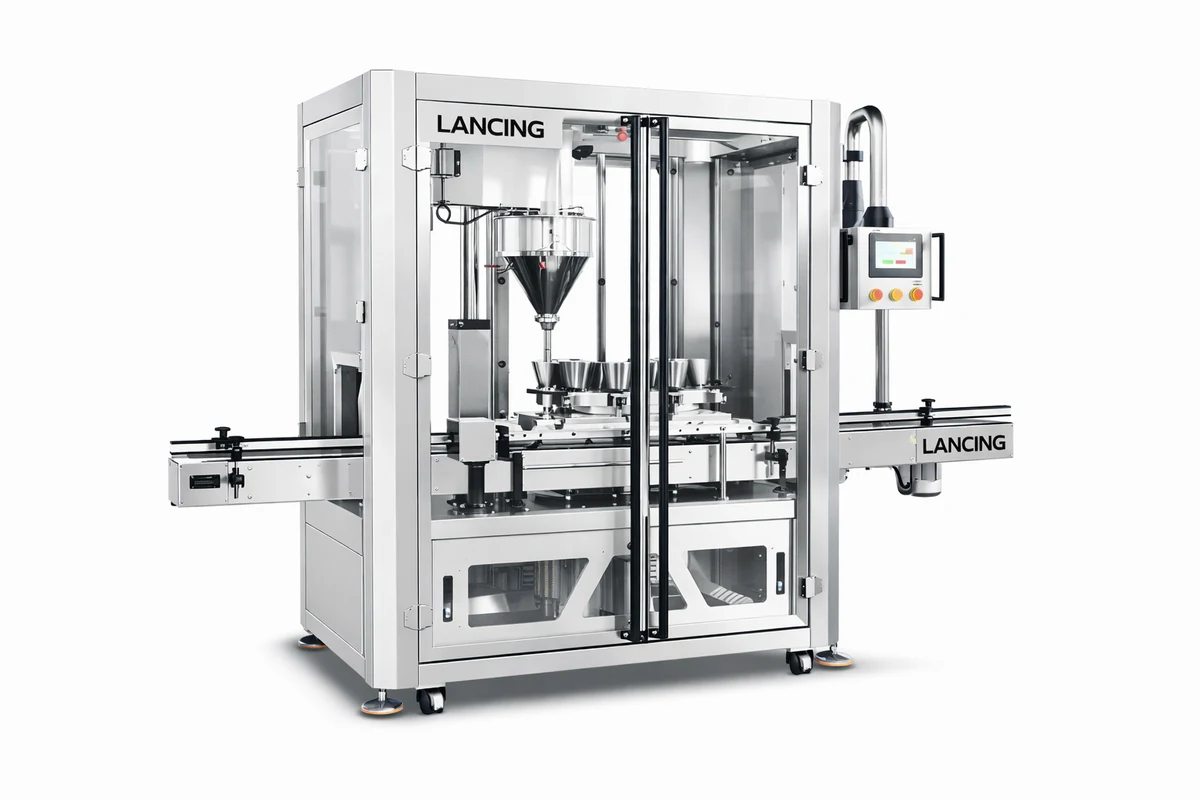 Inline automation
Conveyor-fed auger filling routes for powders that need repeatable dosing, container handling and integration with closing or labelling.
View route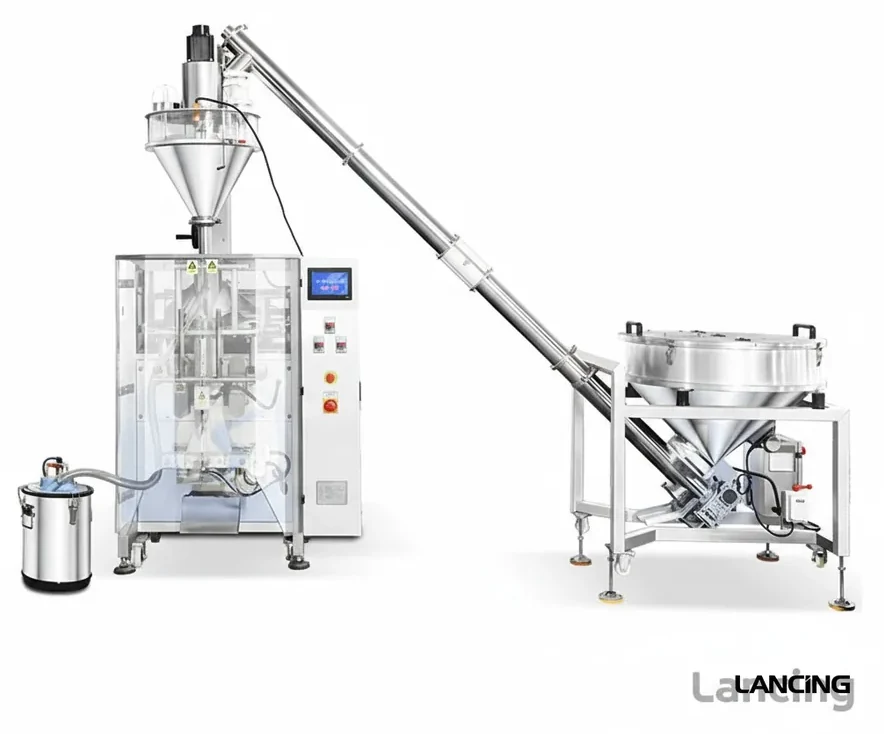 Bagging / roll film
Auger dosing integrated with vertical form fill seal bagging for powder pouches, sachets and formed bags from roll film.
View route
Line planning
Product feed, filling, settling, capping, sealing, labelling, coding and checking planned as one dry-product route.
View routeAuger fillers are normally used for powders and some fine granules where controlled screw dosing gives a more suitable route than a pump, cup filler or basic gravity feed.
Yes, but the container handling and discharge setup changes. Rigid containers, premade pouches, VFFS bags and sachets all need different presentation and sealing arrangements.
Send the product name, sample behaviour, fill weight range, pack dimensions, target output, accuracy requirement, available space and any sealing, capping, labelling or coding steps.
Send the product, pack format, target fill weight and required output so Lancing can suggest the most suitable auger filler route.
The correct approach depends on where dust is released, how readily the product becomes airborne and whether the pack or seal area must remain clear. The extraction point and airflow need to be proven with the actual product.
| Option | Where it may help | Evidence to collect | Boundary or limitation |
|---|---|---|---|
| Close-fitting outlet or nozzle | Reduces the open gap around a jar, bottle or pouch mouth. | Product cut-off, deposits on the pack and reliable pack withdrawal. | Must not trap the pack, block displaced air or create contact that damages the opening. |
| Local source-capture hood | Targets dust close to hopper loading or the fill point. | Visible emissions, airflow behaviour, product loss and fill-weight effect. | Poor positioning or excessive airflow can remove product or destabilise the discharge. |
| Fill-head containment | Limits dust spread around an automatic filling station. | Access, cleaning, visibility, deposits and operator intervention during the agreed run. | Guarding and containment must preserve safe access and the approved cleaning method. |
| Central extraction connection | Connects defined pickup points to the site extraction system. | Required airflow, pressure, duct arrangement, filtration and interface responsibility. | It is not assumed to be included in a standard filler and must suit the product hazard and site system. |
| Settling and controlled fill speed | Helps aerated powder remain below the neck or seal area before closing. | Filled height over time, dust at withdrawal and closure or seal cleanliness. | May reduce output and does not replace containment where emissions remain unacceptable. |
After the agreed run, record deposits on the hopper cover, agitator, auger tube, nozzle, pack supports, guards, sensors, conveyor and downstream closing area. Confirm which parts are removable, how they are cleaned, how the machine is inspected and how dust is prevented from entering inaccessible areas.
The restart check should verify correct tooling, line clearance, first-off dose and pack cleanliness.
If product data indicates a combustible, harmful or otherwise hazardous dust, the machinery, extraction, electrical equipment, containment and operating method require competent specialist assessment. A standard auger filler description is not evidence that a hazardous-area application is covered.
Provide the relevant product and safety information before design freeze.
Source capture places the extraction or containment point close to where dust is released, such as hopper loading or the filling outlet, while avoiding disruption to the dose or pack.
An unsuitable extraction flow or pickup position can remove product from the discharge or open pack. Airflow and hood position must therefore be proven during the product trial.
Powder on the seal surfaces can prevent the film layers from joining consistently. Dose timing, settling, fill-tube design and local capture should be reviewed with the intended film and pack size.
Record visible emissions, deposits around the outlet and pack, extraction behaviour, product loss, seal or closure cleanliness, operator intervention and the condition after an agreed production run.
No. Some applications may be controlled by close-fitting outlets, containment and careful handling, while others need a dedicated local or central extraction connection. The decision is product and site specific.
Do not assume a standard filler or extraction arrangement is suitable. The product data, dust hazard and area classification require competent specialist assessment before the machine and controls are specified.
Send product data, a pouring or filling video, the pack and the site extraction information so the fill-head and containment options can be reviewed.
Identify each release point and assess the actual powder. Fine combustible dusts can create fire and explosion hazards, while other products may create inhalation, contamination or housekeeping risks. A competent product- and site-specific assessment is required.
| Source | Engineering questions | Trial evidence |
|---|---|---|
| Bag or drum tipping | Can transfer be enclosed, localised or moved to a lower-level feed station? | Observe refill plume, residue and operator exposure route. |
| Hopper and agitator | Are covers, seals and feeder interfaces suitable for the product and cleaning method? | Inspect leakage during normal running and refill. |
| Filling outlet | Can drop height, nozzle fit, shroud and extraction capture displaced air and dust? | Inspect the pack rim, thread or seal area at production speed. |
| Cleaning and strip-down | How will residual powder be contained and removed safely? | Witness the agreed line-clearance method and waste route. |
Too little capture can release dust; excessive airflow can disturb light product or draw it away from the pack. Review feeder and extraction behaviour together with the hopper feeding guide.
A local vacuum or generic dust collector is not automatically suitable for combustible or hazardous powder. Confirm equipment duty, filtration, discharge and area classification through the competent assessment.
Source capture, enclosure, powder fall, displaced air and cleaning method must be assessed together; extraction flow alone does not define an effective control.
Not always. The first step is to understand where and why dust is released, then consider containment, reduced handling, lower drop height, better pack fit and source capture. Local exhaust ventilation may be part of the solution, but it should be designed around the actual contaminant cloud and workstation.
The UK Health and Safety Executive provides guidance on COSHH assessment and containment and local exhaust ventilation.
Direct link to answerExtraction should act close enough to the release point to capture dust without drawing saleable powder away from the dose or disturbing product flow. Likely points include hopper charging, the filling outlet and pack mouth, but the hood or enclosure must suit the direction and energy of the dust cloud.
A competent extraction designer should use observations from the real filling cycle and confirm that the control remains effective during refill, dosing and cleaning.
Direct link to answerObtain the safety data and product hazard information, then complete a competent site-specific assessment of fire, explosion and health risks before selecting the filler, extraction equipment or cleaning method. Do not assume that ordinary dust extraction is suitable for a combustible-dust duty.
For Great Britain, review HSE guidance on DSEAR. Final equipment and zoning decisions depend on the actual substance, process and workplace assessment.
Direct link to answerInclude the safety data, transfer method, pack, fill range, expected cleaning method and any existing extraction details.
Dust capture around a hopper or filling head is a machine-interface issue, but the wider dust risk depends on the product, site, operating method and duty-holder assessment. For dusty or potentially combustible powders, prepare SDS information and site controls before the filling head, extraction point and cleaning route are finalised.
The new powder dust, extraction and DSEAR checks guide explains what to send before a dusty-powder trial.