Machine advice
Match the machine to the product and pack.
High accuracy powder filling machine advice for projects where fill weight, product giveaway and repeatability are critical to the production process.
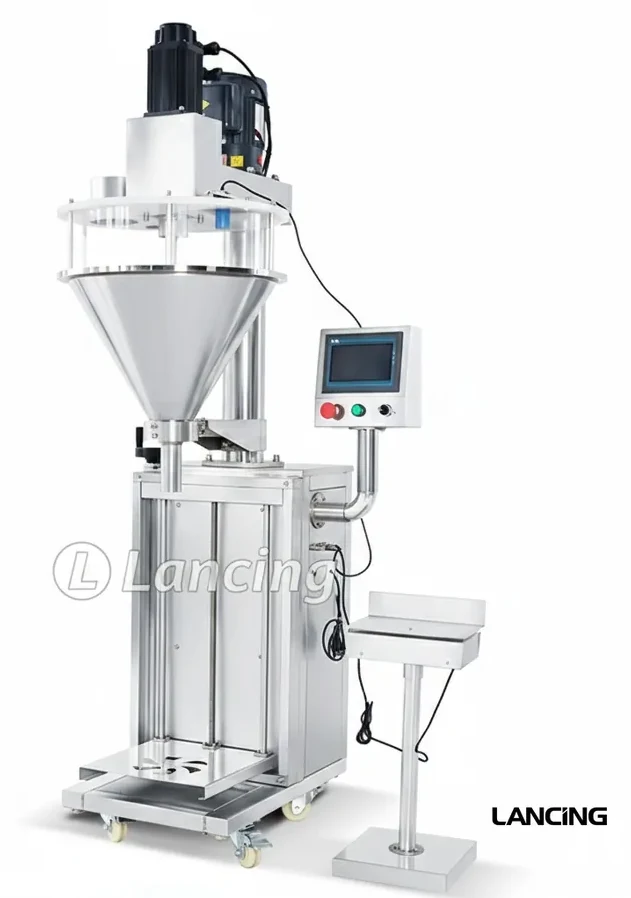
Customer routeHigh accuracy powder filling machines for controlled fills
High accuracy powder filling depends on product consistency, auger selection, weighing method and line control. The tighter the tolerance, the more important it is to test the product and define the true acceptable range.
Send product details →
What to considerKey points before choosing equipment.
These checks help decide whether the right route is compact, semi-automatic, automatic, VFFS or a complete powder filling line.
Step 1Check the product behaviour
Define the target fill weight and legal or commercial tolerance.
Step 2Match the pack format
Check product density variation between batches.
Step 3Plan the full route
Consider weigh feedback where overfill is expensive.
Quick answers
Questions about this route.
What affects powder filling accuracy?
Bulk density, product flow, auger size, fill weight and weighing method all matter.
Can auger fillers be high accuracy?
Yes, particularly when correctly sized and supported by weighing where required.
How do I reduce giveaway?
Improve dose control, weigh checking and product consistency through the line.
Next stepSend your product details for a practical recommendation.
Tell us the powder, fill weight, pack size, target output, current filling method and any issues you are seeing with dust, flow or accuracy.
- Powder type and flow behaviour
- Fill weight range and accuracy target
- Jar, bottle, tub, pouch or bag size
- Manual, semi-automatic or automatic output
Send an enquiry Project enquiryNeed a powder filling machine route?
Send your powder, pack and output target and we will help point you towards a suitable auger filling option.
Contact Lancing UK
Control evidence
Distinguish average offset, spread and non-weight quality.
High-accuracy powder filling is not demonstrated by a single average close to the target. Check whether individual results are spread widely, whether the centre changes after a refill, and whether different heads behave differently. Each pattern calls for a different investigation; applying one correction to all of them can conceal the real cause.
Read the pattern before changing the dose| Pattern | Investigation focus |
|---|
| Tight grouping consistently above the intended setting | Confirm the scale and tare, then review the approved recipe and any deliberate target allowance. |
|---|
| A wide scatter around the intended setting | Review powder feed, measurement stability, cut-off and pack presentation before lowering the target. |
|---|
| A step change following refill or restart | Compare the product state and event-linked results rather than treating the whole run as one population. |
|---|
| Stable weight but changing ingredient distribution | Use a composition investigation; a weight correction cannot restore a segregated blend. |
|---|
This distinction helps connect powder giveaway reduction to verified process stability, while blend-segregation checks address a separate quality requirement. There is no universal sampling interval or tolerance in this guide: those belong in the agreed specification and applicable quantity-control method.
For a useful review, send the individual sequence of weights rather than only the best result, together with target quantity, tare method, machine head, powder batch and refill times. Send accuracy evidence with the enquiry so the trial can address the actual failure pattern.