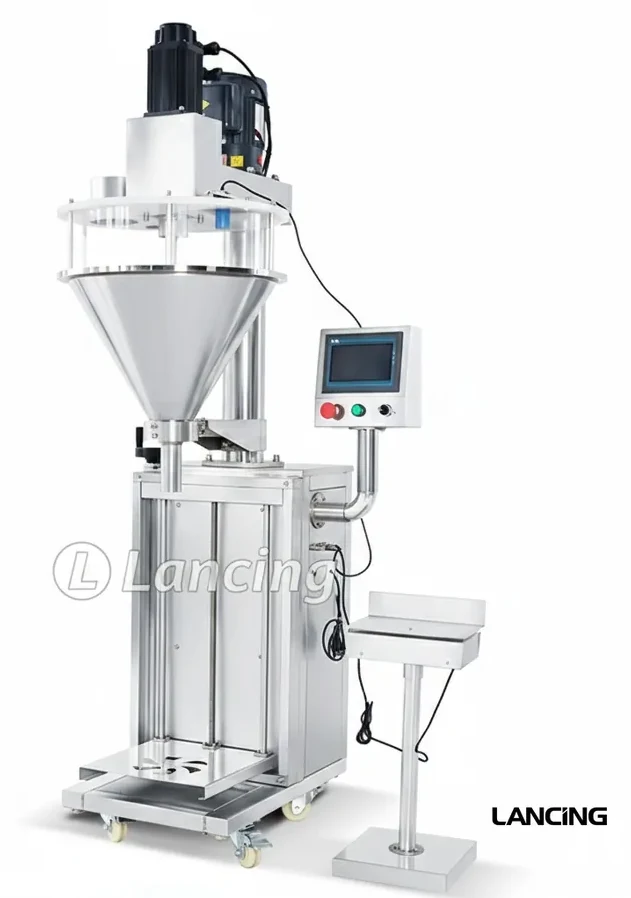
Auger filling machinery, powder dosing and dry-product line support from Lancing UK 01494 623015 · sales@lancinguk.com
powder weighing and filling machine

Powder weighing and filling machines for controlled output.

Powder weighing and filling combines dosing with weight control or verification. This is useful where product giveaway, label weight or batch variation affects production costs.

WeighingFillingAccuracyPowder
Machine advice

Match the machine to the product and pack.

Powder weighing and filling machine advice for products where weight control, checkweighing and dosing repeatability are important.

Powder weighing and filling machines for controlled output.
Customer route

Powder weighing and filling machines for controlled output

Powder weighing and filling combines dosing with weight control or verification. This is useful where product giveaway, label weight or batch variation affects production costs.

Send product details
What to consider

Key points before choosing equipment.

These checks help decide whether the right route is compact, semi-automatic, automatic, VFFS or a complete powder filling line.

Step 1

Check the product behaviour

Define whether every fill must be weighed or sampled.

Step 2

Match the pack format

Check weighing resolution against target tolerance.

Step 3

Plan the full route

Plan reject handling and record keeping if needed.

Quick answers

Questions about this route.

Can powder filling be weight controlled?

Yes, by using weigh feedback or checkweighing in the process.

Is weighing needed for every product?

No. It depends on accuracy, product value and regulations.

Can weighing be added to a line?

Often yes, depending on the line layout and controls.

Next step

Send your product details for a practical recommendation.

Tell us the powder, fill weight, pack size, target output, current filling method and any issues you are seeing with dust, flow or accuracy.

  • Powder type and flow behaviour
  • Fill weight range and accuracy target
  • Jar, bottle, tub, pouch or bag size
  • Manual, semi-automatic or automatic output
Send an enquiry
Project enquiry

Need a powder filling machine route?

Send your powder, pack and output target and we will help point you towards a suitable auger filling option.

Contact Lancing UK
Weighing strategy

Decide whether weighing is for setup, feedback, inspection or trade use.

A scale beside an auger filler, weight-assisted dose control and an in-line checkweigher perform different jobs. Define where the weight is measured, how it changes the process, what happens to an out-of-limit pack and whether any legal-metrology requirement applies before selecting equipment.

Setup scale

Used to establish or verify a volumetric auger recipe during trials and routine checks.

Weight-assisted fill

Uses a weighing device as part of the agreed operator or control sequence.

In-line check

Inspects finished packs and needs a defined reject or hold response.

Legal status

Must be confirmed separately; a process scale should not be assumed to be approved for trade use.

Link the weight result to a defined action.

State the scale capacity and resolution, tare method, sampling frequency, tolerance expression, feedback rule and response to a failed pack. Without that control plan, adding a scale may produce data without improving the process.

Project evidence

Send the required weight-control method.

Lancing can distinguish recipe verification, weight-assisted filling and independent inspection in the machine scope.

Send project details
Search intent match

Net-weight, weigh-assisted and checkweigh powder filling.

Powder weighing and filling can mean several different routes. A weigh-assisted auger filler still uses screw dosing, but weight evidence helps confirm the fill. A separate weigher measures product before discharge. A checkweigher confirms the finished pack after filling and can reject out-of-tolerance packs.

Is net-weight filling the same as checkweighing?

Net-weight filling and checkweighing are related but not always the same. Net-weight filling controls or verifies the product weight during the filling process, while checkweighing often checks the finished pack after filling.

The best route depends on the product, pack tare variation, output target and whether correction or rejection is required.

When should an auger filler use weigh assistance?

An auger filler may use weigh assistance when the product suits screw dosing but the buyer needs weight confirmation, tighter acceptance evidence or better control of overfill.

Trials should record scale conditions, product settling, hopper refill effects and operator intervention.

Weighing route

Choose the weighing point that matches the buyer's acceptance rule.

A powder weighing and filling project should define whether weight is measured during dosing, after dosing, after closing or as a sample check away from the line. Each option changes the mechanical layout and the evidence produced by the line.

Review checkweighing after auger filling when the enquiry needs reject handling, accepted-pack evidence or a recorded quality check after the filler.

Specify the check
  • Gross or net basis
  • Pack tare variation
  • Reject handling
  • Sample or every-pack checking
  • Data needed by production
Weight evidence

Separate setup calibration from accepted-pack verification.

For auger filling, the recipe setting is only useful when it is linked to a defined powder, tooling set, hopper state and weighing method. If the product settles, aerates or restarts differently after a stop, the finished-pack result may need an extra verification check.

Use the calibration and weight verification guide with checkweighing after auger filling when the project needs documented pack-weight evidence.

Record together
  • Product condition
  • Tooling and recipe setting
  • Scale and tare method
  • Start-up, refill and restart checks